
ecoPayz Casino Refunds: Where the Money Goes Back
 Available in GB
A refund sounds like the simplest thing in the world until you are waiting for one and it has not appeared. A player wrote to me convinced his casino had pocketed a refunded deposit, when in fact the money had gone back exactly where the rules say it must — to the wallet he paid from, not the bank account he was watching. He was looking in the wrong place.
Refunds at a casino follow a specific logic, and that logic is the same closed-loop principle that governs withdrawals: money returns by the route it arrived. Once you understand that a refund retraces its own steps, the mystery of where it went and why it is taking its time mostly evaporates. The refund is not lost. It is going home the way it came.
So let me explain how casino refunds actually work with a wallet, why they go back the way they do, and what to do when one seems to be taking longer than it should. This is a corner of the cashier that causes needless worry purely because players expect refunds to behave more freely than the rules allow. They do not, and that constraint is there for good reasons.
The Route a Refund Has to Take
The single fact that explains most refund confusion is this: a refund goes back to the payment method it came from, not to wherever you would prefer it landed. If you deposited from your Payz wallet, a refund of that deposit returns to your Payz wallet — full stop.
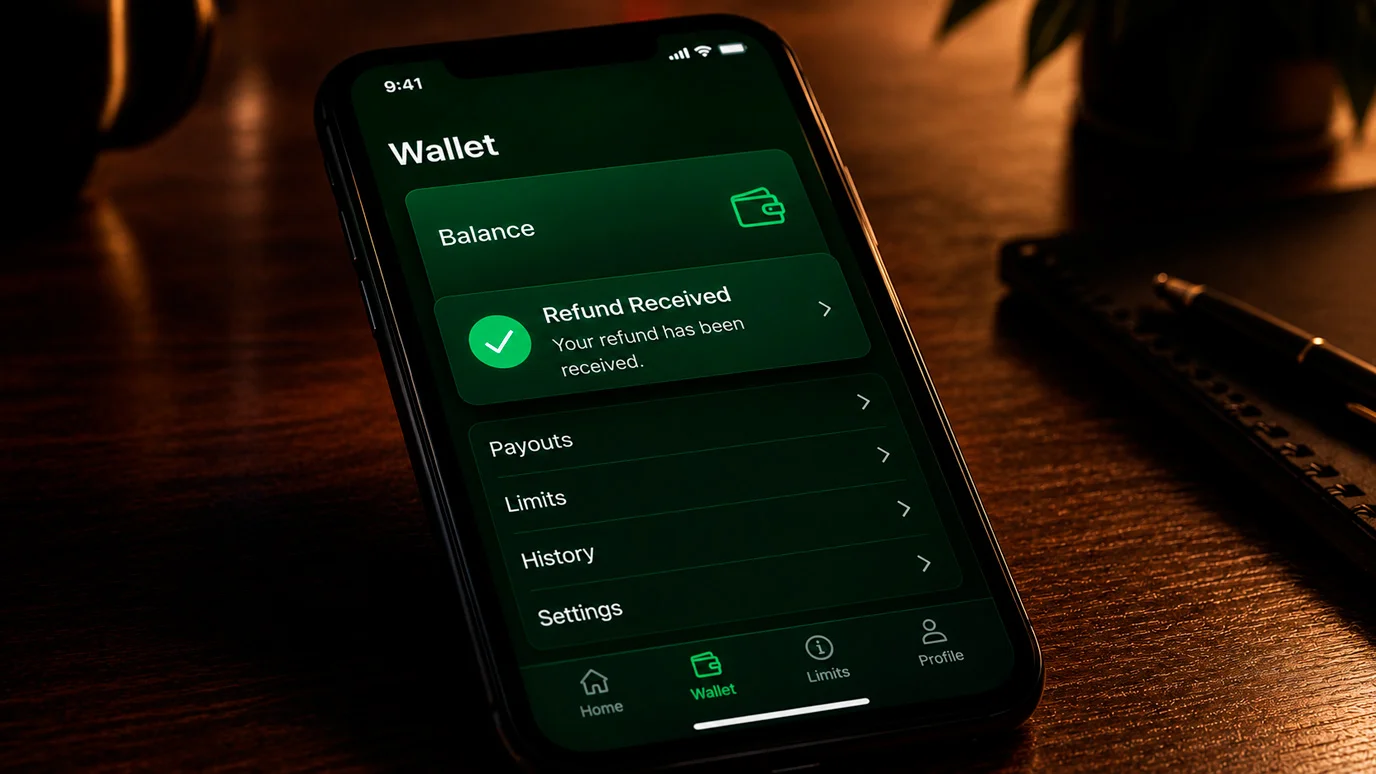
This is the closed-loop principle at work, the same rule that stops you withdrawing winnings to a method you never deposited with. Money that came in by one route goes back out by that same route, and a refund is no exception; it is essentially the original transaction reversed. So the player waiting on his bank statement for a refunded wallet deposit was watching the wrong screen entirely, because the money was retracing its path back to the wallet, exactly as the rule requires. The destination of a refund is decided by the origin of the payment, not by your current preference. Once you internalise that, you always know where to look: wherever the money came from is where it is going back.
This same-route discipline is not a casino being awkward — it is a deliberate anti-money-laundering and anti-fraud control that runs throughout regulated payments. It exists to stop money being shuffled between methods to obscure its trail, and a refund that jumped to a different destination would blow a hole in exactly that protection. The rule that occasionally frustrates you is the same rule that keeps the system clean, which is precisely the closed-loop logic I unpack in detail in the piece on the ecoPayz withdrawal same-method rule.
Best casino sites in the UK
- BeOnBetBonus: 100% up to €500 + 100 FS · Payout speed: 1-3 business days
- EvoSpinBonus: 125% up to €2500 + 125 Free Spins · Payout speed: 1-3 business days
- BritsinoBonus: Welcome Package – Get your £2,200 + 2,000 FS · Payout speed: 1-3 business days
- Revery PlayBonus: 100% up to€1,000+ 100 FS · Payout speed: 1-3 business days
- SlotoSportBonus: 500% up to £ 10 200+ 777 FS · Payout speed: 1-3 business days
- ZombillionBonus: Welcome Pack 250% up to £4000 + 200 FS · Payout speed: 1-3 business days
Why Refunds Are Not Withdrawals
Players often lump refunds and withdrawals together, and the distinction is worth drawing because it explains why a refund behaves the way it does. A withdrawal is you taking your money out by choice; a refund is the casino reversing a transaction that should not stand. They look similar from the outside but they are different events.

The practical consequence is in what triggers them and how they are treated. A refund typically arises from something specific — a deposit that failed to apply correctly, a cancelled transaction, an error, or funds returned because a deposit could not be used as intended. Because it is a reversal rather than a payout, a refund is generally not subject to the same winnings-related checks a withdrawal of profit attracts, but it is still bound by the same-route rule and still passes through the casino’s processing. The money goes back to the originating wallet, and from there the wallet’s own near-instant settlement takes over, run on the regulated rails of FCA-authorised PSI-Pay Ltd. So a refund can actually be cleaner than a withdrawal, since there are no winnings to verify — but it is no freer in terms of where it can land. It returns to source, the same as everything else.
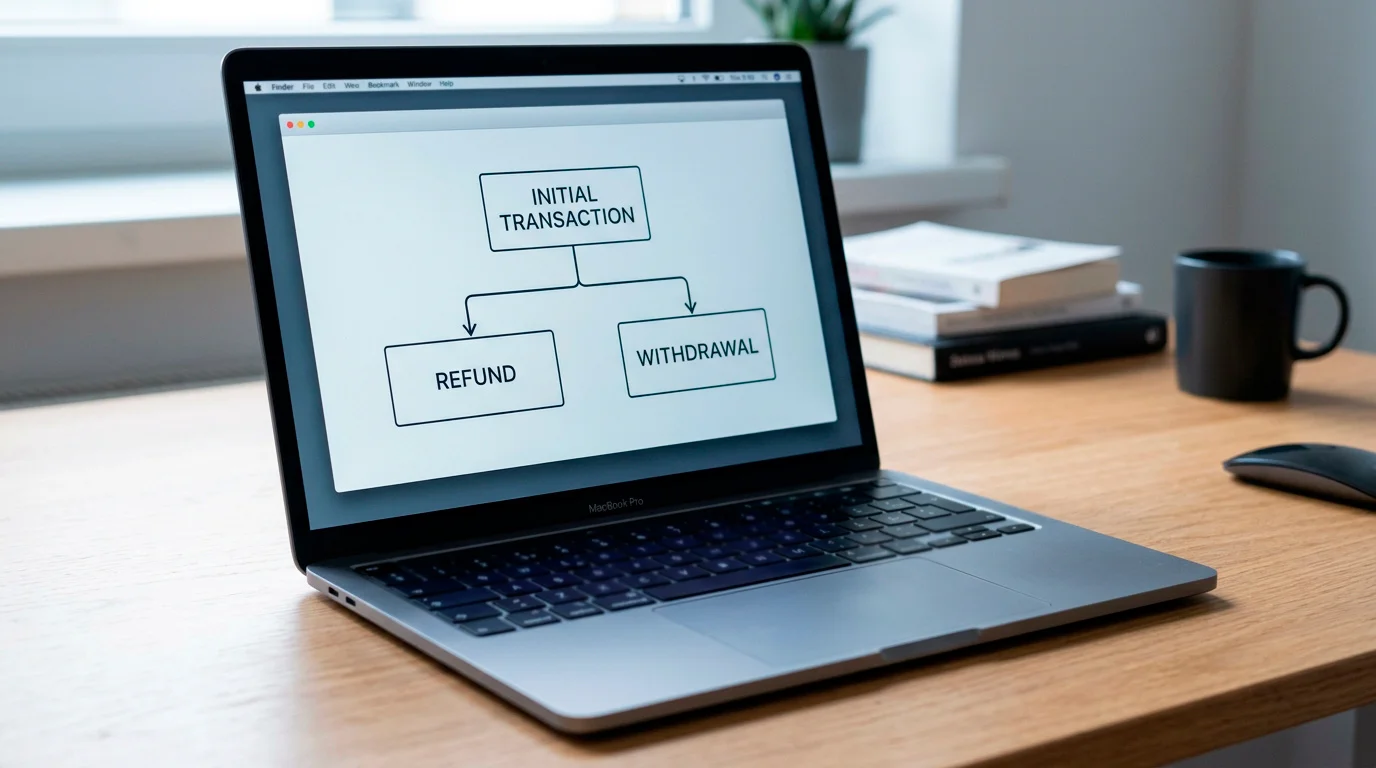
Keeping the two ideas distinct stops a lot of misplaced worry. When you understand that a refund is a reversal heading back to origin rather than a payout you direct, you stop expecting it to behave like a withdrawal and start watching the right account. The refund is the casino putting things back as they were, not handing you money to place wherever you like.
When a Refund Seems Stuck
Most refunds arrive quietly and on time, but when one seems delayed the response is the same calm diagnosis I apply to any payment that has gone quiet. Check the right place first, then work out whether you are seeing a normal processing window or a genuine snag.

The first move is to look at the wallet you paid from, not your bank, since that is where a refunded wallet deposit is heading. Then check the casino’s transaction history to confirm the refund was actually issued and when, because a refund that has not yet been processed is simply not in flight yet rather than lost. If the casino shows the refund as sent and a reasonable processing window has passed without it reaching your wallet, that is the point to raise it with support, armed with the transaction reference. The wallet’s own settlement is fast once the casino releases the money, so a long gap usually points to the casino’s processing stage rather than the wallet’s. As with a pending withdrawal, the tell of a real problem versus a routine wait is communication: a casino that explains where the refund is and roughly when it will land is processing normally, while silence and runaround are the signals worth pursuing.
The reassuring reality is that refunds rarely actually go missing — they go to a place the watcher was not watching, or they are still inside a processing window the watcher did not expect. Look at the originating wallet, confirm the casino issued the refund, allow the stated time, and the overwhelming majority of refund worries resolve themselves. The money is going back the way it came, which means you always know exactly where to find it.
Published by the Vaultline team.