
ecoPayz Casino Sites in the UK: How the Payz E-Wallet Works
 Available in GB
A payments-desk breakdown of how the Payz e-wallet moves money through UK-licensed casino cashiers — and where British rules rewrite the play.
11 May 2023
ecoPayz renamed to Payz
FCA 900011
PSI-Pay Ltd, authorised
50+
currencies, incl. GBP
Near-instant
deposit lands in wallet
If you searched for an ecoPayz casino this year, you went hunting for a wallet that technically retired its name three years ago. ecoPayz became Payz on 11 May 2023, yet the old label still clings to British cashier pages and forum threads like a barnacle to a hull. I spend my working weeks benchmarking how e-wallets behave inside UK-licensed casino cashiers — watching deposits land, timing payouts, reading the small print on funding sources — and "ecoPayz" still turns up in my notes far more often than "Payz". So I'll deal with the name first, then get to the part that decides whether the wallet is any use to you.
This is a payments breakdown, not a casino advert. I'm not here to point you at a site or wave an offer under your nose. I'm here to explain how the wallet moves money into and out of a British casino, where the United Kingdom's own rules quietly rewrite the experience, and what separates a clean cashier from one that has you chasing support tickets at midnight.
Three forces shape every line of this page. The first is the wallet itself — a regulated e-money product run by a company in West Sussex, not some anonymous offshore conduit. The second is the licensed market it plugs into, a £16.8bn industry the Gambling Commission watches closely. The third, and the one almost nobody explains properly, is the stack of British rules — the credit card ban, the slot stake caps, the self-exclusion machinery — that change what you can actually do once your wallet is funded. Get those three straight and the rest of this falls into place.
Essential ecoPayz Account Verification and Funding Steps
- ecoPayz and Payz are the same wallet — same company, same balance, just a name change in 2023.
- It is run by PSI-Pay Ltd and authorised by the FCA, so your balance is ring-fenced — separate from whether the casino itself is licensed.
- The 2020 UK credit card ban reaches into the wallet: you cannot fund Payz with a credit card and then gamble.
- Deposits land near-instantly; payout speed is set by the casino's review and KYC, not by Payz.
- Holding GBP avoids the conversion margin, which runs from 2.99% down to 1.49% on higher tiers.
ecoPayz, Payz, and Why Your Casino Still Calls It the Old Name
Here is the question I get more than any other, usually phrased with a note of quiet panic: "I had an ecoPayz account, now my casino lists something called Payz — did I lose my money?" No. You lost a name, nothing else. The rebrand on 11 May 2023 swapped the badge on the door and left the building, the staff and the safe untouched.
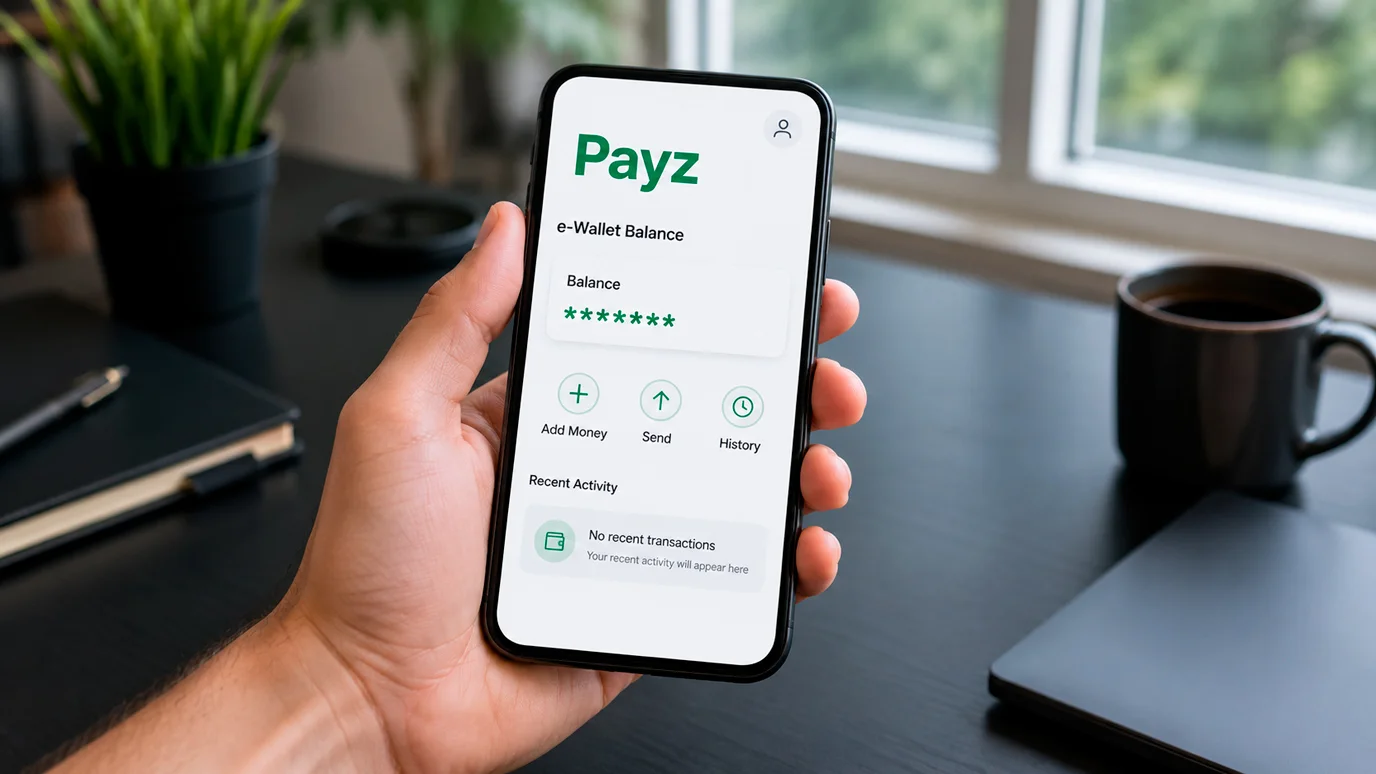
Payz is an e-wallet, which in plain terms is a digital account that sits between your bank and the sites you pay. You load it once, then spend from the balance without handing your card details to every cashier you meet. The product you open is still called an ecoAccount in places, and the older prepaid card it issued went by ecoCard — relics of the previous branding that survive in menus and help pages because nobody rushes to relabel everything overnight. That lag is exactly why a casino built five years ago might still print "ecoPayz" on its banking page in 2026.
ecoPayz = Payz. The operator, PSI-Pay Ltd, did not change. The legal entity, the licence and the account numbers all carried over, and existing balances migrated automatically. If your casino says ecoPayz and your wallet app says Payz, you are looking at one product under two names.
The reason the wallet earns its place at all is reach. It supports more than 50 currencies, including sterling, euro and US dollars, which matters enormously to a British player who does not want every deposit run through a conversion. That breadth is also why it travels well across casinos that serve more than one country from a single cashier.
e-wallet — a prepaid digital account you fund from a bank or card, then use to pay sites without re-entering your card details each time.
ecoAccount — the name for the core Payz wallet you open; ecoCard — the legacy prepaid card the service issued under its old brand.
For all the name confusion, this is no minnow. Payz ranks as the third-largest e-wallet in the space, sitting behind Skrill and Neteller — which is part of why so many UK casinos kept it on the menu through the rebrand.
What the wallet does, mechanically, is insert a layer between your bank and the sites you pay. Your card or bank details live with Payz and nowhere else; the casino only ever sees the wallet. That separation is the whole appeal for a privacy-minded player, because the casino's name does not surface on your bank statement the way a direct card deposit would. It is worth being precise about what that buys you, though: it is privacy from your bank's paperwork, not anonymity from the casino, which still verifies exactly who you are. The wallet hides the transaction from the statement, never from the operator's compliance desk.
Where Payz Fits in Britain's Licensed Casino Cashier
The short answer to "can I use it here?" is yes — at any UK casino that lists it and holds the right licence. The longer answer is the one worth your attention, because the wallet does not exist in a vacuum. It plugs into one of the most heavily regulated gambling markets anywhere, and that market sets the rules the wallet has to live inside.
Some context for scale. The British industry generated £16.8bn in gross gambling yield in the year to March 2025, up 7.3% on the year before. The online slice alone reached £7.8bn and grew 13.1%, which makes it the engine of the whole thing. When you break the market into its parts, the remote casino, betting and bingo sector accounts for 46% of it, the land-based estate another 29% at £4.8bn, and lotteries the remaining 25% at £4.2bn. Your Payz deposit lands squarely in that dominant remote slice.
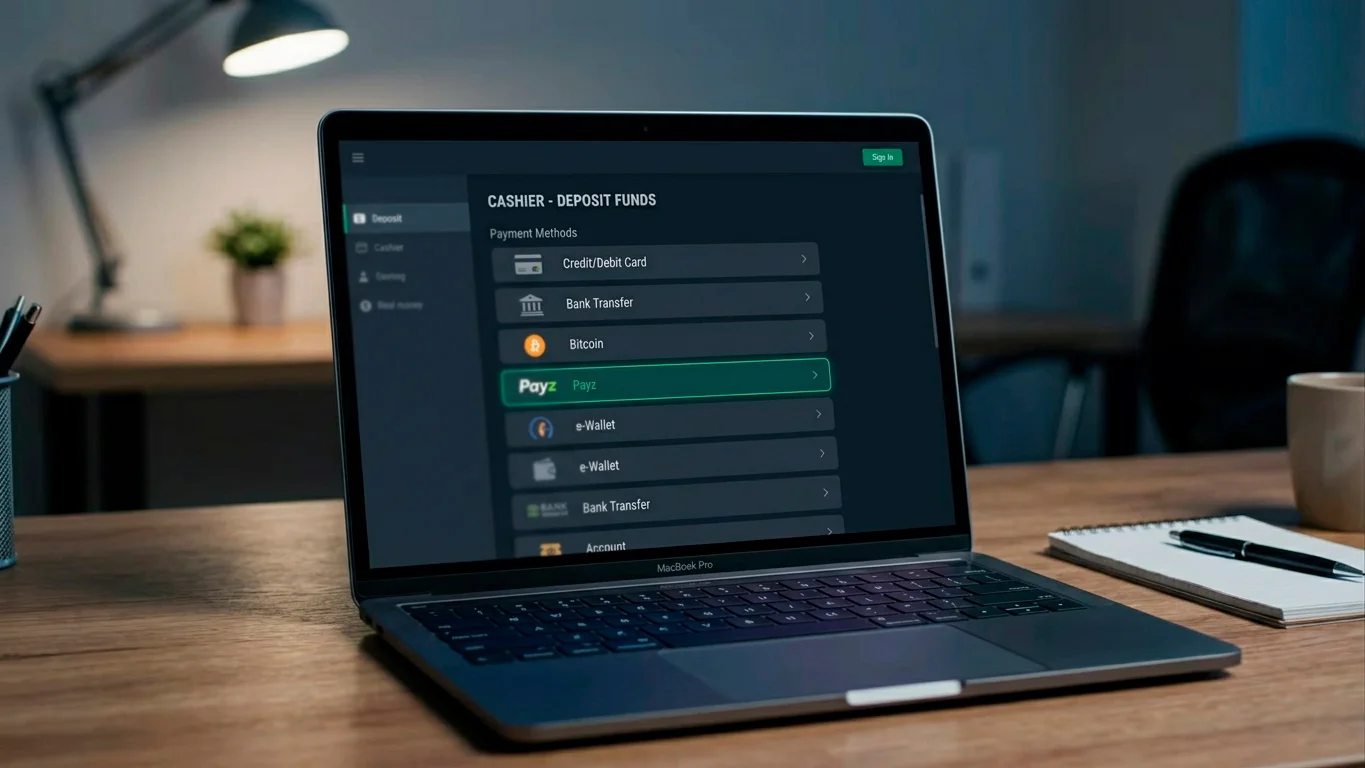
What this means in practice is that Payz at a UK casino is one cashier option among many, and the casino, not the wallet, decides whether it appears at all. A site holding a remote operating licence can list Payz, debit cards, bank transfer and a handful of other wallets, then turn any of them on or off by region. So the wallet being "accepted" is really a two-part fact: the casino chose to offer it, and your account is eligible to use it where you are.
The single check that matters before any deposit is the casino's licence, not the wallet's logo. Payz showing on a cashier page tells you nothing about whether the site is licensed in Britain. A site can display the wallet and still sit entirely outside UK protection — which is why the licence comes first and the payment method second.
Payz works at UK casinos that both list it and hold a current operating licence. The wallet rides on top of the market's rules; it never overrides them.
Money In, Money Out: The Shape of a Payz Cashier Run
The first time I benchmarked a Payz deposit against a Payz withdrawal at the same casino, the gap told the whole story. The money in took eleven seconds. The money out took the better part of two days. Neither number was the wallet's doing, and understanding why is the difference between a calm cashier experience and a frustrated support email.
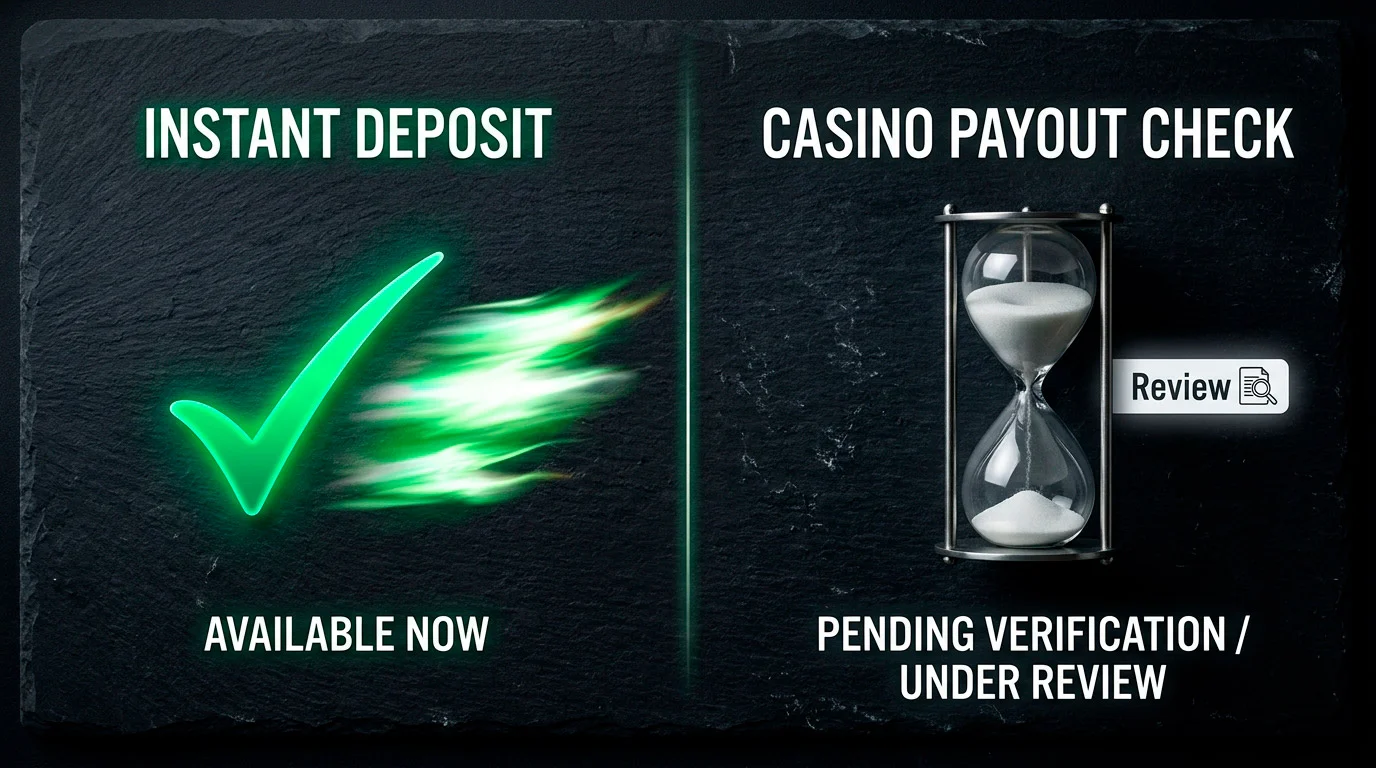
On the way in, Payz behaves like cash on a counter. You pick it at the cashier, confirm the amount, and the balance appears in your casino account almost immediately. There is no clearing window the way a card or bank transfer might carry, which is why the wallet built its reputation on speed in the first place. The market it feeds is busy enough to stress-test that speed daily — in the quarter to December 2025, players in Britain placed 27.4 billion bets and spins online, a 6% rise even as online yield dipped 2% to £1.5bn.
On the way out, the wallet steps aside and the casino takes over. A withdrawal request enters the operator's own review queue, where identity checks and anti-fraud screening run before a penny moves. Once the casino releases the payout, Payz receives it quickly — but the slow part already happened, inside the casino, before the wallet was ever involved. Players blame Payz for the wait constantly. It is almost never the culprit.
✓ Worth doing
- Match your withdrawal method to your deposit method, since most casinos return funds the way they arrived.
- Clear your casino identity checks early, before you ever request a payout.
- Keep your wallet currency aligned with the casino's to skip a conversion on the way out.
✗ Worth avoiding
- Assuming a slow payout means the wallet failed — check the casino's pending status first.
- Requesting a withdrawal before your account is verified, which only resets the clock.
- Reading the instant deposit as a sign withdrawals will be instant too. They run on different rails.
Both halves of this run deserve their own walkthrough. I have set out the full step-by-step deposit process for UK players, and separately mapped out how payout timing really plays out once a casino's review queue gets involved.
What the Wallet Actually Charges You
Most "Payz charged me" complaints I read are misfiled. The player is staring at a casino's own processing fee and pinning it on the wallet, or paying a currency conversion they could have avoided entirely. The wallet does charge, but its fees are predictable once you know where they hide.
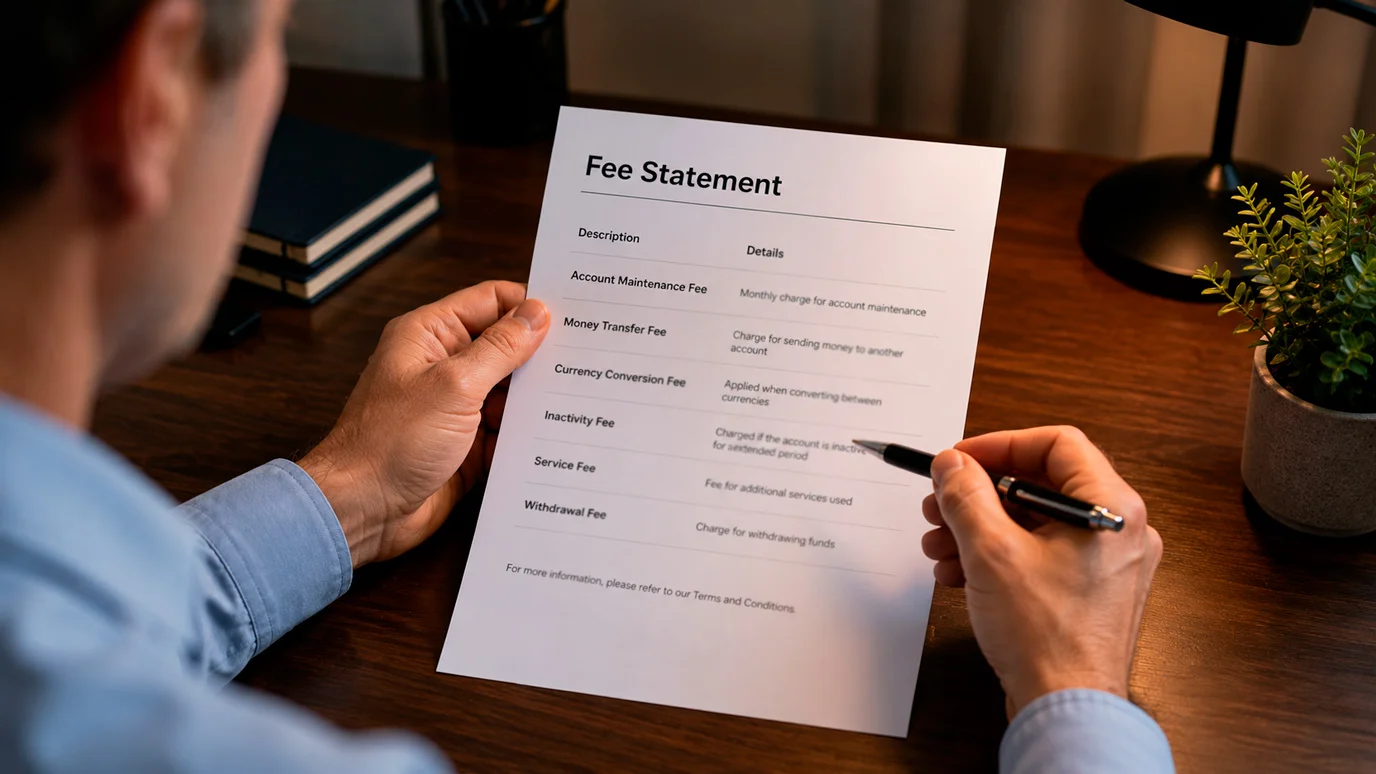
The headline charges break down into three. A peer-to-peer transfer costs around 1.5% on a Silver account and nothing once you reach Gold. Currency conversion is the one that quietly bites: 2.99% on Classic and Silver accounts, falling to 1.49% on Gold and above. And a dormant wallet attracts a monthly inactivity fee of about €1.50 once it has sat untouched, which catches seasonal players who load up before a big event and forget the balance afterwards.
| Charge type | Classic / Silver | Gold and above |
|---|---|---|
| Currency conversion | 2.99% | 1.49% |
| Peer-to-peer transfer | about 1.5% | free |
| Inactivity, once dormant | about €1.50 monthly | about €1.50 monthly |
The conversion margin is where the real money goes, so it is worth seeing in numbers.
Worked example: the cost of a currency mismatch
Suppose you hold a euro balance and deposit the equivalent of £200 at a sterling casino on a Silver account.
At the 2.99% conversion rate, the wallet skims roughly £5.98 off that single deposit.
On a Gold account at 1.49%, the same deposit loses about £2.98 — half the bite, for nothing more than holding the right tier.
Hold a GBP balance from the start and a sterling deposit converts nothing at all, which is the cheapest move of the three.
The lesson is not that Payz is expensive. It is that the wallet's cost is almost entirely a function of currency and tier, both of which you control before you ever reach a cashier.
How Safe the Wallet Is, and What That Safety Does Not Cover
I trust a payment provider the way I trust a bank: not on its marketing, but on who regulates it and what happens to my money if the company falls over. By that test, Payz holds up well — but only for the part it is responsible for, and players routinely confuse that part with the casino's.
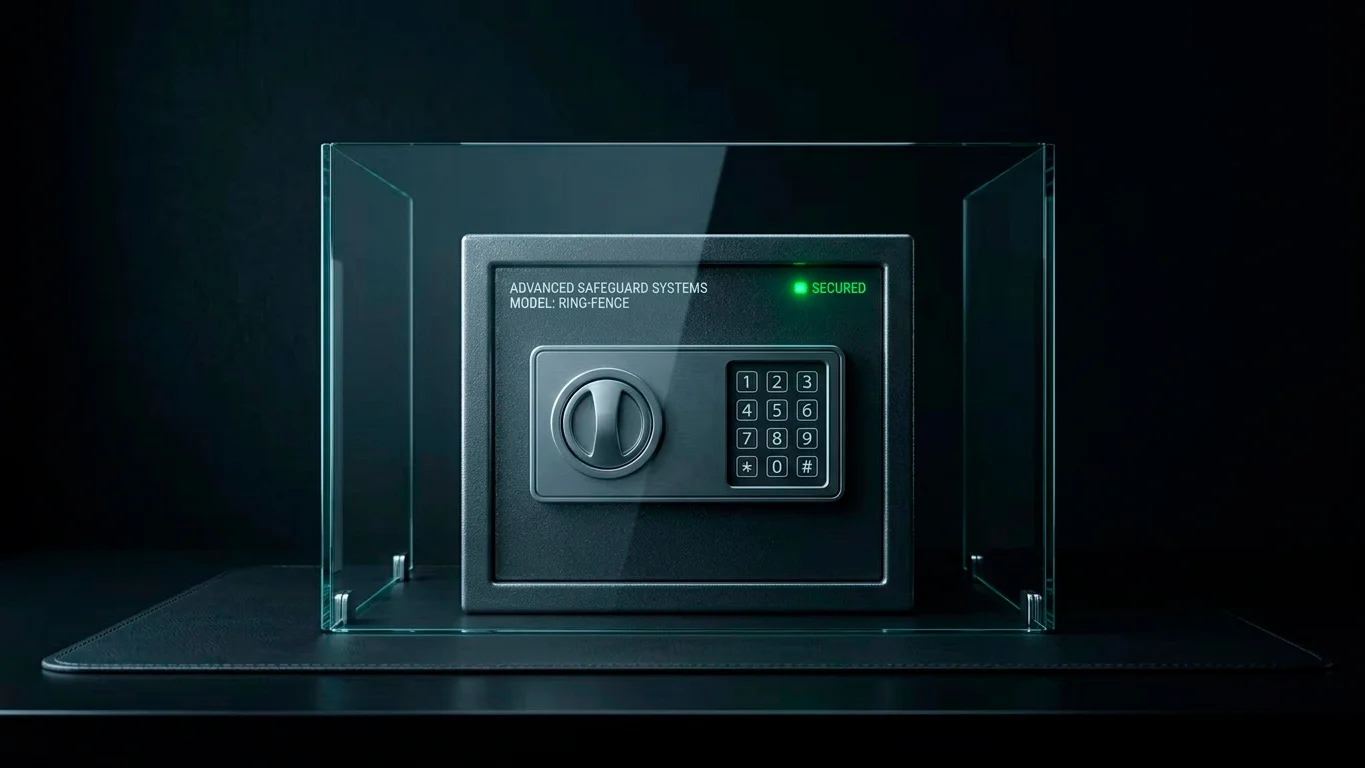
The wallet is run by PSI-Pay Ltd, authorised by the Financial Conduct Authority under registration number 900011, with the company registered in England and Wales as 05899168 and an office in Horsham, West Sussex. That is not a detail dredged up for reassurance; it is the legal spine of the whole thing. The service has operated as an FCA-recognised platform since 2008 and partnered with Mastercard from 2009 to issue prepaid cards, so this is a long-established e-money operation rather than a recent launch.
FCA — the Financial Conduct Authority, the UK regulator that authorises and supervises e-money firms like the operator behind Payz.
The most important protection sits behind a word few players know: safeguarding. Under the FCA regime, the wallet must keep customer money in separate, ring-fenced accounts that are legally insulated from the company's own funds. If the operator went bankrupt tomorrow, your balance would not be swept into the wreckage with everyone else's claims — it is held apart, for you.
safeguarding — the legal requirement that an e-money firm hold customer balances in segregated, ring-fenced accounts, protected even if the firm itself fails.
Authorised by the FCA since 2008, with balances held in ring-fenced safeguarding accounts — the wallet's money protection is regulatory, not promotional.
Here is the line players cross without noticing. A safe wallet does not make a casino safe. The FCA covers your Payz balance; it has nothing to say about whether the site you are funding holds a UK gambling licence or treats your winnings fairly. Those are two separate layers of trust, and the wallet only guards the lower one.
Verifying the wallet's regulatory standing
- The operator name should read PSI-Pay Ltd, not an unfamiliar reseller.
- The FCA registration 900011 is public and checkable on the regulator's own register.
- Look for the safeguarding language in the wallet's terms — segregated, ring-fenced funds.
Because the casino layer is the one that actually fails players, I have set out a deeper look at whether the wallet is safe for gambling, including where the real risk sits once you cross from the wallet into the casino.
The Credit Card Ban Reaches Into Your Wallet
This is the rule the spam guides get wrong, and the one that actually decides whether your deposit is legal. I have watched players treat an e-wallet as a way around the British credit card ban, loading the wallet on plastic and assuming the casino only sees "Payz" at the cashier. It does not work, and the reason is written into the licensing conditions.
Since 14 April 2020, gambling on credit cards has been banned in Britain, and the ban does not stop at the casino's payment page. It follows the money. Under the Licence Conditions and Codes of Practice, an operator may accept Payz, Skrill or Neteller only if the wallet was not funded with a credit card. The so-called wallet loophole is a myth: the ban reaches through the e-wallet to the source of the funds behind it.
The regulator did not impose this on a whim. Its own research found that 22% of online players who used credit cards were classified as problem gamblers — a concentration of harm too sharp to ignore. When the rule landed, the Gambling Commission's chief executive at the time, Neil McArthur, put the case in one flat sentence: credit card gambling can lead to significant financial harm. That is the logic the whole prohibition rests on.
Funding a Payz wallet with a credit card and then gambling at a UK casino is not a clever workaround — it breaches the conditions the casino operates under. A debit card, bank transfer or other non-credit source is the only compliant way to load a wallet you intend to gamble with. The ban is about where the money comes from, not which logo sits at the cashier.
The practical takeaway is simple. The wallet is a buffer, not a disguise. Whatever you pour into it carries its origin with it, and a credit card origin makes the eventual gambling deposit non-compliant no matter how many steps sit in between.
Vaultline payments desk · tracing tool
The Funding-Source Tracer
The credit card ban does not stop at the cashier — it follows the money through the wallet to whatever funded it. Build your wallet history below, then pick a casino deposit. The tracer answers one question three ways: how much of that deposit can be traced back to credit-card money?
Strictest reading
—
Assumes the tainted pounds leave first. This is the ceiling a compliance desk works to.
Pro-rata
—
Every pound out carries the same mix as the balance behind it. Money is treated as fungible.
First in, first out
—
Oldest money leaves first. The rule that flatters you — or convicts you, depending on order.
Add some wallet activity below to run a trace.
The ratchet
The grey staircase is your balance. The amber band is the most credit-card money the wallet could still be holding. Watch what it does: a credit top-up raises it, spending lowers it — but a later clean top-up never lifts it back up. Traceable origin only ever ratchets down.
- Wallet balance
- Traceable ceiling
- Pro-rata share
- FIFO remainder
Wallet history
Order matters more than dates here, so each line is a step. Change any amount and everything below re-traces.
| Step | What happened | Amount | Balance after | Traceable ceiling | Remove |
|---|
Why three answers, and why they never agree
When clean and credit-funded money sit in one balance, the pounds stop being distinguishable. Deciding which ones left is a rule, not a measurement — and the three rules above are the ones used in practice when mixed funds have to be untangled. Nobody is going to run this arithmetic on your wallet, and no casino asks for it. The point is what the spread between the three numbers tells you: while the ceiling sits above zero, there is no reading of your history that proves a deposit was free of credit-card money.
Two things the model deliberately does not do. It does not add the ceiling on a deposit to the ceiling on the remaining balance — each is the maximum of a different allocation, so they cannot both be true at once. And it does not treat casino winnings paid back into the wallet as a fresh clean source, because their origin is whatever funded the stake.
Illustrative model for general guidance, built on published wallet and licensing rules. Not legal, financial or compliance advice. 18+ · GamCare · National Gambling Helpline 0808 8020 133
Funded Wallet, Capped Spins: The 2025 Slot Limits
A funded wallet feels like freedom right up to the moment you open a slot. Then the United Kingdom's stake caps step in, and the size of your balance stops mattering as much as the rules governing each spin. This is where the payment method and the gameplay rules meet, and barely anyone connects the two.
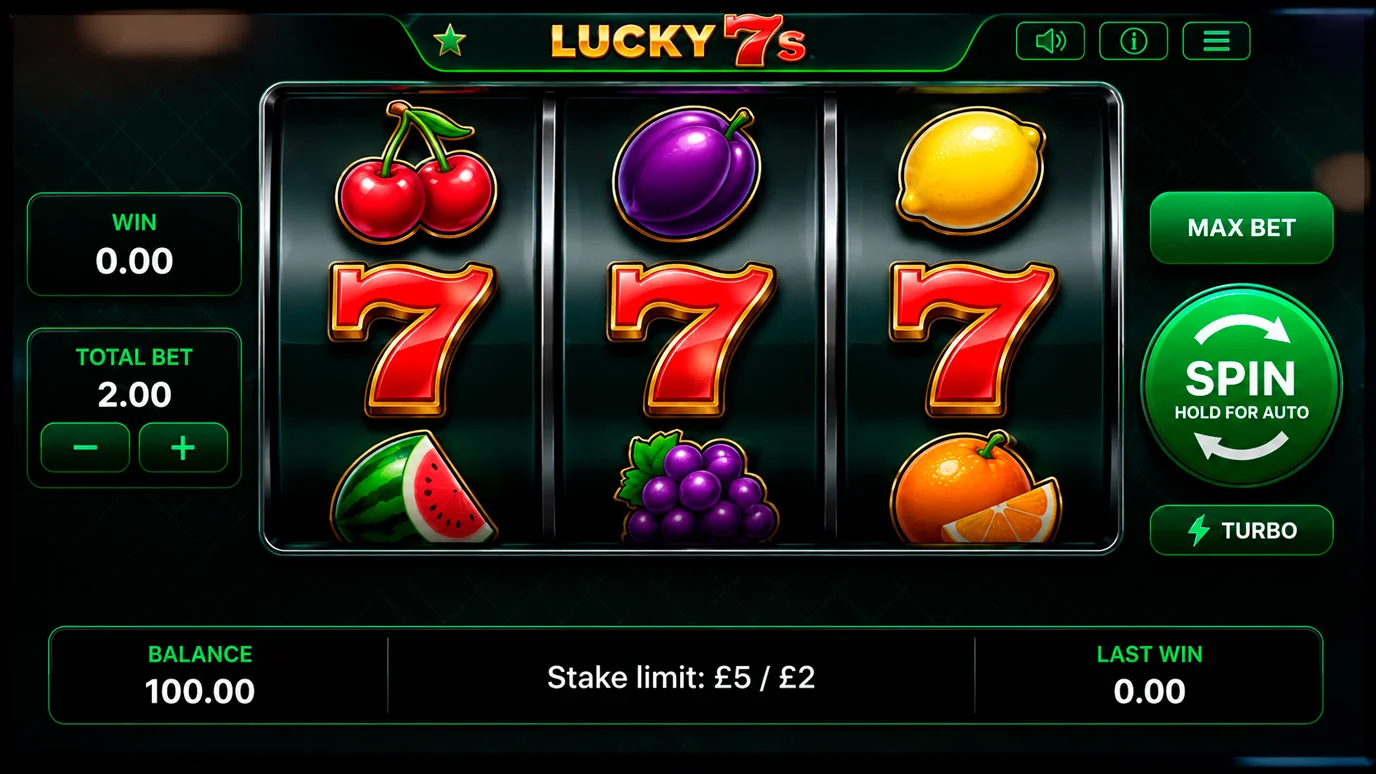
The caps arrived in two waves. From 9 April 2025, online slot stakes were limited to £5 a spin for players aged 25 and over. From 21 May 2025, a tighter £2 cap landed for the 18 to 24 age band, on the reasoning that younger players carry more risk. So the wallet can hold any sum you like; the spin itself is bounded by your age and the law.
LCCP — the Licence Conditions and Codes of Practice, the Gambling Commission rulebook that operators must follow, including the slot stake limits and the credit card restriction.
For most players the caps change less than the headlines suggest, because the average online slot stake in Britain is just £0.60 — well under either limit. The limits bite at the top, not the middle. The gambling minister, Baroness Twycross, was careful to frame the caps as a ceiling rather than a target, putting it that online slots stake limits should serve as a maximum stake that customers should choose to stake up to. In other words, the cap is the most you may stake, not a level the design nudges you toward.
£5 a spin for players 25 and over, £2 for those aged 18 to 24 — against a national average online slot stake of just £0.60.
The point for a Payz player is that funding and staking are two separate decisions. Loading the wallet says nothing about how the game will let you bet; the stake cap is fixed by regulation the instant you reach the reels.
Self-Exclusion, the Wallet, and Knowing When to Step Back
Some of the most useful conversations I have are with players who want to know whether keeping a Payz wallet means they can never take a break. The relief on their faces when I explain how the two systems actually interact tells me the confusion is widespread and worth clearing up.

By the end of 2025, 562,000 people had registered with Gamstop, the national self-exclusion scheme, which is roughly 1% of the adult population. That number keeps climbing, and the climb is not a sign the tools are failing. Gamstop's chief executive, Fiona Palmer, reads it the other way around, saying the continued year-on-year growth in registrations highlights the ongoing and increasing need for effective self-exclusion tools. Demand for a brake is not the same as a brake that does not work.
Gamstop blocks your access to UK-licensed casinos. It does not freeze your Payz wallet. The wallet keeps working for everything that is not gambling, because the self-exclusion sits at the casino's door, not on your money. That distinction is why a wallet and a self-exclusion can coexist without conflict.
The wider backdrop is why any of this matters. Across the adult population, 2.7% now score 8 or above on the standard problem-gambling scale, up from 2.5% — a small percentage that translates into a great many people once you apply it to the whole country. Self-exclusion exists because the harm is real and measurable, not theoretical.
562,000 people registered with Gamstop by the end of 2025 — about 1% of UK adults — while 2.7% of adults now score in the problem-gambling range.
If you ever feel the wallet is making gambling too frictionless rather than just convenient, that is itself a signal worth heeding. Gamstop is free, it is fast, and the wallet keeps running for the rest of your life while the casinos stay shut. Anyone struggling with their gambling can reach confidential support through GamCare and the National Gambling Helpline.
Reading a Casino's Cashier Like an Auditor
When I assess a casino, I do not start with its game library or its welcome page. I start at the cashier and the footer, because that is where a site either proves it sits inside the British system or quietly admits it does not. A Payz logo is the last thing I look at, not the first.

The market gives you a baseline of legitimacy to test against. Britain runs 8,234 licensed gambling premises, a number that actually fell 1.1% over the year, and every remote operator serving UK players must hold a current operating licence. The licence is checkable, public and specific, and a site unwilling to state its licence number clearly is telling you something before you have read a word of its terms.
Enforcement is real, which is the reassuring part. Operators that breach anti-money-laundering or social-responsibility rules face penalties with teeth — NetBet Enterprises Limited was ordered to pay £650,000 over exactly those failings. That a regulator imposes fines like that is a feature of the system, not a flaw; it is the mechanism that keeps the licensed estate honest.
What I check before any cashier I assess
- A clearly stated UK operating licence number, verifiable on the regulator's register.
- A cashier page that names PSI-Pay and explains fees and limits without burying them.
- Participation in Gamstop, signalled openly rather than hidden.
- Transparent terms on withdrawals, including the same-method return rule.
✓ Worth doing
- Confirm the licence on the regulator's register, not just the casino's footer.
- Read the cashier's fee and limit notes before funding.
✗ Worth avoiding
- Treating the presence of Payz as evidence the site is licensed.
- Ignoring vague or missing withdrawal terms because the deposit was easy.
Turning these checks into a working method takes more room than an overview allows, so I have set out the full approach to how to pick a licensed Payz casino, signal by signal.
Payz Against the Other Wallets in the Drawer
Players ask me which e-wallet is "best" as if there were a podium. There is not. The three big names do roughly the same job, and the right one depends on your currency, your fees and which casinos you actually use. What is true is that the preference for wallets over cards is no fad: surveys put e-wallet preference among online players at 68%, chosen for safety and speed over plastic.
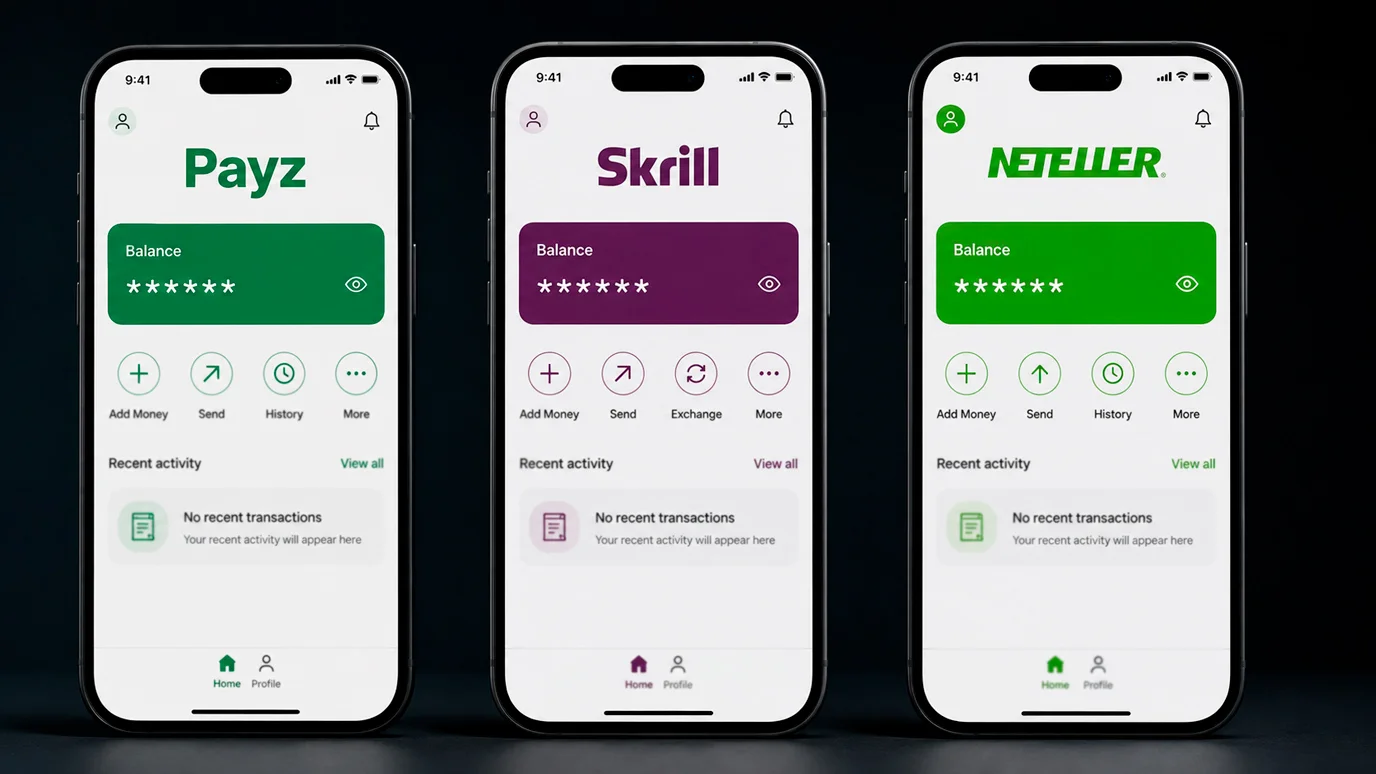
Payz sits third by size, behind Skrill and Neteller, and that ranking hides a structural quirk worth knowing. Skrill and Neteller share a single owner, the Paysafe group, while Payz runs independently under PSI-Pay. For a player, that can mean Skrill and Neteller are sometimes treated as one provider by a casino's bonus or limit rules, whereas Payz stands on its own.
| Characteristic | Payz | Skrill | Neteller |
|---|---|---|---|
| Market position | Third-largest e-wallet | Long-established, larger | Long-established, larger |
| Ownership | Independent, PSI-Pay | Paysafe group | Paysafe group |
| Currency support | 50+ currencies | Wide | Wide |
| Treated as one provider? | Stands alone | Often paired with Neteller | Often paired with Skrill |
The practical upshot is that the choice rarely comes down to brand prestige. It comes down to whether you can hold your balance in GBP without a conversion, how a given casino treats each wallet in its terms, and which one its cashier actually lists.
The fee-by-fee, speed-by-speed detail is more than this section can carry, so I have built out the full wallet-by-wallet comparison for UK casino players.
The Market Your Wallet Plugs Into
It is easy to treat a payment method as a private thing, just you and a cashier. It is not. Every Payz deposit drops into one of the largest regulated gambling markets on earth, and the shape of that market explains why the wallet is built the way it is — and where the regulator keeps pointing its attention.
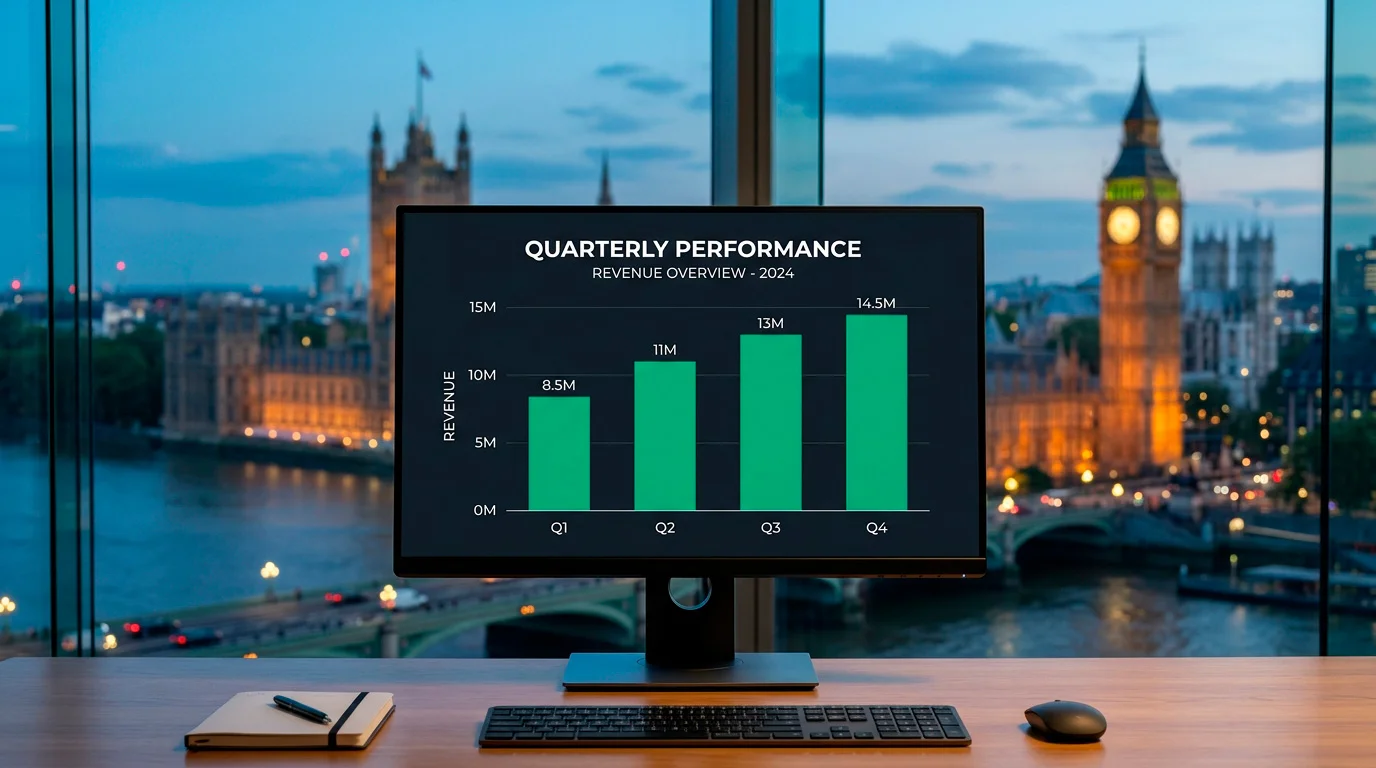
Online casino games generated £5bn in gross yield, up 14.9% on the year — the fastest-growing slice of a fast-growing market.
Within that online casino figure, the concentration is striking. Slots alone produced £4.2bn, which is 83.5% of all online casino yield. When the Gambling Commission talks about online gambling, it is overwhelmingly talking about slots, and that is precisely why the stake caps landed there first. A wallet that funds online play is, in statistical terms, mostly funding spins on a reel.
Online slots produced £4.2bn — 83.5% of all online casino yield — which is why the 2025 stake caps targeted slots specifically.
The human scale behind those pounds is roughly 22.5 million gambling consumers across Britain. That is the population your wallet joins the moment you fund a casino — a market large enough that small percentage shifts in harm or spend translate into very real numbers, and large enough that the rules wrapped around it are not going to loosen any time soon.
There is a second reason the market figures matter to a payments analyst rather than just an economist. A regulator watching £5bn of online casino yield grow at nearly 15% a year is a regulator that keeps tightening the screws on how money flows in and out. The credit card ban, the safeguarding rules behind your wallet, the stake caps on the games you fund — all of it is downstream of a market the Commission considers too large and too fast-moving to leave alone. The wallet you choose is, in effect, riding the same regulatory current as everything else in this report.
Knowing the market matters because it reframes the wallet. Payz is not a way to slip past the system; it is a regulated rail running straight through the middle of it, carrying your money into the most scrutinised gambling economy in Europe.
Straight Answers on Payz at UK Casinos
Is ecoPayz the same as Payz?
Yes. ecoPayz was renamed Payz on 11 May 2023, and it is the same wallet run by the same operator, PSI-Pay Ltd. The legal entity, the FCA authorisation and your account numbers all carried over, and balances migrated automatically. Casinos and players keep using the old name out of habit, which is why you still see "ecoPayz" on cashier pages even though the product is Payz.
Can I use ecoPayz or Payz at UK casinos?
You can use it at any UK casino that both lists the wallet on its cashier and holds a current operating licence. The casino decides whether to offer Payz and may enable or disable it by region. The wallet appearing on a banking page is not by itself proof the site is licensed in Britain — the licence is the check that matters, and it comes before the payment method.
Is ecoPayz safe and FCA-regulated for gambling?
The wallet itself is regulated. Its operator, PSI-Pay Ltd, is authorised by the FCA under registration 900011 and has run as a recognised platform since 2008. Your balance is held in ring-fenced safeguarding accounts, protected even if the operator failed. What that regulation does not cover is the casino — a safe wallet does not make a site safe, so the casino's own UK licence is a separate layer of trust you have to check yourself.
Can I fund my ecoPayz wallet with a credit card to gamble in the UK?
No. The UK credit card gambling ban has applied since 14 April 2020, and it reaches through e-wallets to the funding source. A casino may accept Payz only if the wallet was not loaded with a credit card. Topping up the wallet on plastic and then gambling is not a loophole — it breaches the conditions the casino operates under. A debit card, bank transfer or other non-credit source is the compliant route.
How long do ecoPayz casino withdrawals take?
The wallet receives funds quickly once the casino releases them, so the real timing depends on the casino, not Payz. A payout request enters the operator's review queue, where identity and anti-fraud checks run before any money moves. That review is the slow part and can take from a few hours to a couple of days. Clearing your verification early and using the same method you deposited with both shorten the wait.
What fees does ecoPayz charge at casinos?
Many casinos add no charge of their own for a Payz deposit, so the fees you meet are usually the wallet's. The main ones are currency conversion at 2.99% on Classic and Silver accounts, falling to 1.49% on Gold and above, a peer-to-peer transfer fee of around 1.5% on Silver that disappears at Gold, and a monthly inactivity fee of about €1.50 once a wallet sits dormant. Holding your balance in GBP avoids the conversion margin entirely.
Do I need to verify my identity before withdrawing with ecoPayz?
Yes, on two fronts. The wallet runs an account-tier system — Classic, Silver and Gold — where higher verification unlocks higher limits and lower fees, so cashing out a larger sum often means clearing a higher tier. Separately, the casino runs its own identity checks under UK rules before releasing a payout. Doing both early, rather than at the moment you want your money, is the single biggest thing that prevents a stalled withdrawal.
What Actually Decides Whether Payz Works for You
Strip away the name confusion and the marketing noise, and the wallet is straightforward. ecoPayz and Payz are one product, regulated by the FCA, running a clean rail into and out of British casinos. The questions that actually matter are not about the wallet's reputation — they are about the things you control and the rules you cannot.
The things you control are currency and tier. Hold GBP and you sidestep the conversion margin that quietly eats deposits. Reach the right tier and you halve the fees that remain. Clear your verification before you ever request a payout and the casino's review queue stops feeling like a black hole. None of that depends on the wallet being clever; it depends on you setting it up deliberately.
The rules you cannot control are the British ones, and they are the part the rest of the internet keeps fumbling. The credit card ban reaches into the wallet, so the source of your funds matters as much as the logo at the cashier. The slot stake caps bound your play the instant you hit the reels, whatever your balance. And the casino, not the wallet, decides whether your money is genuinely protected — which is why its licence is the first thing to verify and the last thing to take on trust.
Payz is a regulated buffer between your bank and a casino, not a way around anything. Set the currency and tier yourself, fund it from a non-credit source, verify early, and check the casino's licence before the wallet's logo. Do that, and the e-wallet does exactly the quiet, fast job it was built for.
Articles
Payz vs Bank Transfer
A reader once told me he had stopped using e-wallets entirely because, in his words, "why add a middleman when the bank can just send the money?" It is a…
Non-UKGC Licensed Casinos: Rules and Risks
Non-UKGC status places a casino outside the UK Gambling Commission’s system; the…
Greentube Online Casinos in the UK: Game Guide
A catalogue can describe game mechanics, but provider names, lobby availability and…
£10 Minimum Deposit Casinos in the UK: What to Know
The advertised deposit floor is only one part of how an account…
Created by the "Vaultline" editorial team.