
ecoVoucher Casino Deposits: The Prepaid Cousin Explained
 Available in GB
People assume ecoVoucher and Payz are the same thing wearing different hats, and the confusion is understandable given the shared family resemblance. Then they try to withdraw winnings to their voucher and discover it does not work that way, because a voucher is not an account. That moment of surprise is what this piece exists to prevent.
ecoVoucher is a prepaid voucher — a code carrying a fixed value that you buy and then spend — and it sits alongside the wallet as a related but fundamentally different product. It is brilliant for one specific job and useless for another, and knowing which is which saves you from expecting it to do something it was never built to do. The voucher deposits; it does not receive.
So let me set out what ecoVoucher actually is, where it shines, and the one limitation that catches everyone out. This is a product with a genuinely useful narrow purpose, and the trouble only ever comes from asking it to be a full wallet when it is something simpler and more focused by design.
What a Prepaid Voucher Actually Is
Strip it to basics: an ecoVoucher is a prepaid code with a set amount of money attached, much like a gift card you buy for a fixed value and then redeem. You purchase the voucher, you receive a code, and you spend that code’s value — that is the entire mechanism.

The defining feature is that it is self-contained and prepaid. The value is fixed at purchase, the code carries that value, and once you have spent it the voucher is done. There is no account behind it accumulating a balance, no login, no ongoing relationship — just a code worth a specific sum. This is what makes it feel different from the wallet even though they come from the same stable. A wallet is a container you fill, empty and refill; a voucher is a single-use token of predetermined worth. The voucher is closer to cash in an envelope than to a bank account, and that is precisely its appeal for players who want strict control. You cannot overspend a voucher, because it only ever holds what you bought into it. The amount is the amount, full stop.

That fixed-value character is the key to understanding both its strengths and its single big limitation, which flow from the same root. Everything good about a voucher and the one frustrating thing about it come from the fact that it is a prepaid, one-directional token rather than a two-way account.
Best casino sites in the UK
- BeOnBetBonus: 100% up to €500 + 100 FS · Payout speed: 1-3 business days
- EvoSpinBonus: 125% up to €2500 + 125 Free Spins · Payout speed: 1-3 business days
- BritsinoBonus: Welcome Package – Get your £2,200 + 2,000 FS · Payout speed: 1-3 business days
- Revery PlayBonus: 100% up to€1,000+ 100 FS · Payout speed: 1-3 business days
- SlotoSportBonus: 500% up to £ 10 200+ 777 FS · Payout speed: 1-3 business days
- ZombillionBonus: Welcome Pack 250% up to £4000 + 200 FS · Payout speed: 1-3 business days
Where the Voucher Genuinely Shines
For one particular kind of player, the prepaid voucher is close to ideal, and it is worth being clear about who that is. If your priority is hard budget control and minimal data exposure at the cashier, a voucher does something a full account cannot match.

The budgeting benefit is concrete. Because a voucher carries only its fixed value, depositing with one means you can never put in more than you bought — the spending limit is physically built into the product rather than relying on your willpower in the moment. That is a genuinely powerful tool for anyone who wants a hard ceiling on a session, and it dovetails with the wider direction of UK gambling regulation, which has been steadily building structural limits into play; the new online slot stake caps of £5 per spin for those aged 25 and over, and £2 for younger adults, reflect the same philosophy of designed-in limits rather than relied-upon restraint. A voucher applies that logic to your deposit itself. It also keeps your exposure minimal at the point of paying, since you are redeeming a code rather than connecting an account full of history. For a careful, deposit-focused player, that combination is exactly right.

This is why I never dismiss the voucher as merely a lesser wallet. For the specific job of putting a controlled, capped amount into a casino with minimal fuss, it is arguably better than a full account, precisely because its limitations are doing useful work. The fixed value is not a weakness here; it is the whole feature.
The One Thing It Cannot Do
Now the limitation that catches everyone, and it follows directly from the voucher being prepaid and one-directional. You cannot withdraw winnings to an ecoVoucher, because a voucher is a way to put money in, not a place to receive it. It points one way only.
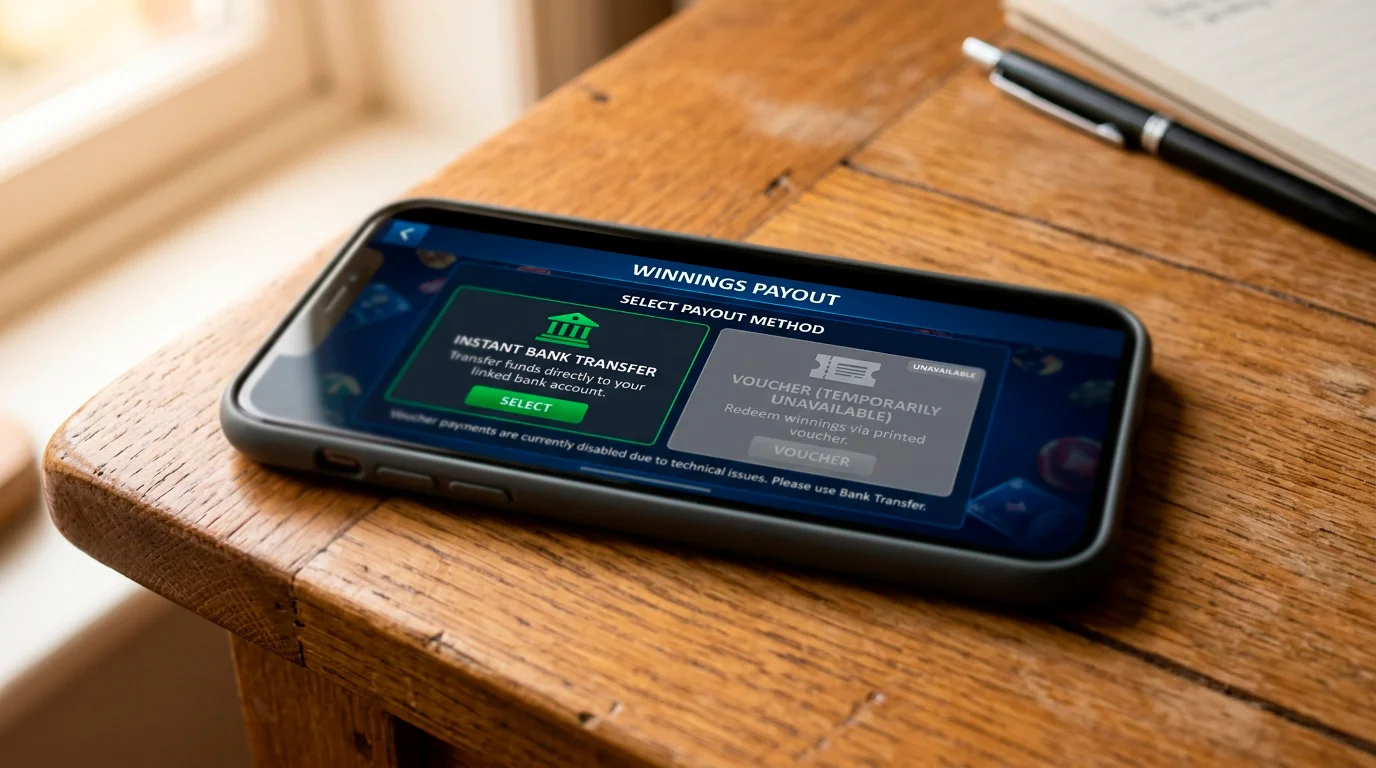
This is the source of nearly every complaint I hear about the product, and it is not a fault — it is the design. A voucher has no account behind it to hold incoming funds, so when you win, the casino cannot pay you back to a code that has already been spent. You will need a different method to receive a withdrawal, typically a full wallet or a bank route, which means a voucher user has to think about deposits and withdrawals as two separate arrangements rather than one round trip. The deposit-only nature is the trade you accept in exchange for the budgeting control, and it only stings if you expected the voucher to behave like an account. Plan for it and it is a non-issue; assume otherwise and it is a nasty surprise at exactly the wrong moment. The voucher’s job ends the instant the money is in.
So treat the voucher as the focused tool it is. Use it for controlled deposits where its hard cap is a feature, and arrange a separate, capable method for receiving anything you win. If you are thinking about deposit control more broadly, the voucher fits naturally into the wider question of how much you need to put in to start, which I cover in the breakdown of the ecoPayz casino minimum deposit. Understood for what it is, the voucher is excellent. Expected to be something it is not, it only disappoints.
Written by the editors at Vaultline.