
ecoPayz Casinos Not on Gamstop: Why They Carry Real Risk
 Available in GB
This is a search people make when they are trying to get around something, and I would rather be straight with you than coy. A casino “not on Gamstop” is a casino that ignores the UK self-exclusion register, which means it is operating outside the UK licensing system — and that is not a feature, it is the whole problem. The phrase markets itself as freedom. What it actually describes is a site with no obligation to protect you.
I am not going to point you toward any of these sites, name them, or explain how to reach them, because doing so would be helping you walk into the exact harm this page exists to flag. The honest version is that the moment a casino sits outside UKGC licensing, every protection you take for granted on a regulated site disappears at once: dispute routes, fair-payout obligations, funding safeguards, the lot. The wallet might still send money there. That is not the wallet endorsing the site — it is simply a payment tool with no way of knowing the destination is unlicensed.
The reason this matters is not abstract. Around 2.7% of UK adults score at the level associated with problem gambling, up from 2.5%, and that figure is climbing, not falling. Non-Gamstop sites cluster around exactly the people the register was built to protect — those who self-excluded for a reason and are now looking for a way back in. So I will treat this as a risk briefing, not a guide: what the phrase really means, what you surrender by using such a site, and the genuinely safer routes if you reached this page during a hard moment.
What “Not on Gamstop” Really Means
Strip the phrase of its marketing gloss and it means one thing: this site does not check the UK self-exclusion register, because it is not required to, because it is not licensed in the UK. Everything else follows from that. “Not on Gamstop” is not a payment feature or a bonus type. It is a description of a casino that operates beyond the reach of the UK regulator.

Gamstop is a UK Gambling Commission requirement — every licensed operator must check it and turn away anyone registered. A site that does not check it has, by definition, opted out of the UK licence that would compel it to. So the same words can be read two ways. The way they are sold to you is “no annoying restrictions.” The way they actually function is “no UK oversight, no UK obligations, no UK recourse if it goes wrong.” Those are the same sentence.
The reason this resonates with a particular reader is uncomfortable but worth saying plainly. Almost nobody searches for a non-Gamstop casino unless they are already on Gamstop, which means they have already self-excluded — already told the regulated system, in effect, “stop me.” A site advertising that it will not stop you is advertising that it will undo the protection you put in place. That is not a loophole working in your favour. It is the safety mechanism being deliberately bypassed by an operator that profits from the bypass.
The Protections You Give Up
Let me lay out the trade in concrete terms, because “you lose protections” is too vague to land. On a UK-licensed casino, a thick layer of rules sits between you and the operator. Step outside that licence and the entire layer vanishes in one move.

You give up the funding safeguards. The credit-card ban for gambling, in force since 14 April 2020 and written into licence condition 6.1.2 precisely to keep people from betting with borrowed money, binds licensed operators — not offshore ones. So a non-Gamstop site may happily take credit-funded deposits the UK system forbids, reopening the most direct route to the kind of debt-fuelled harm the ban was built to stop. You give up fair-payout and dispute protections too: a licensed casino answers to the regulator if it refuses a withdrawal or buries unfair terms, while an unlicensed one answers to no one you can reach. If it decides not to pay, there is no UK body to escalate to.

And you give up the self-exclusion you chose. The regulator’s former chair Jenny Watson described the licensed system as “well-positioned to achieve the important objective of making gambling safer for everyone” — a system that only works because operators inside it honour the register. An operator outside it honours nothing. The protections are not bureaucracy you are cleverly escaping; they are the difference between a fight you can win and one you cannot. If safety is even part of your reason for being here, the regulated wallet-and-casino safety story is the one worth reading instead, and I have set it out in the piece on whether ecoPayz is safe for gambling.
Safer Routes If You Need a Break
If you landed here in a difficult moment — restless during a self-exclusion, tempted to find a way back in — I want to talk to that directly, because the better answer is not a different casino. It is leaning into the thing that is already working for most people who use it.
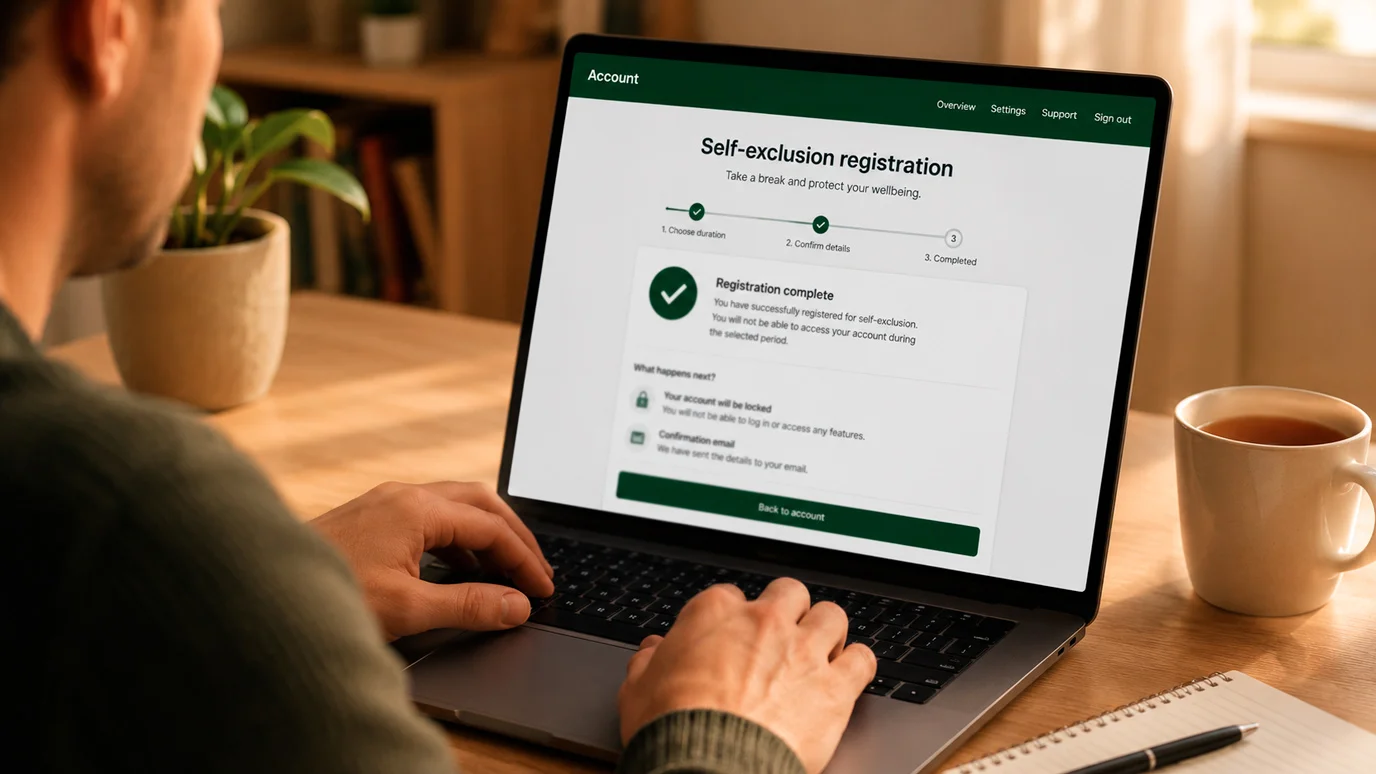
Self-exclusion is effective: an independent study found that 75% of Gamstop users stopped gambling online. Three in four. That is not a tool failing you that you need to escape — it is a tool succeeding, and the urge to get around it is usually the exclusion doing exactly its job at the hardest part of the process. The restless period passes. The harm of finding a route around it during that period does not pass nearly so cleanly.

So the safer routes are the boring, sturdy ones. Keep the gambling money out of your wallet entirely, so the means is not sitting ready. Lean on the support designed for these moments rather than testing whether a wallet can still reach somewhere it should not. And give the exclusion time to do what it does for the majority — quietly remove the option until the urge to use it has gone. A non-Gamstop site does not offer freedom. It offers the removal of the one barrier you deliberately built, at the precise moment you most need it standing.
Published by the Vaultline team.