
Is ecoPayz Safe for Gambling? FCA Status and Safeguarding Explained
 Available in GB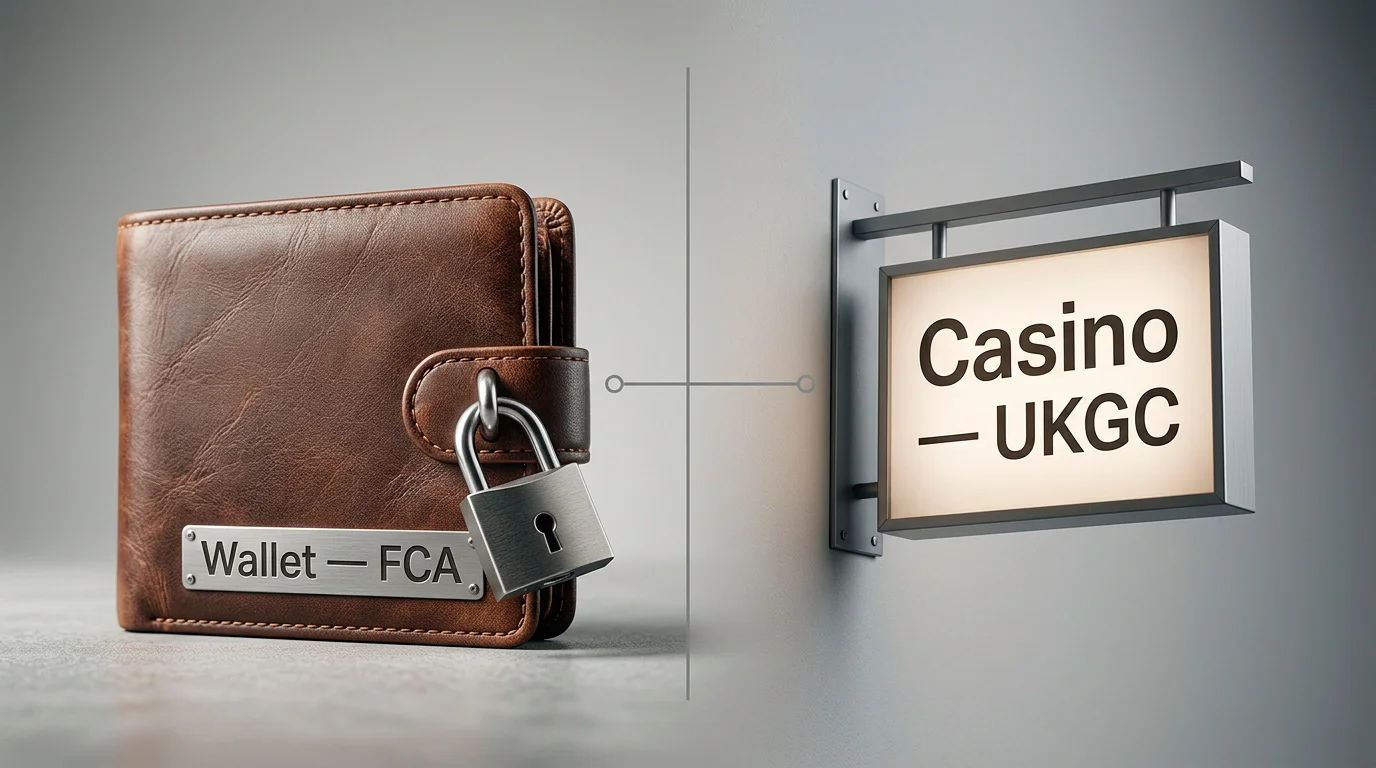
Whenever someone asks me whether ecoPayz is safe for gambling, I ask them a question back: safe in which sense? Because the word is doing two completely different jobs in that sentence, and the confusion between them is responsible for most of the bad decisions I see UK players make. There is the safety of the wallet, which is a question about a regulated payment company. And there is the safety of the casino you point the wallet at, which is an entirely separate question about a gambling operator. A perfectly safe wallet sending money to a dangerous casino is not a safe situation, and conflating the two is how people end up trusting a site they should have run from.
Let me answer the narrow version first, because it has a clean answer. The wallet itself, now called Payz and previously ecoPayz, is about as established and supervised as e-wallets get. It has been recognised as a safe payment platform since 2008, it has run a Mastercard partnership since 2009, and it sits under a regulatory regime that exists specifically to protect customer money. So as a place to hold and move funds, the wallet is on solid ground. The harder, more useful part of the answer is what that regulation actually does and does not protect, where the real risk in gambling sits, and why a safe wallet is necessary but nowhere near sufficient. That is what the rest of this guide is for.
Once you are confident in the FCA safeguarding measures, it is equally important to familiarise yourself with ecoPayz casino withdrawal times before requesting your first payout.
FCA Authorisation and Safeguarding of Your ecoPayz Balance
People throw around “FCA regulated” as if it were a magic word, and casinos know it, which is why you see the phrase splashed across payment pages with no explanation of what it means. So let me strip the mystique off it, because the protection is real but specific, and knowing its edges is more useful than believing it covers everything.
The Financial Conduct Authority is the UK’s financial regulator, and Payz is operated by PSI-Pay Limited, authorised under reference number 900011 and registered as company 05899168 in England and Wales, with its office in Horsham, West Sussex. Those are not decorative details; they are the verifiable identity of a real, accountable company you can look up. Authorisation means PSI-Pay has met the FCA’s standards for handling electronic money, that it is subject to ongoing supervision, and that it must follow rules designed to keep your funds available and your data protected. This is a genuinely higher bar than an unregulated payment app clears, and it is the foundation of the wallet’s trustworthiness.
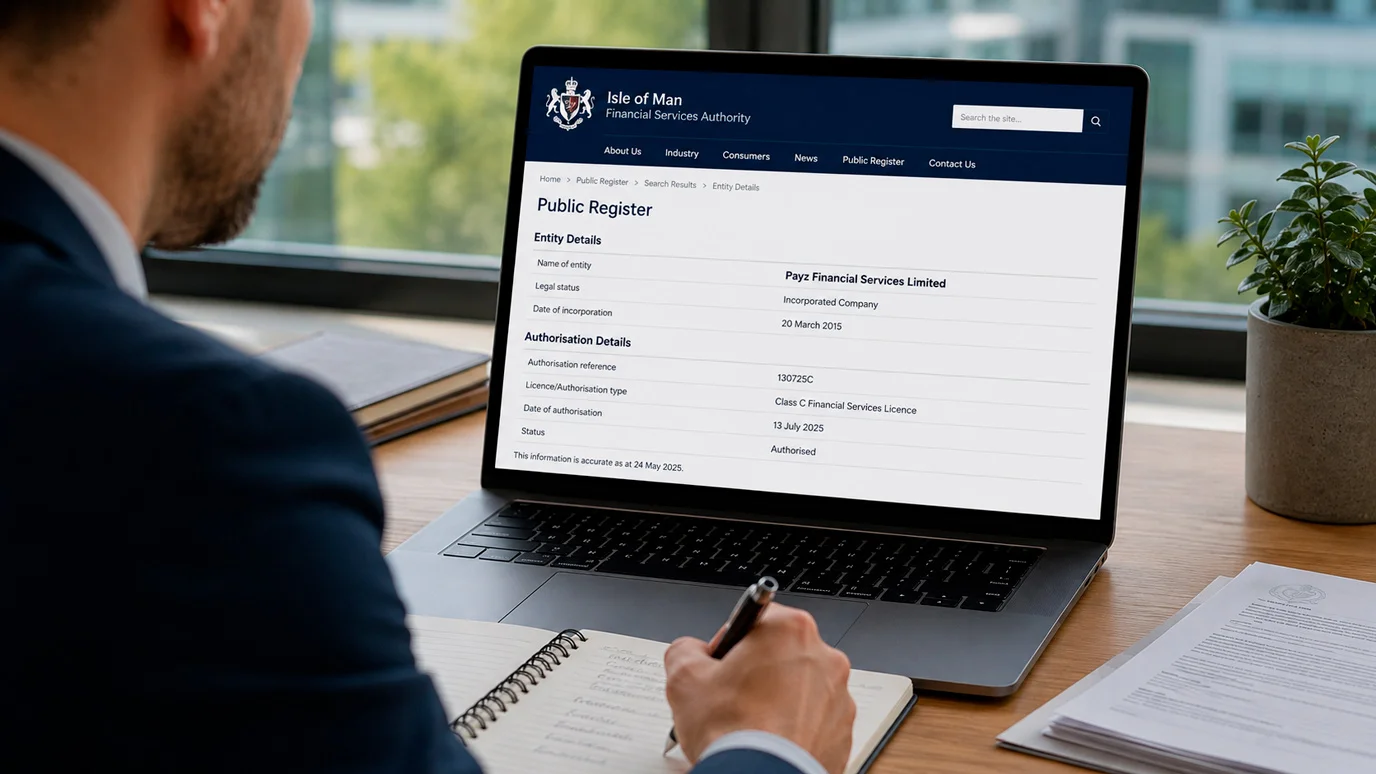
What it does not do is touch your gambling. The FCA regulates the wallet as a money service; it has nothing to say about whether the casino you send money to is licensed, fair or solvent. That is a different regulator’s job entirely. So the FCA layer makes the wallet a safe container for your money, full stop. It does not bless, vet or insure the destination. If you want to go deeper on the company behind the licence and exactly what its authorisation covers, I have written a full piece on who owns Payz and PSI-Pay, because understanding the operator is the foundation of trusting the wallet, and it is the half of the safety question players most often skip.
It is worth being concrete about how this differs from the alternatives, because “regulated” only means something against an unregulated baseline. A casual money-transfer app with no e-money authorisation can hold your balance on far looser terms, can change those terms with little oversight, and offers you limited recourse if it mishandles your funds. An FCA-authorised firm cannot quietly do those things; it operates under supervision, reporting obligations and conduct rules, and the authorisation can be checked, suspended or withdrawn by a regulator with teeth. That is the gap you are buying when you choose a regulated wallet over an unregulated one, and for money you intend to move in and out of gambling sites, where disputes and freezes are an everyday reality, that supervised status is exactly the kind of backstop you want underneath the balance.
Where your money sits, and why that matters
The question that should keep you up at night is not “is the wallet secure?” but “if the company running it collapsed tomorrow, what happens to my balance?” Most people never ask it, because they assume a balance in an app behaves like a balance in a bank. It does not, and the difference is the single most important safety feature Payz has.
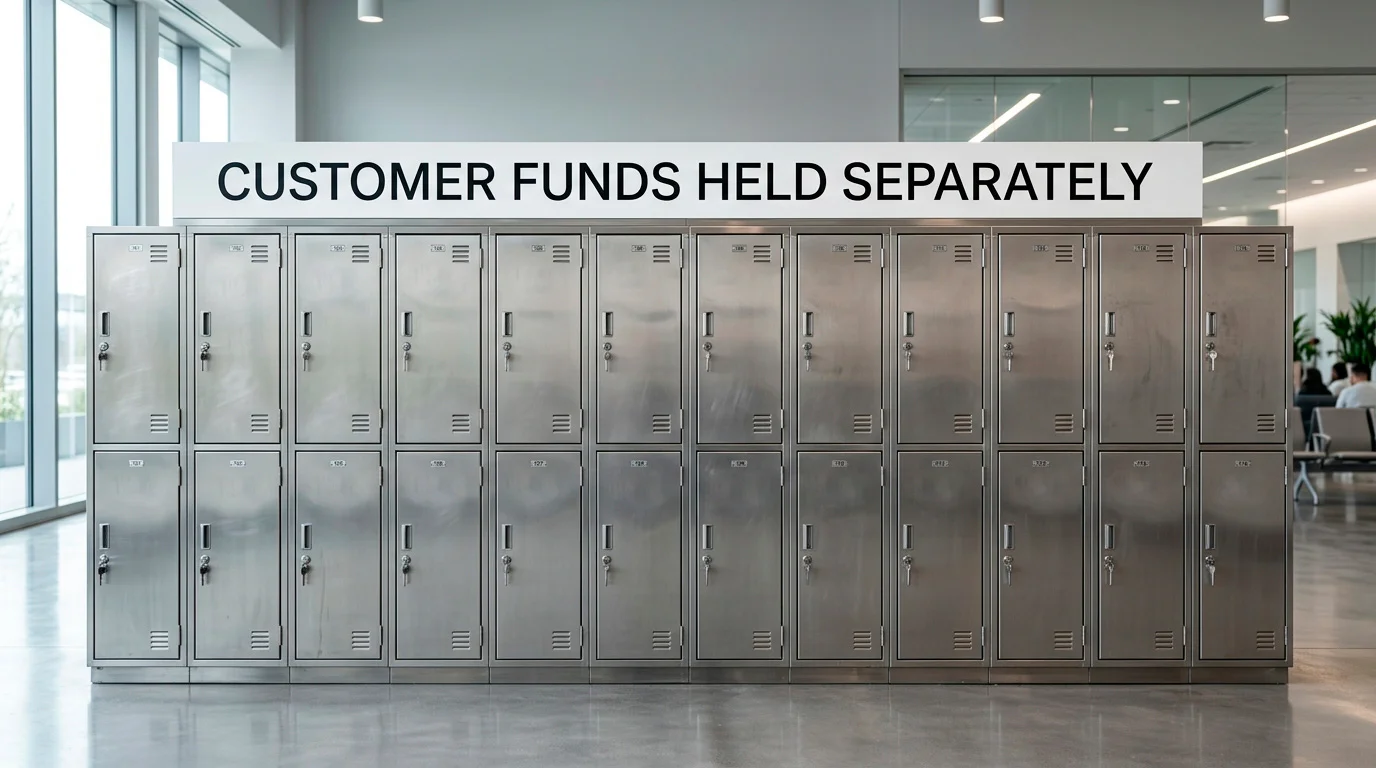
Under the FCA regime, an e-money firm is required to safeguard customer funds, which in plain terms means keeping your money in separate, ring-fenced accounts rather than mixing it with the company’s own operating cash. The practical consequence is enormous: those funds are legally protected even if the operator becomes insolvent. Your balance is not an IOU from a company that might go under; it is your money, held apart, that creditors cannot raid if the business fails. That is a stronger position than holding cash with many unregulated payment services, where your “balance” is really just an entry in a ledger backed by the company’s continued existence.
This is the feature I point to when someone asks why I trust a wallet at all. It is not the encryption or the app login, useful as those are. It is the regulatory requirement that turns a digital number into legally protected money. Safeguarding is also why the rebrand from ecoPayz to Payz changed nothing about your safety: the legal entity, the licence and the safeguarding obligations all carried over untouched, so balances were as protected the day after the name change as the day before. When you understand safeguarding, you understand that the wallet’s safety does not rest on the company being nice or staying in business. It rests on a rule that protects you precisely when the company cannot.
A useful way to picture it: imagine a left-luggage office that, by law, must keep every customer’s case in a separate locker rather than tipping the contents into one big pile. If the office goes under, the administrators cannot sell off the pile to pay the office’s debts, because there is no pile; each case is plainly someone’s property, sitting in its own locker. Ring-fenced safeguarding accounts work the same way for your balance. The money never becomes part of the company’s general assets, so it never becomes something the company’s creditors can claim. It is a quiet, structural protection that you never see working until the exact moment it matters most, which is precisely the moment you would otherwise have no recourse at all.
The security built into the account itself
Regulation protects your money at the structural level, but day to day, the thing standing between your balance and someone else is the account’s own security, and this is where your habits matter as much as the technology. The strongest safeguarding rule in the world does not help if you hand someone your login.
Payz layers the usual modern protections: encrypted connections so your data is not readable in transit, login controls, and on the app the option of biometric approval so a payment needs your fingerprint or face rather than just a password someone could phish. Identity verification, the same KYC process you meet at the casino, also runs at the wallet level, which means an account is tied to a real, verified person rather than floating anonymously. That verification is a security feature as much as a regulatory one, because it makes an account far harder to hijack and impersonate.
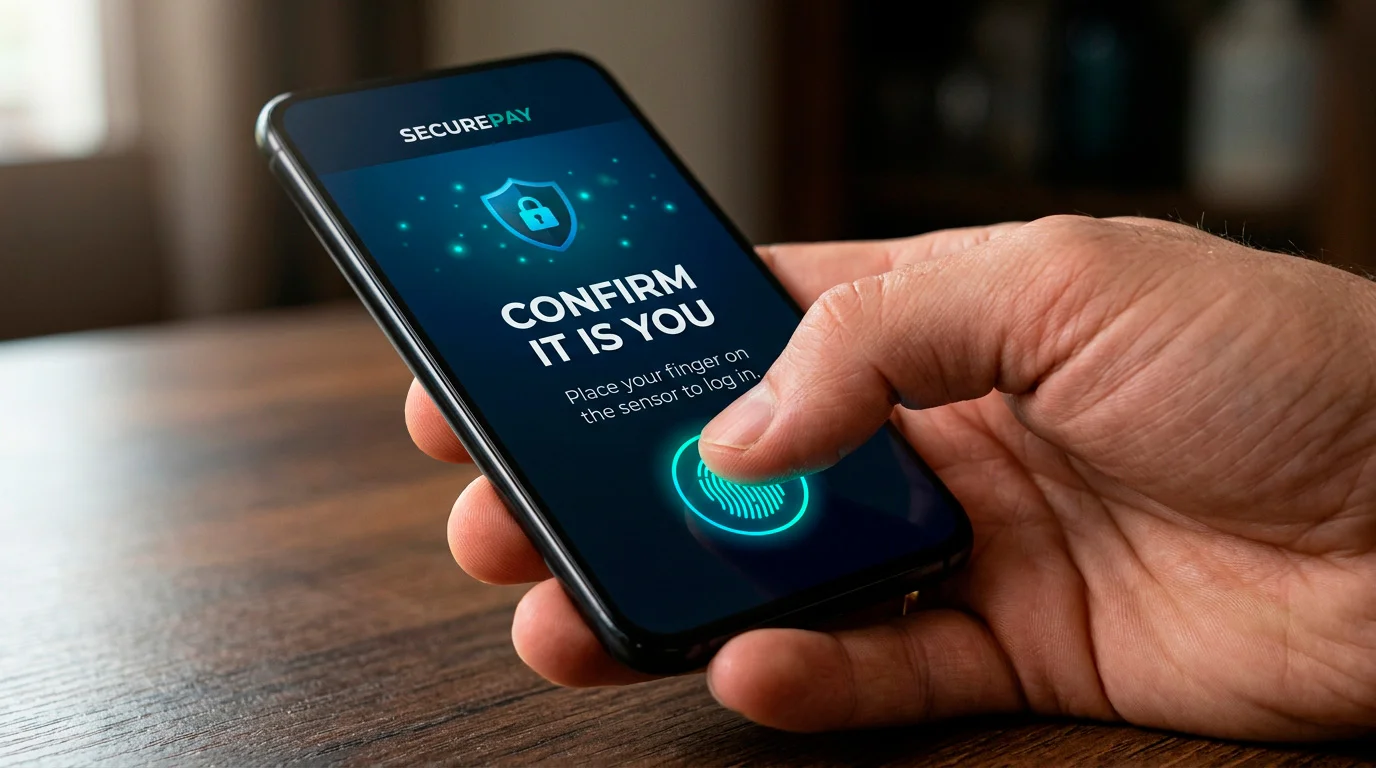
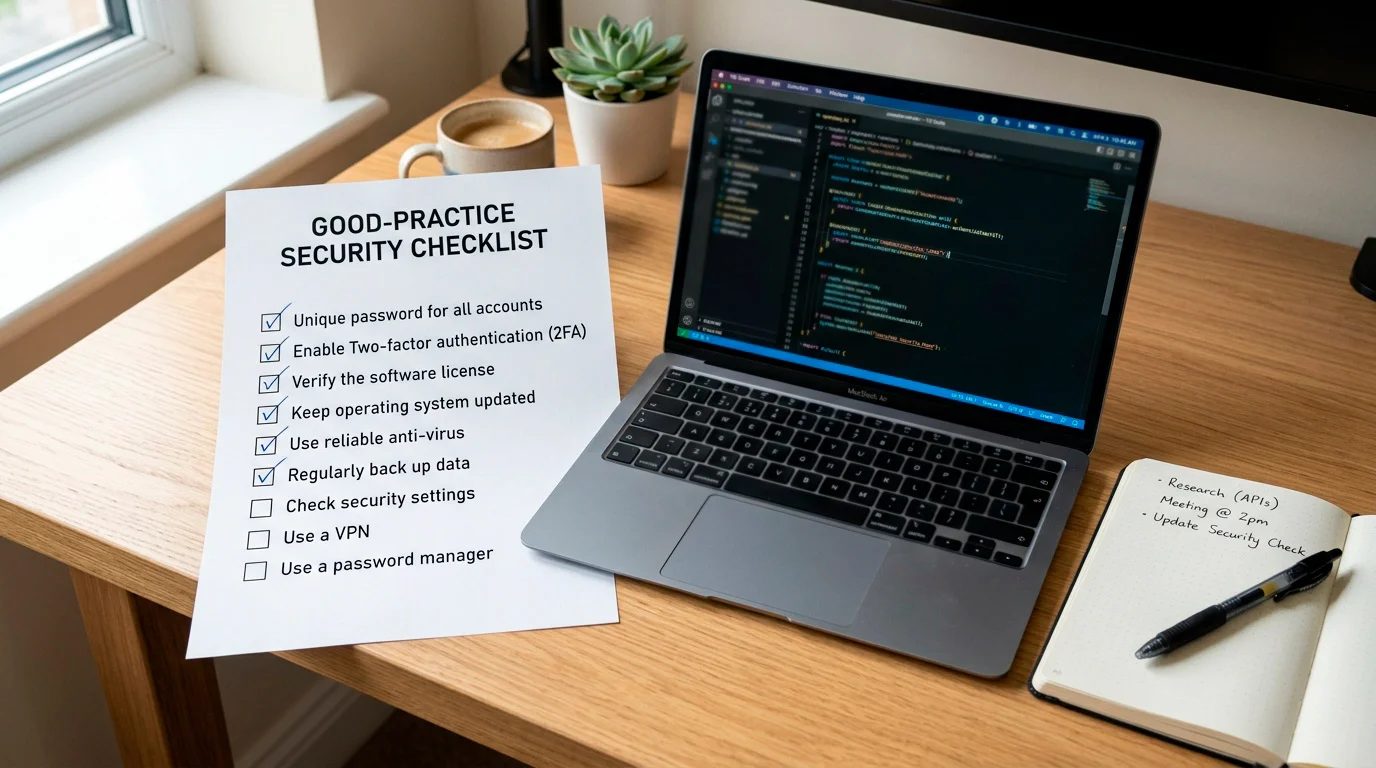
Your part of the bargain is the boring discipline that actually prevents most losses. Use a password you do not use anywhere else, because reused passwords are how one breach becomes ten. Turn on every layer of authentication the wallet offers. Be ruthless about phishing, since the realistic threat to your balance is not someone cracking PSI-Pay’s encryption but someone tricking you into typing your credentials into a fake login page. The wallet has done its share of the security work to a high standard. The remaining gap, almost every time, is human, and it is the one part of the system entirely under your control.
One scam pattern is worth naming because it targets gambling players specifically. You receive a message claiming there is a problem with a pending withdrawal, or that your wallet needs reverification to release a payout, with a link that goes to a convincing replica of the login screen. The pressure of waiting on real winnings is exactly what makes people click without thinking. The defence is a single rule held without exception: never reach your wallet or your casino through a link in a message. Open the app yourself, or type the address you already know. Legitimate verification and payout issues are always visible inside the account when you go there directly, so a message that can only be resolved through its own link is the tell. Adopt that one habit and you neutralise the most common way real money actually disappears from accounts like these.
Safe wallet versus safe casino, two different things
Here is the distinction I opened with, now that we have the wallet half nailed down. A safe wallet pointed at an unsafe casino is an unsafe situation, and the wallet cannot protect you from your choice of destination. This is the trap, and I watch intelligent people fall into it constantly because the wallet feels safe and they let that feeling spill over onto the site.
The casino is regulated by a completely different body, the UK Gambling Commission, and a casino’s licence is what protects you on the gambling side: fair games, segregated player funds at the casino level, dispute resolution, and rules on responsible gambling. That licence is enforced with real consequences. When NetBet Enterprises Limited was ordered to pay 650,000 pounds over anti-money-laundering and social-responsibility failings, that was the gambling regulator doing the job the FCA does not: holding the casino accountable for how it treats customers and money. The evidence base behind that supervision matters, and the Commission’s chief executive Andrew Rhodes has described the national gambling survey as “a key building block of the evidence base” that shapes how operators are held to standard.
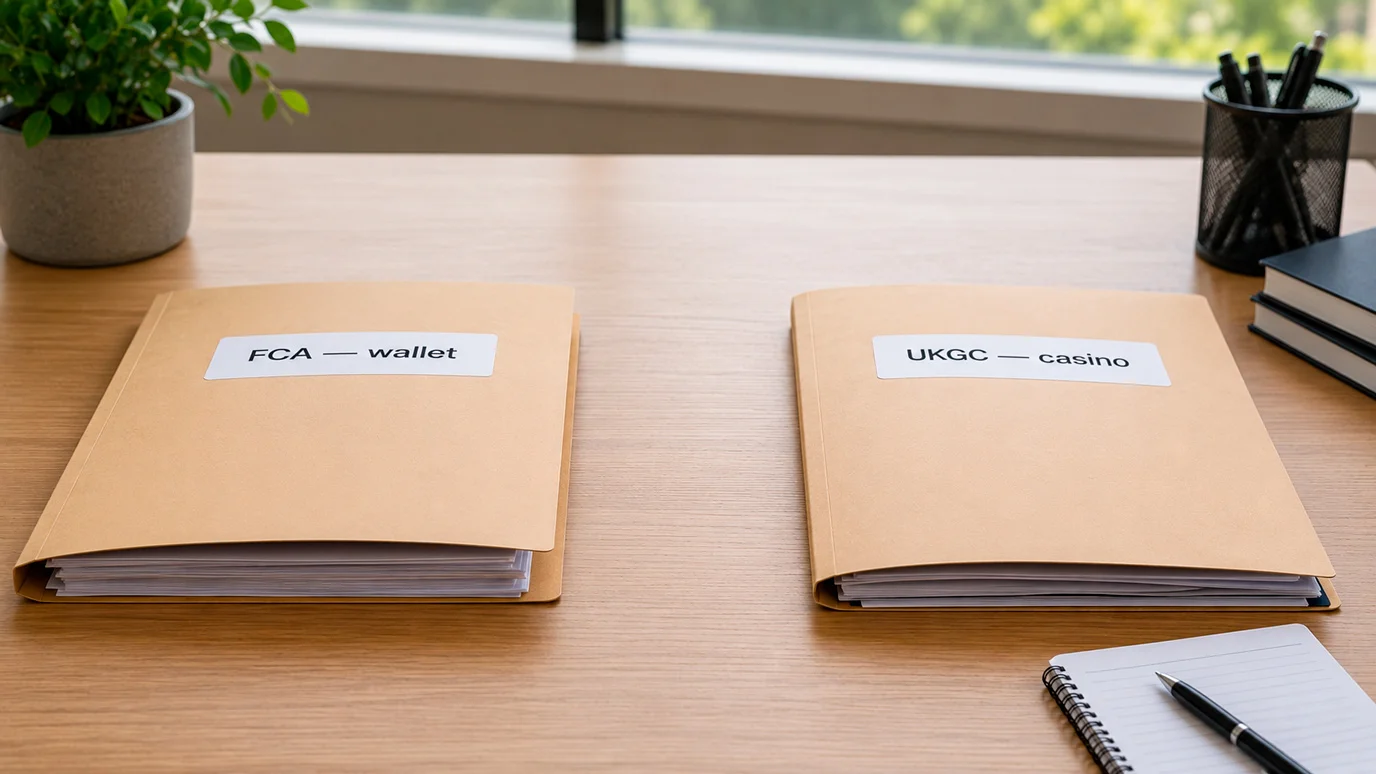
So the safe combination is specific and non-negotiable: a wallet regulated by the FCA, sending money to a casino licensed by the UKGC. Get both and you are protected on both ends, the money in transit and the gambling at the destination. Use the safe wallet at an unlicensed casino and you have a beautifully secured pipe feeding a site with no obligations to you at all, where the FCA cannot help because the problem is not the wallet, and where there is no UKGC licence to invoke because the casino chose to operate outside it. The wallet’s safety is genuine. It simply ends at the casino’s door, and what happens beyond that door is governed by an entirely separate question you have to ask separately.
Where the real risk hides
After all this talk of regulators and safeguarding, I have to be honest about the thing that actually harms most people, and it is neither the wallet nor a rogue casino. It is the gambling itself, and no payment regulation touches it. The most secure wallet in the world will move your money into a loss just as faithfully as into a win.
The industry’s own framing is that gambling is safe for the majority, and a Betting and Gaming Council representative put it as “the vast majority of people who enjoy a bet each month do so safely.” That is true and worth holding onto. But the minority for whom it is not safe is real and measurable, and the risk concentrates around specific behaviours. The clearest example is credit: among online gamblers who used credit cards before the practice was banned, around 22 per cent were classified as problem gamblers, a concentration so sharp that the regulator outlawed credit-funded gambling outright. That number tells you where the danger actually lives. Not in the payment method’s security, but in the relationship between borrowed money and the urge to keep playing.

This reframes the whole safety question in a way I want to leave you with. A safe wallet protects your balance from theft and from the company’s collapse. A licensed casino protects you from unfair games and unaccountable operators. Neither protects you from yourself, and that is the risk that warrants the most attention precisely because it is the one no regulator can ring-fence. The good news is that the wallet can be turned into a tool on that front. Holding a deliberate, limited balance in Payz rather than a card permanently wired to the cashier puts a small, real gap between impulse and money, and that gap is worth more to your long-term safety than any amount of encryption.
Keeping your own setup tight
Safety, in the end, is less a property of the wallet than a practice you maintain, and the practice is short enough to memorise. After six years I can compress almost everything that matters into a handful of moves you can make this week.
For peace of mind, we strongly recommend choosing your next gaming destination exclusively from our list of secure Payz casino sites.
On the wallet side: verify your account so it is tied to the real you, use a unique password, enable every authentication layer, and fund the wallet only from debit or bank transfer so you never drift into the credit risk the data warns against. On the casino side: confirm the UKGC licence independently before you deposit a penny, because the wallet will not do it for you and the licence is your only protection at the destination. And on the side no regulator covers: set the limit before the session, keep a bounded balance in the wallet rather than an open card line, and treat the small friction of moving money deliberately as a feature rather than an inconvenience. Do those three things and you have closed the gaps the regulators leave open, which is the only version of “safe for gambling” that actually holds up in practice.
This topic touches on financial wellbeing, and if any of it resonates with your own situation rather than landing as general information, support is available and worth reaching for early rather than late.
Safety questions I get asked again and again
Created by the "Vaultline" editorial team.