
ecoPayz Casino Withdrawals: Payout Times and the Process Explained
 Available in GB
The phrase “instant withdrawal” has done more damage to UK players’ expectations than any other two words in this industry. An ecoPayz casino withdrawal is fast in one specific sense and slow in another, and confusing the two is why my inbox fills up every Monday with people convinced their casino has stolen their winnings over the weekend. It has not. It has simply done what casinos do, which is review the payout before releasing it, and the wallet has done what wallets do, which is sit there waiting to receive money the casino has not yet sent.
Here is the distinction that fixes most of the frustration. There are two speeds in any cash-out, and they belong to two different companies. There is the speed of the casino deciding to release your money, which is where almost all the waiting lives. And there is the speed of Payz crediting that money once the casino sends it, which is effectively instant. The wallet is not the bottleneck; the casino’s internal processing is, and once you understand that, the entire timeline becomes predictable rather than maddening. The wallet side is built for exactly this kind of volume, with Paysafe, the group behind the wider e-wallet ecosystem, reporting active digital wallet users up to 7.9 million and iGaming revenue rising 28 per cent in early 2026, growth that only happens when the receiving infrastructure is genuinely fast and reliable.
The ecoPayz Withdrawal Process and Payout Timeline Explained
A reader once described his withdrawal as “stuck in Payz,” and I had to gently explain that the money had never reached Payz at all. It was still inside the casino, waiting in a review queue, and the wallet was as empty as it had been the day before. That misdiagnosis is the single most common one I see, so let me trace the actual journey before we talk about timing.
When you request a withdrawal, you are not moving money. You are submitting a request to the casino to release money it is currently holding on your behalf. The casino then runs that request through its own checks: confirming your identity is verified, that the withdrawal complies with any bonus terms, that it falls within limits, and that nothing about the pattern triggers a manual review. Only when those checks clear does the casino actually send the funds. That sending step is the moment Payz becomes involved at all. Up to that point, the wallet is a spectator.
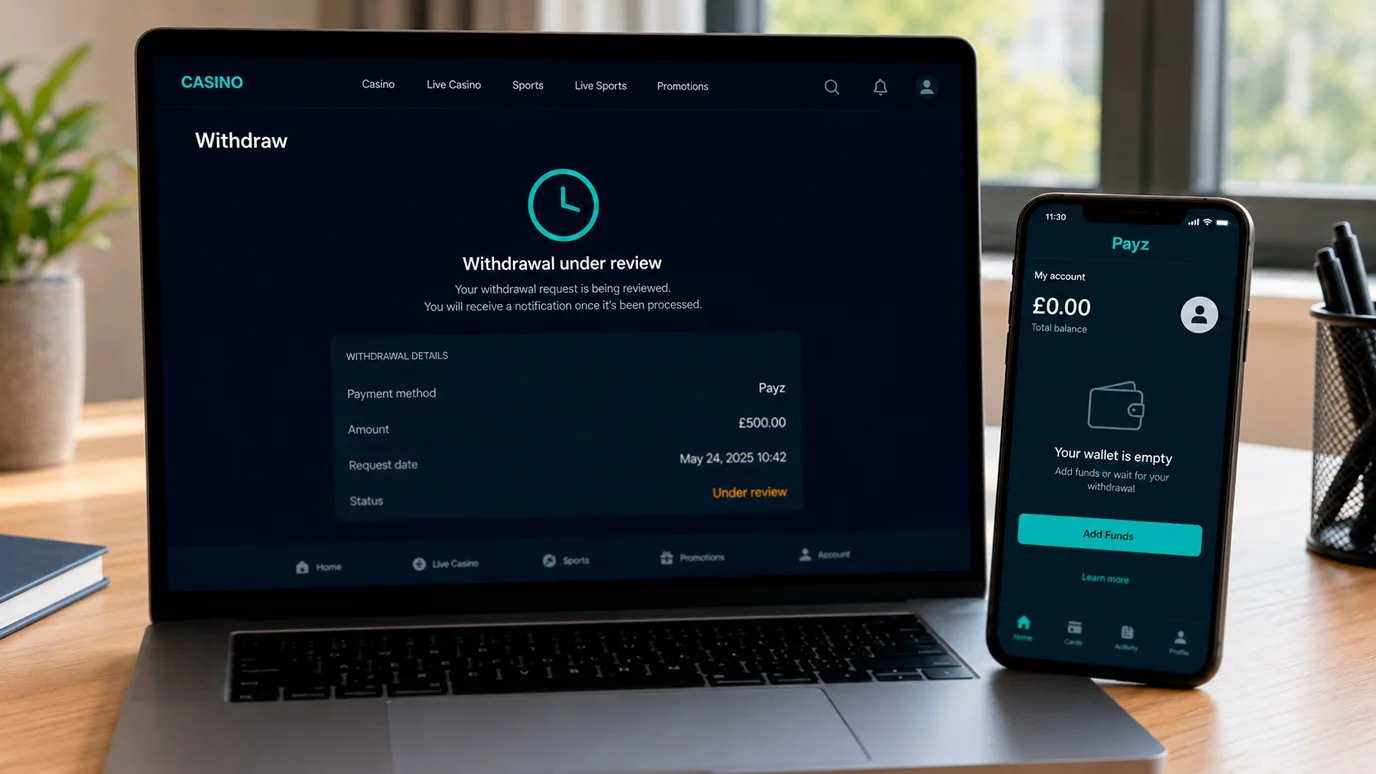
Once the casino releases the payment, the Payz side is quick and dependable, which is no accident given how the wallet is regulated. The operator behind it, PSI-Pay Limited, is authorised by the Financial Conduct Authority under reference 900011, and that authorisation brings with it a settlement infrastructure built to move money in real time within a supervised framework. So the practical shape of a payout is a long, variable wait at the casino followed by a short, reliable hop into the wallet. If you find yourself refreshing the Payz app while a withdrawal shows “pending” at the casino, you are watching the wrong screen. Nothing will change in the wallet until the casino’s status flips to sent.
This two-company structure also explains why “pending” and “processing” mean different things depending on where you read them. A status of pending on the casino’s cashier means the casino has not yet released the money; it is still in the review phase, and the wallet has no record of it because nothing has been sent. A status that appears in the Payz history means the casino has already let go of the funds and the wallet is now handling them, at which point you are minutes from completion. Learning to read which side a status belongs to is the whole skill. Once you can tell a casino-side pending from a wallet-side processing at a glance, you always know who to ask and whether asking is even worth your time yet.
A realistic timeline, not the marketing one
If a casino’s homepage says “withdrawals in minutes,” read it as a best case it has achieved once, not a promise it makes every time. The honest timeline for a Payz cash-out at a UK-licensed site has a few distinct phases, and knowing them turns waiting from anxiety into arithmetic.
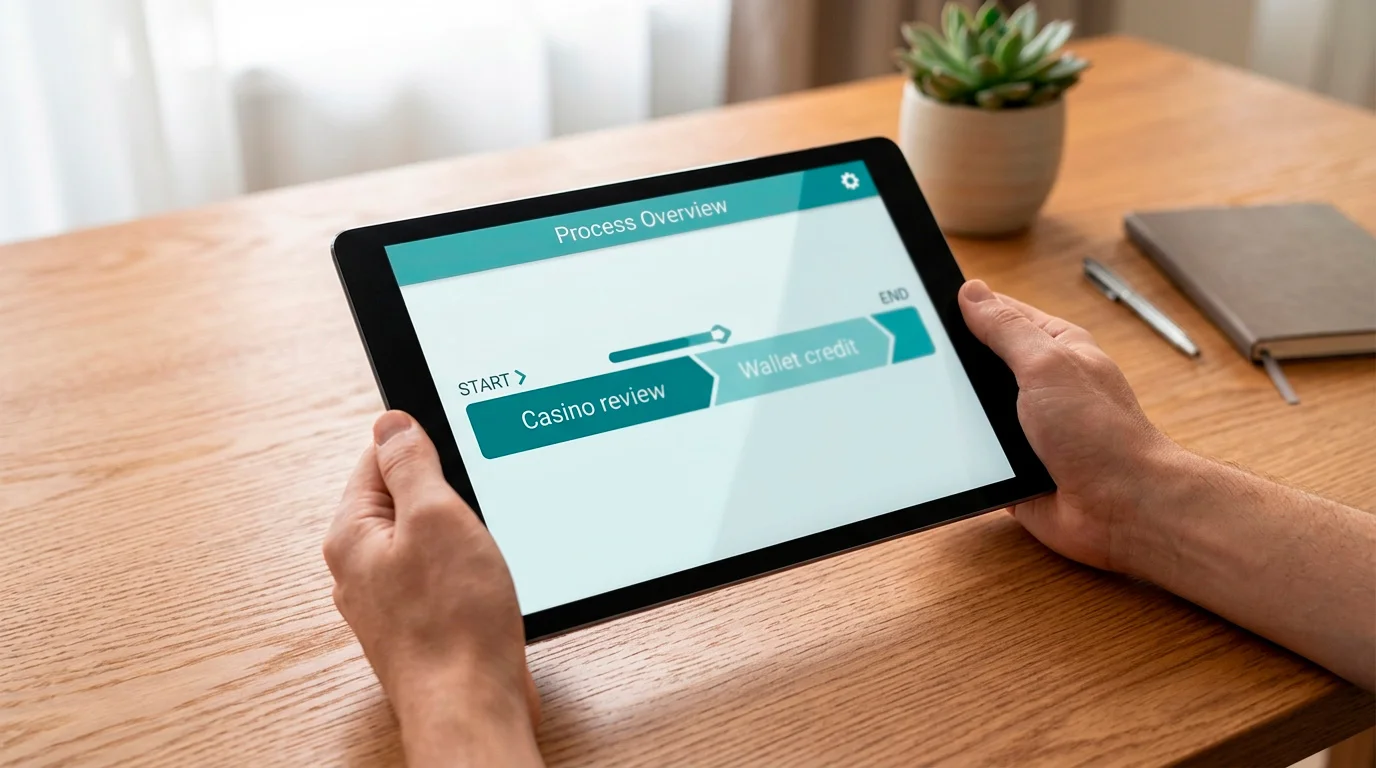
The first phase is the review window, which is entirely the casino’s. For an established account that is already verified, this can be anywhere from a few hours to a working day. For a first withdrawal, or a large one, expect the longer end, because the first time money leaves is precisely when checks are most thorough. The second phase, once the casino releases the funds, is the wallet credit, and that is genuinely fast, usually minutes. So a realistic end-to-end picture for a verified account is hours rather than days, and for a first or unusually large withdrawal, a day or two is normal rather than alarming.
The reason casinos cannot simply skip the review is the sheer scale and scrutiny of the modern UK market. In a single quarter of the 2025/26 year, online operators handled 27.4 billion bets and spins, a 6 per cent rise on the year, and each withdrawal sits inside a regulated system that expects operators to check before they pay. A casino that paid out instantly with no review would be a casino cutting corners on exactly the obligations that protect both you and it. So the review window is not friction for its own sake; it is the system working. The variable you actually control is whether your account is ready when you hit withdraw, and that comes down to one thing more than any other.
Let me put a real shape on it with a worked example, because abstractions about “phases” only get you so far. Say you are a verified player who has been at a site for a month, and you request a 300-pound withdrawal on a Tuesday morning. The casino’s review window for an established, verified account typically clears within a working day, so by Tuesday evening or Wednesday morning the status flips to sent. The wallet credit then lands within minutes. Total time, roughly a day. Now run the same withdrawal as your very first ever, on a Friday night, before you verified your documents. The casino requests identity and address proof on Saturday, you upload it, a thinner weekend team reviews it on Monday, and the funds release Monday afternoon. Same wallet, same casino, three days instead of one, and every extra hour is explained by preparation and timing rather than by anything Payz did. The arithmetic is entirely in your hands.
The verification step that catches everyone out
Nothing delays a withdrawal like discovering, at the moment you try to make it, that you should have verified your identity three weeks ago. I have lost count of the players who sailed through deposits for months, hit a win, requested a withdrawal, and then ran headfirst into a verification request they could have cleared in five calm minutes at any earlier point.
Know your customer checks, usually shortened to KYC, are the casino confirming you are who you say you are before it releases money. They are not optional and they are not the casino being difficult. They are a regulatory requirement, and they are applied with increasing rigour because the regulator wants them applied that way. The Gambling Commission’s chief executive Andrew Rhodes has been explicit about the direction of travel, urging that operators should “use this evidence to consider the risks” their customers face, and identity and source-of-funds checks are part of how that intention reaches the cashier. A casino skipping them is not doing you a favour; it is exposing you to a site that may not be properly licensed at all.
The fix is entirely within your control and it is dull, which is why people skip it. Verify your account as soon as you open it, not when you want to withdraw. Upload the documents the casino asks for, typically photo identification and a proof of address, before you have any winnings on the line. Make sure the name on your Payz account matches the name on your casino account exactly, because a mismatch there is a classic cause of a frozen payout. Do this once, calmly, and verification stops being a delay and becomes a thing that already happened. Leave it until withdrawal time and you have voluntarily added the slowest possible step to the fastest possible moment.

Why payouts stall, and who is responsible
When a withdrawal sits longer than it should, players reach for the worst explanation first: the casino is stalling deliberately to tempt them into gambling the money back. That happens, but it is rare, and it is usually a sign of a site you should not have been using. Far more often the delay has a mundane cause, and identifying which one you are facing tells you whether to wait or to act.
The legitimate delays cluster around a few themes. Verification not yet complete is the biggest, and it is fixable by you. A withdrawal that breaches a limit or a bonus term is the second, and that is a terms problem to read carefully rather than a payment problem. A manual review triggered by an unusual pattern, such as a sudden large win or a change of details, is the third, and that resolves with patience and cooperation. A weekend or holiday, when payments teams run thinner, stretches all of the above. None of these is the casino misbehaving; they are the casino doing the checks the system requires.
The illegitimate delays look different, and the regulator treats them seriously. When NetBet Enterprises Limited was ordered to pay 650,000 pounds over anti-money-laundering and social-responsibility failings, that enforcement existed precisely because operator conduct around money and customer protection is supervised and punishable. So if a withdrawal stalls with no explanation, no verification request, no terms breach, and support that goes quiet, you are no longer dealing with a normal review; you are dealing with a site whose conduct the regulator would want to hear about. The line between a legitimate wait and a problem is whether the casino can tell you, in plain language, exactly why your money is being held and what clears it. A casino that can answer that question is working through a process. A casino that cannot is the problem itself.

Getting the money out of the wallet
Winning is only half the job. A reader once told me, with real frustration, that he had a four-figure balance sitting in his Payz wallet and “no way to actually spend it.” He had been so focused on getting the casino to pay that he had never thought about the last mile: moving money from the wallet into a form he could use in the real world.
Payz gives you a few routes off the wallet, and the right one depends on how quickly you need the cash and how much you mind paying for speed. You can transfer to a linked bank account, which is the standard route for larger sums and arrives within the wallet’s normal processing time. You can move money to another Payz user. Or you can use the prepaid Mastercard the service has offered through its long-standing card partnership, which dates back to 2009, letting you spend the balance directly or draw it at an ATM. The card route is the one most people overlook and the one that solves the “stuck in the wallet” feeling most directly, because it turns a digital balance into something you can tap at a till.
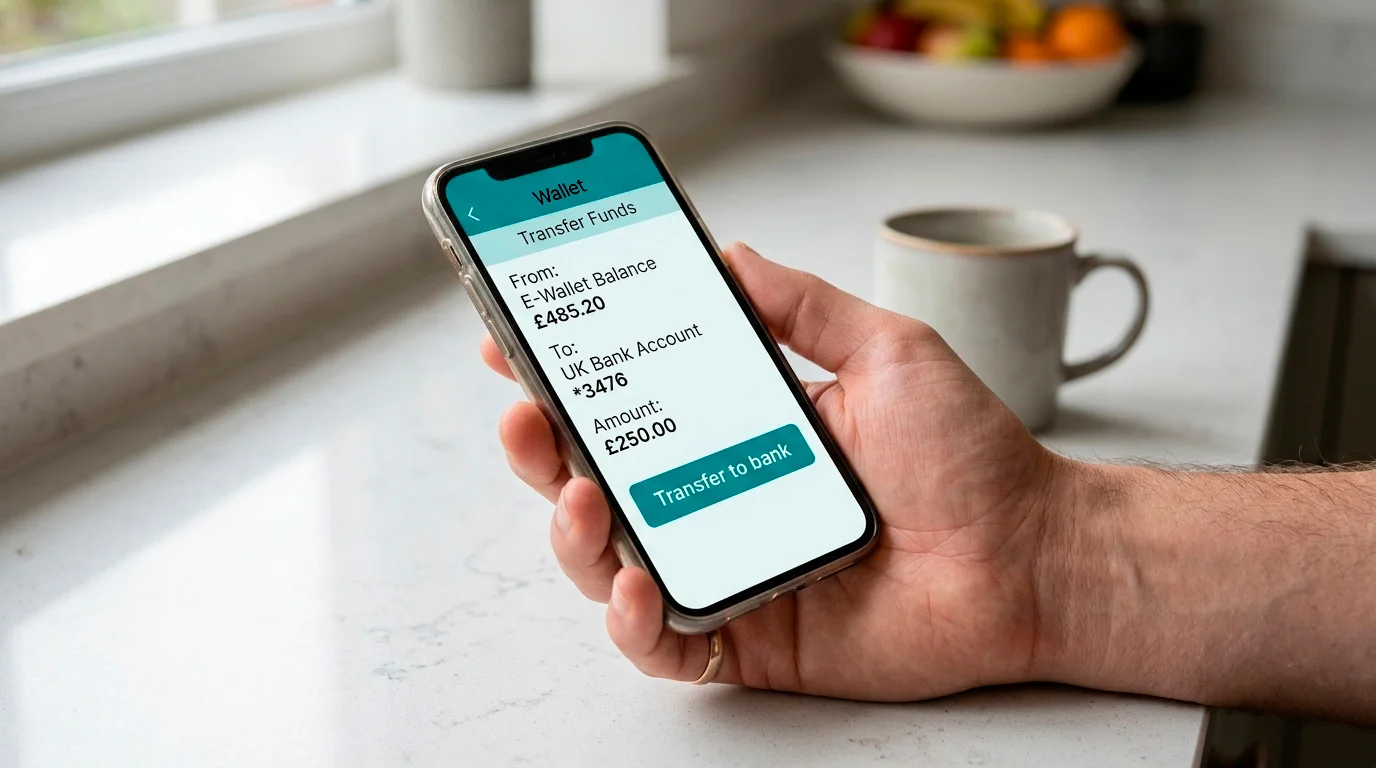
One rule shapes all of this and surprises newcomers every time: casino winnings generally have to come back to the method you deposited with, up to the amount you deposited, before any surplus can travel elsewhere.
That has a practical knock-on for the card route in particular. If you deposited with Payz, the winnings up to your deposit total return to Payz, and only then are you free to push the balance onto the prepaid card, your bank, or wherever you actually want it. So the card is the last step in a chain, not a shortcut around it. It is worth knowing the card carries its own modest fees and limits, separate from anything the casino or the wallet transfer charges, so for a large win a bank transfer is often the cheaper way to move the bulk while the card handles the spending money. The point is not that one route is best; it is that you should know all three exist before you have winnings to move, rather than discovering your options under the impatience of wanting the cash now.
The same-method rule is not a Payz quirk; it is an anti-fraud and anti-money-laundering principle that runs across the whole industry, and it has real consequences for how you plan a cash-out. I have unpacked exactly why this works the way it does in my piece on the ecoPayz withdrawal same-method rule, because understanding it in advance saves you from the unwelcome surprise of winnings that will only route back the way they came.
Small habits that speed up every cash-out
The players who never wait long for a payout are not lucky; they are prepared, and their preparation is almost embarrassingly simple. After years of watching fast withdrawals and slow ones side by side, the difference comes down to a handful of habits you can adopt today.
Verify before you play, not before you withdraw. Match your Payz name to your casino name to the letter. Keep your wallet in pounds so no conversion delays the credit. Read the withdrawal limits and bonus terms before you have a win to protect, not after. And request withdrawals early in the working week rather than on a Friday night, because a payments team is a payments team, and a request that lands when one is fully staffed clears faster than one that waits out a weekend.

The last habit is less about speed and more about keeping the whole exercise healthy. Decide what you are withdrawing and stick to it, because the gap between requesting a payout and receiving it is exactly the window in which a wavering player cancels the withdrawal and feeds it back into the game. Some casinos make cancelling a pending withdrawal far too easy, and the regulator’s whole direction of travel is toward operators taking that risk seriously rather than exploiting it. Treat a confirmed withdrawal as money that has already left, mentally, and the wait becomes a non-event. The cash-out you collect cleanly is almost always the one you decided on before you ever clicked withdraw, and every habit on this list exists to protect that single decision from the friction and the temptation that sit between you and your money.
Withdrawal questions worth answering
Prepared by the Vaultline editorial staff.