
ecoPayz Casino Deposits: A Step-by-Step Payz Guide for UK Players
 Available in GB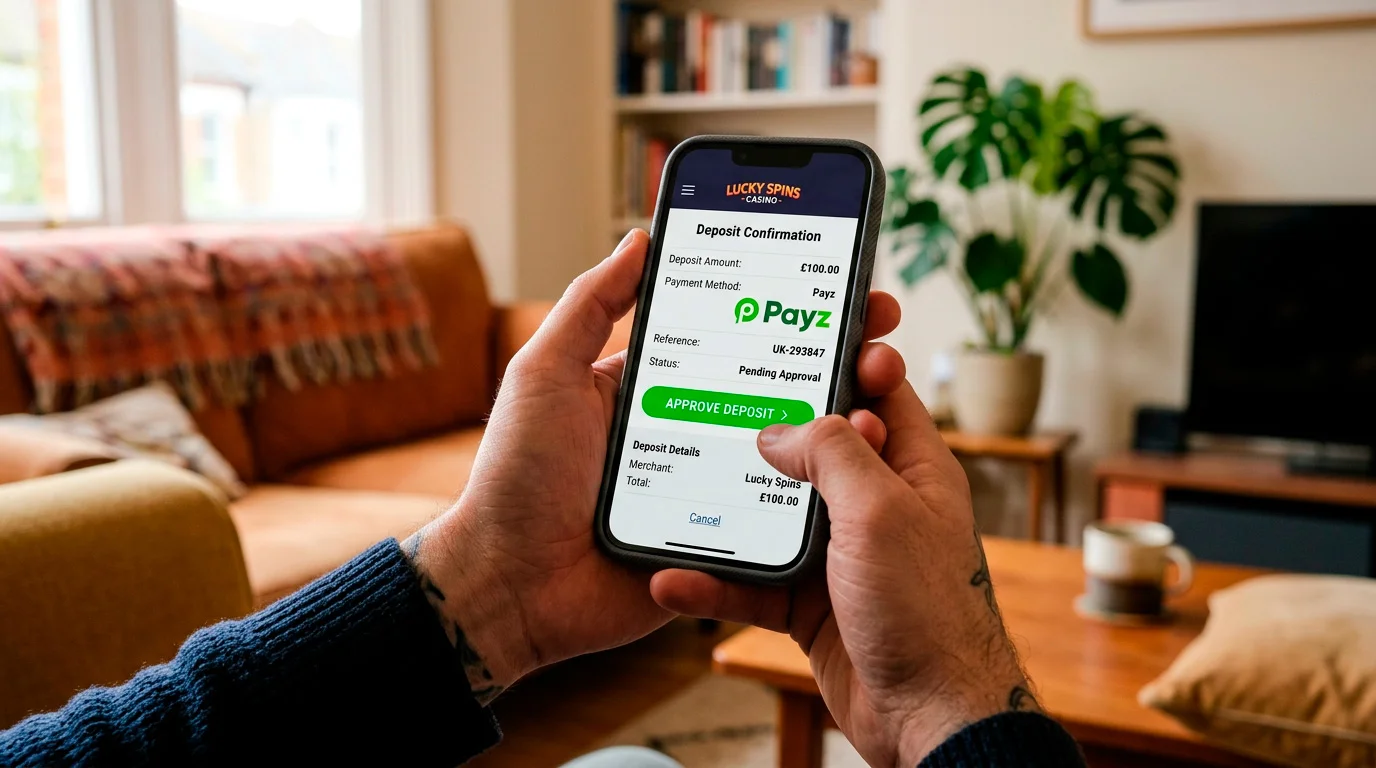
An ecoPayz casino deposit is one of the simplest transactions in online gambling, and that simplicity is exactly what gets UK players into trouble. The button is so quick to press that almost nobody stops to ask the one question that actually matters here: not how the money moves, but what is sitting behind it. A Payz deposit clears in seconds at almost every licensed site, so the mechanics are not where the risk lives. The risk lives in how your wallet was funded before that button was ever pressed.
I have spent six years watching this flow play out across hundreds of cashiers, and the pattern never changes. The deposit itself is boring and reliable. The complications all trace back to one of three things: a wallet topped up the wrong way, a currency mismatch quietly eating your balance, or a confirmation that lands in the wallet but appears to stall at the casino. This guide walks the whole process for a UK player using Payz, the e-wallet formerly called ecoPayz, and it spends most of its time on the parts that are not the button. Payz holds funds in more than 50 currencies, including pounds, which matters more than it sounds and which I will come back to repeatedly, because getting that one setting right removes most of the friction before it starts.
If you are playing on a strict budget, be sure to check the exact minimum deposit requirements for ecoPayz established by the operator.
Crucial Checks Before Making an ecoPayz Casino Deposit
The fastest deposit I ever saw a reader complete took under thirty seconds. The slowest took six days, and the difference had nothing to do with the casino. The slow one belonged to a player who tried to deposit before his Payz account was verified to a tier that allowed it, then spent the rest of the week uploading documents under pressure. Verification done calmly in advance is invisible; verification done in a panic at the cashier is a nightmare. So the work starts before any casino is involved.
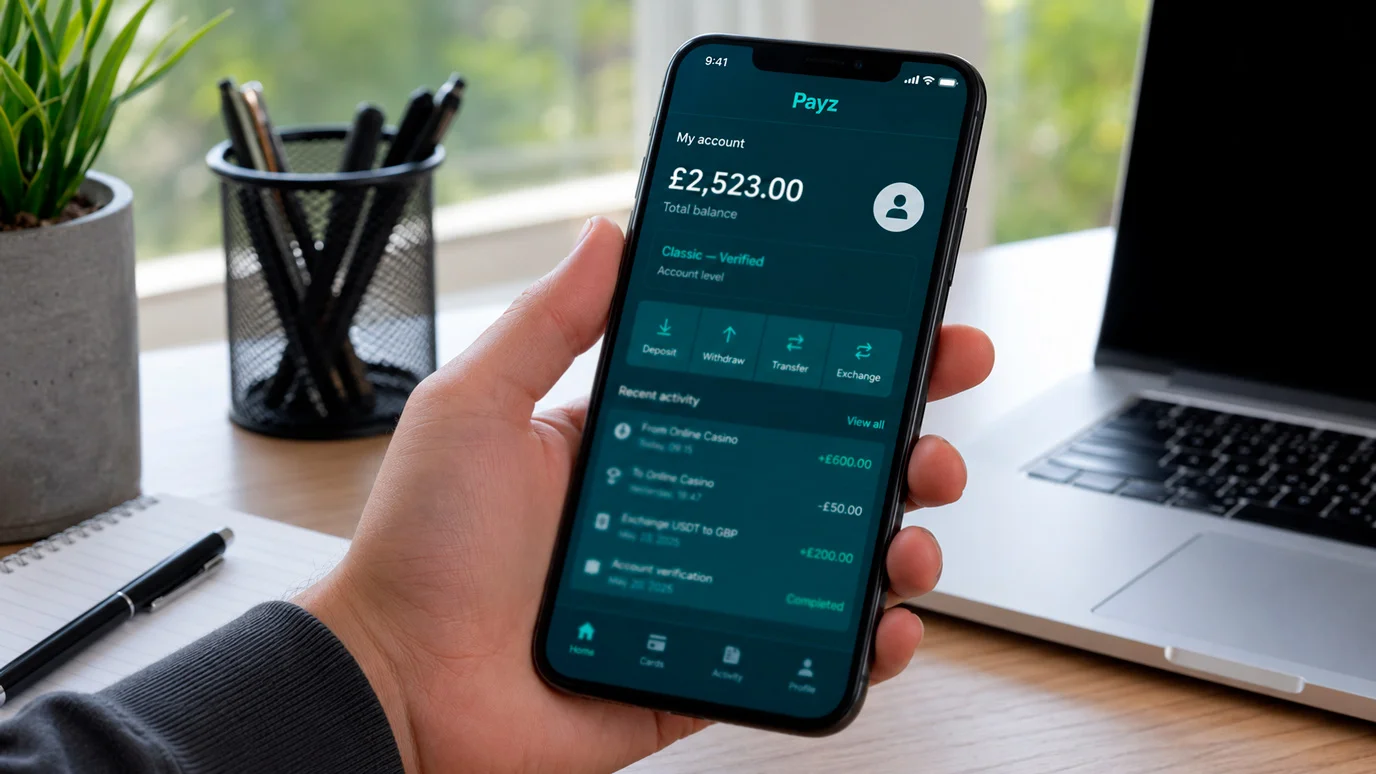
Three things need to be true before you go near a deposit button. Your Payz account needs to hold a usable balance, in the right currency, at a tier that permits the transaction you are about to make. The operator behind Payz is PSI-Pay Limited, authorised by the Financial Conduct Authority under reference number 900011 and registered in England and Wales, and the tier system that governs your limits is part of how that regulated structure works rather than an arbitrary upsell. A Classic account does more than enough for casual play; the higher tiers mainly cut fees and raise limits. Know which one you are on before you assume a deposit will go through.
The currency question is the one most players skip. If your wallet holds euros and you deposit at a casino billing in pounds, you pay a conversion margin on every single deposit, silently, for as long as the mismatch exists. Setting a pound balance as your base currency for UK play removes that drag entirely. The amount also matters: casinos set their own minimum deposit, not Payz, and that floor interacts with responsible-play settings and bonus terms in ways worth understanding before you fund. I have written separately about how low you can actually go in my piece on the ecoPayz casino minimum deposit, because the answer is rarely the round number people expect.
There is also a question of where the wallet money came from, which I will treat properly in its own section but which belongs in your pre-flight check too. Before you fund the casino, you should already know how you funded the wallet, because that decision is the one with legal weight in the UK. A debit-card or bank top-up is clean. A credit-card top-up is not, and it can come back to bite you at exactly the wrong moment. Building that awareness into your preparation, rather than discovering it at a frozen withdrawal, is the single biggest favour you can do yourself. None of this preparation is onerous. It is the same five-minute setup you would do for any payment account you intend to use repeatedly, and once it is done it stays done.
Making the deposit, step by step
Here is the part everyone came for, and I promise it is short, because a Payz deposit really is straightforward once the groundwork is done. I will walk it as I would talk a friend through it on the phone, with the caveats slotted in where they belong rather than dumped at the end.
Log in to the casino first, not Payz. You start the transaction from the casino side because the casino needs to know who is paying and how much. Open the cashier or banking section, which sits behind a button usually labelled “deposit,” “cashier” or “wallet.” Find Payz in the list of methods. On older sites it may still read ecoPayz, or carry the small green logo without a name at all; it is the same wallet, so do not hesitate over the label. Select it.
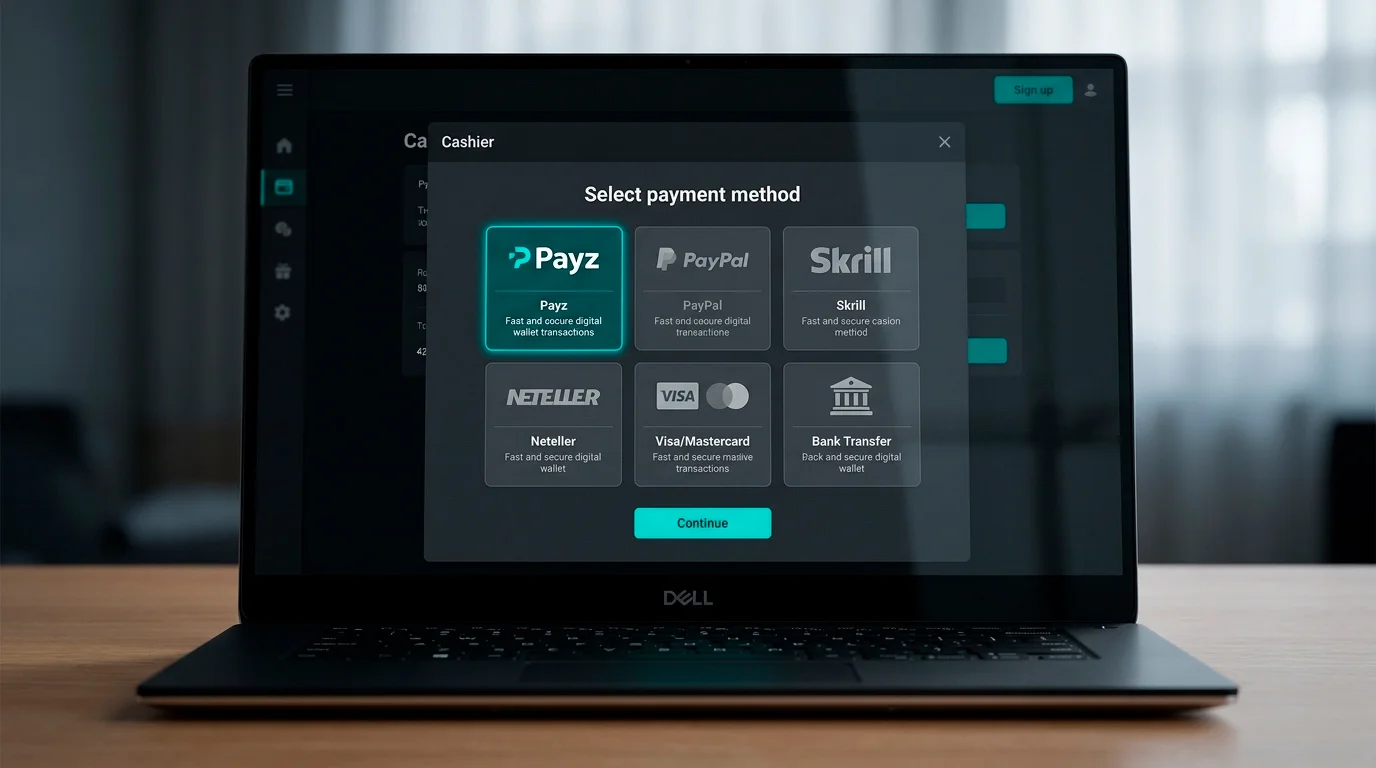
Now enter the amount. The casino will show its own minimum and maximum here, and this is your last chance to sanity-check the currency, because a figure that looks fine in pounds will be converted if your wallet holds something else. Confirm, and you are redirected to a Payz authentication screen. This is the moment the transaction actually happens: you log in to Payz, or approve through the app if you have it set up, and authorise the payment. The wallet checks your balance and tier, debits the amount, and sends the confirmation back to the casino.
You land back on the casino’s cashier, and in the overwhelming majority of cases the funds are already in your playable balance. That is the whole process. The reason I labour the preparation is that every step above assumes the wallet is funded, verified and in the right currency. Get those three right and the deposit is genuinely a thirty-second job. Get one of them wrong and you will spend far longer untangling it than you saved by skipping the prep. One habit worth building: take a mental note of the transaction reference the wallet shows you. If anything looks off afterwards, that reference is the fastest way for either support team to find your payment.
A word on the app versus the desktop route, because players ask which is faster. Functionally they are the same transaction; the difference is the authentication step. On the app you can usually approve a deposit with a fingerprint or face scan instead of typing a password, which shaves a few seconds and, more importantly, removes the temptation to save your wallet password in the browser. The biometric approval also adds a small layer of friction in the right direction: you have to physically authorise each payment, which is a quietly useful brake. If you deposit from a phone often, setting the app up properly once pays you back on every session afterwards. The transaction reaches the casino by the same route regardless of which device you start from, so neither is meaningfully “faster” at the rail level.
Why what sits behind your wallet decides everything
This is the section I wish every UK player would read before their first deposit, because it is the one place where a perfectly normal-looking transaction can be unlawful without you realising. The wallet is a pass-through. The question of whether your gambling deposit is legitimate depends not on Payz, but on what you used to put money into Payz in the first place.
Since April 2020 it has been against UK rules to gamble with credit, and that ban does not stop at the casino’s card field. It reaches through e-wallets. A UK-licensed operator is only permitted to accept your Payz deposit if the wallet was not funded from a credit card, because licence condition 6.1.2 closes exactly the loophole you might think you have spotted. Topping up Payz on a credit card and then depositing at a casino is not a clever workaround; it is the precise behaviour the rule exists to prevent, and a properly run casino has obligations to stop it.

The reason behind the line is not bureaucratic. When the regulator’s then chief executive Neil McArthur introduced the ban, his framing was blunt: “Credit card gambling can lead to significant financial harm.” The data underneath that statement was stark, with around 22 per cent of online gamblers who used credit cards classified as problem gamblers, a concentration too sharp to ignore. So fund your wallet from a debit card, a bank transfer or an existing balance, and the question never arises. Fund it from credit, and you are either depositing somewhere that is not checking, which is its own warning sign, or you are setting up a transaction that can be reversed and an account that can be frozen. There is no upside to it.
How quickly the money should appear
Let me kill a myth in one sentence: if a Payz deposit does not appear instantly, the wallet is almost never the cause. The wallet settles in real time. Anything slower is happening on the casino’s side, or in the rare case of a first-ever deposit that triggers a manual review.
The scale of what these systems handle explains why instant is the norm rather than the exception. In a single quarter of the 2025/26 year, UK online operators processed 27.4 billion bets and spins, a 6 per cent rise even as overall yield dipped, and a payment rail that could not credit deposits in seconds would simply collapse under that flow. So when your deposit lands in the wallet’s transaction history but the casino balance still reads zero, the realistic causes are short and specific. The casino’s cashier may be refreshing on a delay; logging out and back in usually clears the display. A first deposit on a brand-new casino account may be held briefly for a verification check. Or, occasionally, the casino is running a maintenance window and queuing incoming payments.
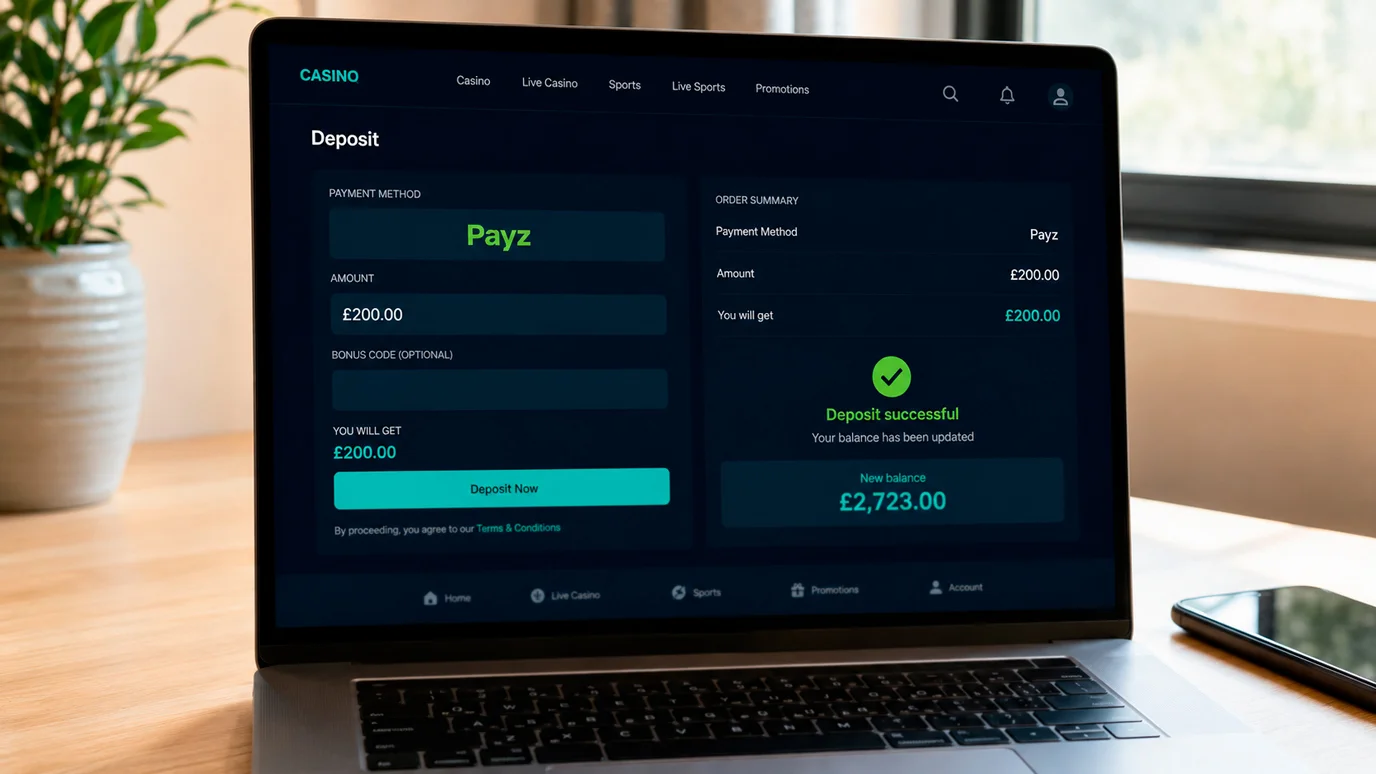
What you should not do is panic-deposit a second time. I have watched players double up because the first deposit “did not work,” only to find both went through and now they are sitting on twice the balance they intended on a budget they had set deliberately. Give the first transaction a few minutes, check the wallet history to confirm the debit, and if the money has clearly left Payz but not arrived at the casino after a reasonable wait, that is a support conversation, not a reason to try again.
It is worth understanding what “instant” actually means at the technical level, because the word gets thrown around loosely. The wallet authorises and debits in real time, and it pushes a confirmation message to the casino in the same moment. The casino then has to receive that message, match it to your account and credit your balance. Almost always this happens faster than you can read this sentence. But the casino’s crediting step is software running on the casino’s infrastructure, and software has the occasional bad second. That is why the honest mental model is “instant at the wallet, near-instant at the casino, with rare and short exceptions.” If you internalise that, you will neither be surprised by the speed nor alarmed by the rare brief wait, and you will direct any question to the right desk on the first try.
When a deposit goes wrong, and what to do
In six years the number of genuinely broken Payz deposits I have seen is tiny, and almost all of them turned out to be one of a handful of fixable causes. Knowing the shortlist saves you the spiral of assuming the worst.
The most common is the phantom deposit: money gone from the wallet, absent from the casino. Nine times in ten this is a display delay or a verification hold, and it resolves itself or with a single message to support quoting your transaction reference. The second is a declined deposit, where the wallet refuses the transaction outright. This is usually a tier or limit issue, occasionally a currency the casino does not support, and sometimes a funding-source flag if the system detects a credit-card origin. The third is the deposit that goes through but in the wrong currency, leaving you with a balance that has quietly shrunk through conversion. That one is not an error to be fixed so much as a setting to be corrected for next time.
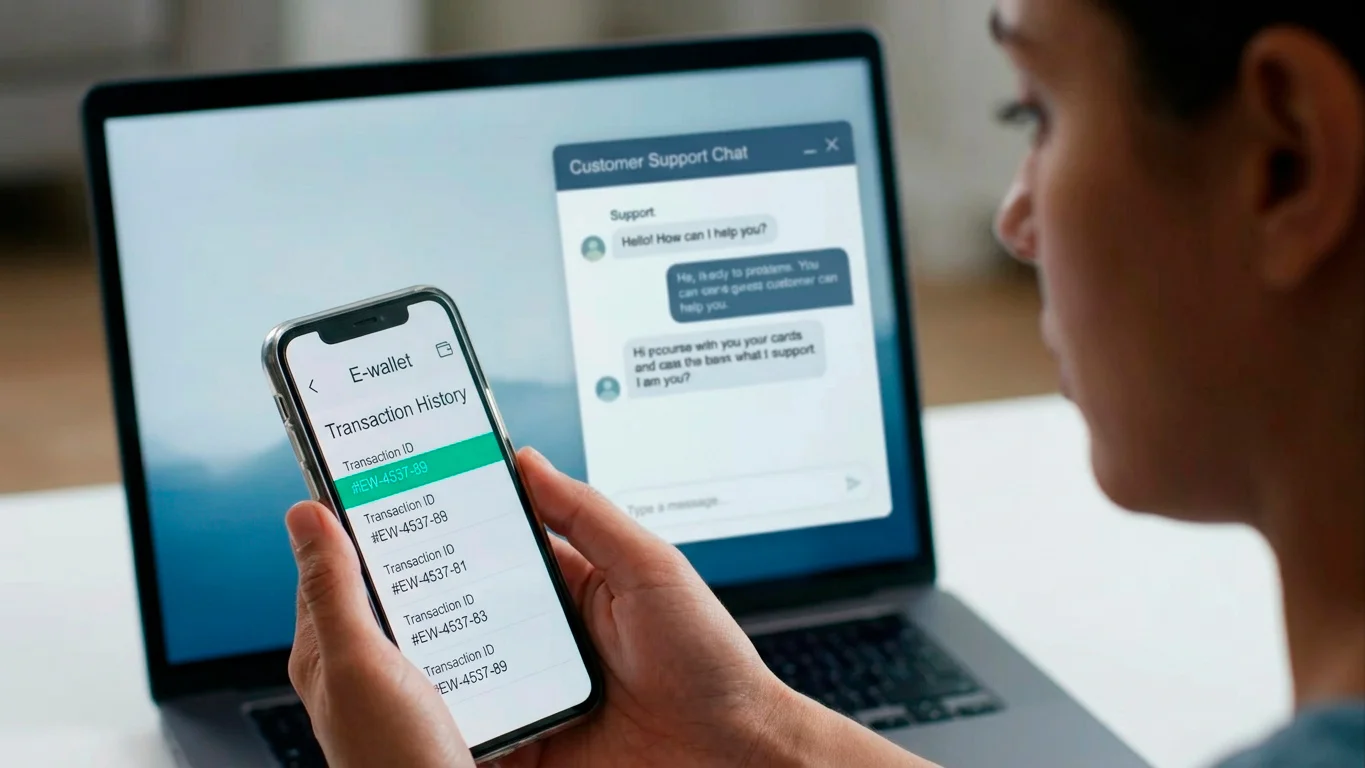
The fix for almost all of these is the same disciplined sequence. Check the wallet’s transaction history first to establish whether the money actually moved. If it did not move, the problem is at the wallet or the funding source, and a second attempt or a tier check resolves most cases. If it did move but did not arrive, the problem is at the casino, and you contact the casino’s support with the reference rather than waiting passively. Resist the urge to retry blindly, because a duplicate deposit is far more painful to unwind than a delayed one. And keep your records: a screenshot of the wallet debit with its timestamp and reference turns a frustrating dispute into a thirty-second lookup for whichever support agent picks it up.
Habits that keep deposits clean
The players who never message me about deposit problems all share the same quiet habits, and none of them is complicated. They are mostly about treating the deposit as a deliberate act rather than a reflex.
Keep your wallet in pounds for UK play, so conversion never touches a deposit. Fund it from debit or bank transfer, never credit, so the legality question never arises. Verify your Payz tier to a level that comfortably covers how you actually play, before you need it rather than during a withdrawal. And set your deposit amount to a figure you decided on away from the heat of the moment, because the deposit screen is precisely where good intentions get rounded up.
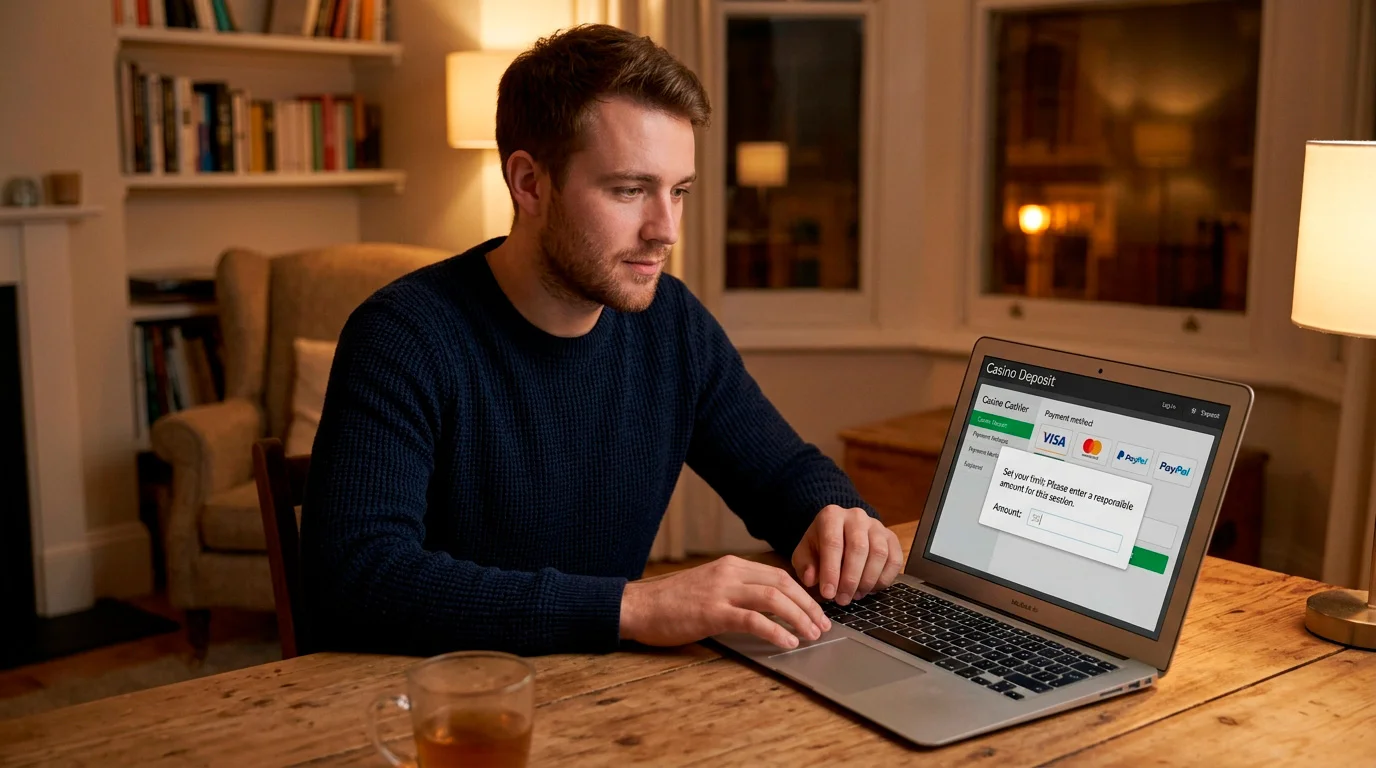
That last point is where deposits stop being a payments question and become a wellbeing one. Around 2.7 per cent of UK adults score at the level that signals problem gambling, a figure that has edged up rather than down, and the deposit button is the exact pressure point where a session either stays inside the limits you set or quietly drifts past them. Payz can actually help here if you let it, because keeping a deliberate balance in the wallet rather than a card permanently linked to the cashier puts a small, useful pause between the impulse and the money. The cleanest deposit is the one you meant to make, in the currency you meant to make it, from a source that keeps you on the right side of the rules. Everything else in this guide is just the plumbing around that single decision.
Find platforms with the best deposit limits on our main directory of trusted Payz gambling platforms in the UK.
Deposit questions I hear most often
Created by the "Vaultline" editorial team.