
Online casino sister sites in the UK: what connects them
 Available in GB
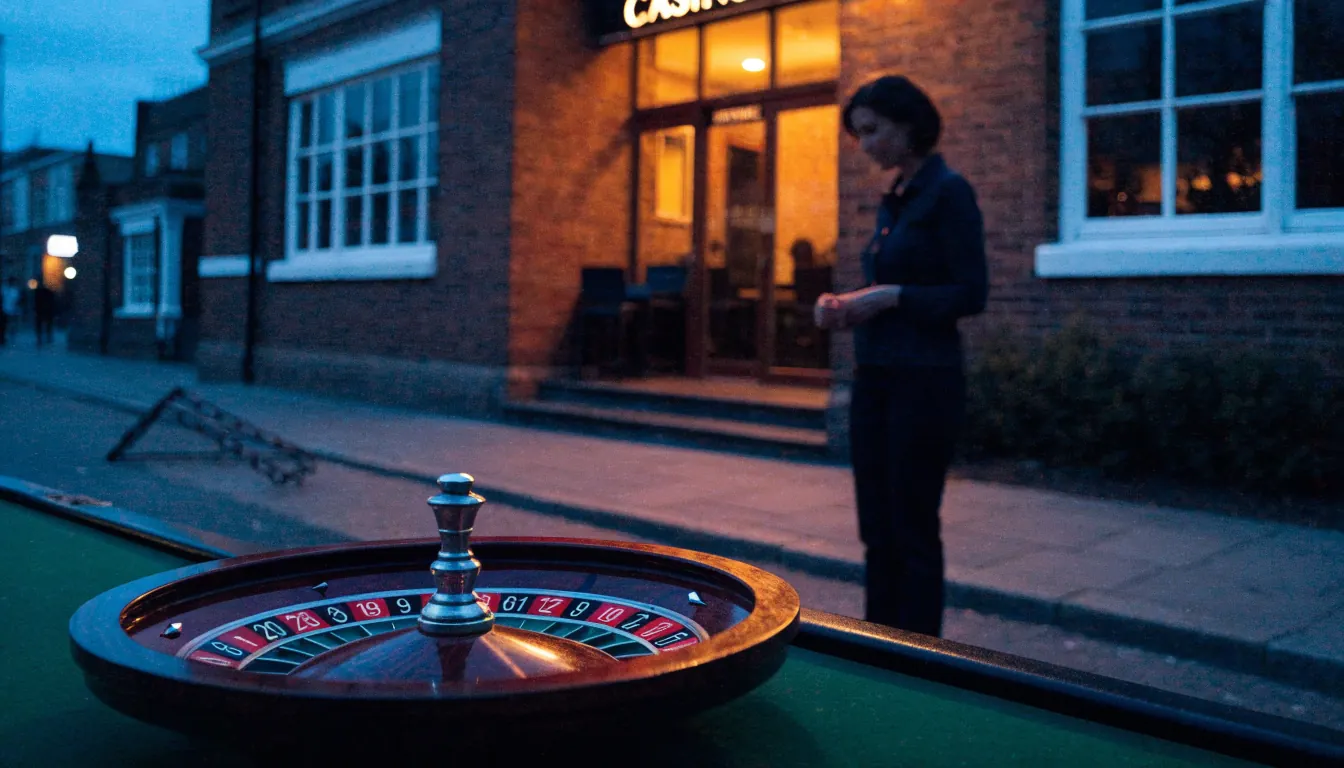
Casino brands can be connected through a parent company or platform without being the same business or offering identical services.
What “sister site” means in practice
A casino sister site is connected to another casino through the business behind it or through the technology running it. The clearest connection is common parent ownership: one company owns or operates multiple casino brands. A second kind of link is shared core technology. In that case, the sites may rely on the same underlying platform even if their ownership differs.
The distinction matters. A shared parent is an ownership relationship; shared technology is an operational one. Both can explain why two casinos feel related, but they do not establish that the brands are the same business or offer the same service. I treat “sister site” as a useful description of a connection, not a promise that every detail carries across.
That is the practical meaning behind searches for casino sister sites in the UK: the task is to understand what kind of link exists, rather than to assume that similar names or layouts tell the whole story. A brand can have its own identity while sitting within a wider group. Another can look familiar because it uses related technology, without being owned by the same parent.
A network may present common features across its sites. Promotions, payment methods, loyalty programmes and parts of the user interface can be shared. But “may” is doing important work here. A shared feature does not prove that all features are shared, nor that they work in precisely the same way. One brand’s design may be adapted, while another uses a different presentation. The connection is real; the experience need not be identical.
I have seen the word “same” do too much work in casino marketing. It can mean the same corporate owner, a similar technical foundation, or simply a familiar look. Those are different claims. A similar interface on its own is not enough to show that two sites are sister sites: resemblance can arise from common software without common ownership, and visual similarity is not proof of a shared business.
Non-UK-Registered Casinos: Regulation and Risks
Technology can also be one layer among several. A platform may provide the underlying tools while each casino brand presents its own name and design. That does not make the brands interchangeable. Nor does a shared parent automatically mean that customers encounter identical features at every site. Brand decisions can sit on top of common infrastructure.
The sensible starting point is to identify the connection being claimed. If the claim is about ownership, the site footer is a practical place to look: ownership details may identify the company behind the brand. If the claim is only that two casinos appear alike, that is weaker evidence. A shared colour scheme or familiar page structure may suggest a common technical source, but it does not establish the corporate relationship.
This is why “online casino with no sister sites” is harder to define than it first sounds. A brand may not have an obvious sibling under the same parent, yet it could use core technology found elsewhere. Conversely, two brands may share an owner but present themselves differently enough that the connection is not obvious from the home page. The label depends on which relationship is being described.
It also helps to separate a network from a clone. A clone implies a near-identical copy. Sister sites can share foundations or selected features without reproducing one another in full. Their names, presentation and customer-facing arrangements may differ. Treating the whole network as one uniform casino turns a partial connection into a claim of sameness, and that is where expectations go wrong.
The term is therefore most useful as a prompt to inspect the relationship, not as a shortcut for deciding what a site does. The parent company may explain why brands are grouped together; shared core technology may explain common mechanics or design. Neither observation, by itself, establishes that every part of the casino experience is common. A network is a link, not a guarantee of uniformity.
When I assess whether two brands belong together, I start with the ownership details in the footer, then keep ownership separate from signs of shared technology. That small distinction prevents a familiar interface from being mistaken for proof of common ownership—and prevents a common owner from being mistaken for a single, unchanged product. The details matter.
Do
- Check the site footer for ownership details
- Identify whether the connection is based on ownership or technology
- Distinguish between a network and a clone
Don’t
- Assume similar layouts prove common ownership
- Mistake a shared interface for a shared business
- Treat a partial connection as a guarantee of uniformity
Best casino sites in the UK
- BeOnBetBonus: 100% up to €500 + 100 FS · Payout speed: 1-3 business days
- EvoSpinBonus: 125% up to €2500 + 125 Free Spins · Payout speed: 1-3 business days
- BritsinoBonus: Welcome Package – Get your £2,200 + 2,000 FS · Payout speed: 1-3 business days
- Revery PlayBonus: 100% up to€1,000+ 100 FS · Payout speed: 1-3 business days
- SlotoSportBonus: 500% up to £ 10 200+ 777 FS · Payout speed: 1-3 business days
- ZombillionBonus: Welcome Pack 250% up to £4000 + 200 FS · Payout speed: 1-3 business days
New brands, familiar networks
“New” is an elastic label in casino marketing. It can describe a recently launched website, a fresh brand name on an established platform, or simply a new look for a service that already has a history. Those are not the same thing. In the UK, a genuinely new casino platform is a less routine arrival than the word might suggest.
One specialist review uses “recent platform” for a casino launched within the previous 12 to 24 months. That is a useful editorial window, not a regulatory definition or a promise that every site described as new fits it. The label also dates quickly: a platform can move outside that window while its branding and launch claims remain online. I treat the launch of the actual casino service as more meaningful than a redesigned homepage or a new campaign.
There is a practical reason the distinction matters. A new name does not necessarily mean a new operation from the ground up. A brand can enter the market on an existing network’s infrastructure, while an established company can introduce a separate identity without creating a wholly new platform. From the outside, both may look like a launch. The customer-facing design alone does not settle which one it is.
New UK platforms are increasingly rare. That is not simply a matter of companies running out of ideas. A real-money operator selling into the British market must meet UK Gambling Commission requirements, and licensing carries substantial overhead. Compliance is ongoing work, not a box ticked at launch: the business must build processes capable of meeting regulatory standards as it operates. That raises the cost and complexity of entering the market.
Casinos Without a UK Licence: Regulation and Risks
The result is a high threshold for a new independent platform. A company needs more than a recognisable name and a set of games. It must establish a compliant operation and sustain it. Where an established network can support another brand, the commercial route may be more practical than building an entirely separate platform. Familiarity, then, can sit beside novelty: a new label may appear while much of the underlying market context is already established.
That does not make a newly presented brand meaningless. Different branding can give a casino its own identity and audience. But “new” should be read narrowly unless the launch details support a broader claim. A fresh design, a different name or a prominent launch message does not by itself demonstrate that the platform, company or operating arrangements are new. Nor does the fact that two casinos feel familiar establish that they are sister sites; visual similarity alone is not proof of a shared relationship.
I have found that launch language often blurs these distinctions because “new” is an easy selling point. It signals discovery and gives a familiar product a sense of occasion. The operational question is more prosaic: what, specifically, has changed? If the answer is only the brand presentation, the change may still matter to the customer, but it should not be mistaken for evidence of a new UK casino platform.
Casino sites not registered with GamStop in the UK
The phrase “best new casinos” has the same problem. “Best” can refer to different things: the quality of the overall service, the range of games, or simply how recently a brand appeared. A label alone cannot establish any of those. For this market context, a ranking would obscure the more useful point: a recent brand may be connected to an established network, while a new platform means something more substantial than a new name. There is no sound shortcut from launch language to a conclusion about quality.
For anyone comparing new casino brands in the UK, the useful starting point is to separate three ideas: the brand’s public identity, the platform on which it operates, and the business responsible for offering the service. They may coincide, but they need not. The footer is one place where ownership information may be stated. That check helps clarify the corporate picture; it does not turn a recent launch into a recommendation.
The same care applies to claims about a site being new in 2026. That wording describes a time-sensitive state, not a lasting attribute. A brand launched in an earlier period may still be relatively unfamiliar, but it is no longer a recent launch under a fixed time window. Conversely, a newly branded casino may draw on an existing operation. In either case, the launch date and the nature of the change matter more than the adjective.
The UK market therefore has fewer genuinely new platforms than a stream of fresh branding might imply. Regulation and compliance make entry demanding, while established networks can give new identities a route into the market without making every arrival a new platform. Familiarity is not the same as sameness. And novelty is not a verdict.
UK Mobile Casinos That Accept Phone Credit
A sister-site welcome offer is not automatically a shared offer
A welcome bonus belongs to the brand offering it, even when that brand sits within a wider casino network. A new registration at a sister site may come with a sign-up offer, but the existence of another account in the same network does not establish that the offer is available, or that a player qualifies for it. The practical distinction is between an offer being displayed and eligibility being confirmed in the current terms.
A specialist affiliate review has described players registering at a sister site as entitled to that casino’s sign-up offer. I would treat that as a claim about the offer and circumstances reviewed, not a standing rule for every operator or promotion. Brands can set their own eligibility conditions, and an existing relationship with another brand may matter. A free-spins promotion at one site, for instance, should not be assumed to carry across to a sister casino; the same applies to a deposit bonus.
The wording beside the offer is where the mechanics sit. It sets out who can claim, what action qualifies and which conditions apply to any bonus funds or spins. Promotions can differ between brands in the same network, so a banner or a familiar-looking page is not enough to establish eligibility. Nor should an old terms page be used to assess a current offer: earlier conditions do not govern a promotion that has since changed.
The distinction is easy to miss because network brands may have similar software and, in some cases, similar promotional structures. From the operator’s side, reusing a promotion format can be efficient. From the customer’s side, similar presentation is not proof of identical rules. “Same network” is not the same as “same offer”.
Attention: A familiar-looking promotion or a shared network does not guarantee eligibility; always verify the specific brand’s current terms and conditions.
There can be more consistency in the underlying bonus conditions. Wagering requirements and other key terms tend to remain uniform across a network, but that tendency does not make every promotion identical. The offer may have different eligibility rules even where some of the general terms look familiar. I check the terms attached to the specific brand and promotion, rather than inferring them from another site’s offer.
Withdrawal minimums need the same care. A specialist review gives £10 as a typical minimum, but that figure should not be treated as a universal network rule or as confirmation of the current limit at a particular casino. The relevant brand’s current withdrawal terms are the point to verify. A number quoted in an older review can quickly become a poor guide.
So a sister casino may present a welcome offer, and a player may be eligible to claim it, but neither follows automatically from the relationship between brands. The live terms decide. Familiar branding is not a shortcut.
Licensing and safety: what a shared network does—and does not—prove
A shared licence is useful evidence about who is legally responsible for a casino, but it is not a safety certificate for every brand in a group. In Great Britain, an online operator offering real-money gambling must hold the relevant Gambling Commission licence. The Commission sets requirements and can take regulatory action when an operator falls short. A licence therefore establishes regulatory accountability; it does not show that every site under the same ownership handles every customer or risk identically.
Non-GamStop Curacao Casino Sites: What to Check
I separate those questions when assessing sister sites. A common operator may put brands within the same regulatory structure, yet that fact alone does not establish that their customer processes, controls or terms are interchangeable. Nor does a brand’s familiar appearance demonstrate how effectively its operator meets its obligations. “Trusted” is a marketing label, not a regulatory finding.
The distinction matters especially with self-exclusion. A licence listing does not, by itself, settle whether an exclusion made at one brand also applies at another. That depends on the operator’s own terms and arrangements. I would not treat a sister site as an alternative route around an existing exclusion: the relevant operator rules still matter, and a person who has self-excluded should not use another brand to continue gambling.
The practical point is narrower than some network claims suggest. Shared ownership may help identify which company sits behind a casino, but it cannot be used as proof that a particular exclusion has been applied everywhere in the group. Equally, the existence of separate brand names does not tell the whole story. The operator’s stated exclusion terms are the relevant detail. No shortcut.
A regulatory case involving Entain shows why common ownership should not be confused with an assurance of performance. In a notice issued on 17 August 2022, the Gambling Commission announced a £17 million settlement with the group following social responsibility and anti-money-laundering failures. Of that total, £14 million concerned LC International Limited, which operated 13 websites, including ladbrokes.com, coral.co.uk and foxybingo.com.
In August 2022, the Gambling Commission issued a £17 million settlement with Entain, with £14 million specifically concerning LC International Limited, the operator of 13 websites including ladbrokes.com, coral.co.uk and foxybingo.com.
That case is evidence of regulatory enforcement, not an endorsement of the brands involved or a conclusion about their present-day operation. It also illustrates the scale at which an operator’s responsibilities can extend across a group: the regulator’s action concerned a company running multiple websites, rather than an isolated label viewed without its corporate context. The lesson is accountability, not automatic trust.
When I see several casinos presented as a network, I treat the connection as a starting point for checking who operates them and what the relevant terms say. I do not infer that a shared licence makes the sites identical, that a licence guarantees flawless conduct, or that self-exclusion necessarily transfers between brands. Those are separate questions, and the operator’s specific terms determine the answer on cross-brand exclusion. A licence identifies oversight. It does not answer everything.
Similar casinos can share games and loyalty schemes, not every detail
A customer-facing comparison between sister casinos often starts with the lobby. The same titles may appear at more than one brand, and the overall selection can feel familiar. That is a real point of similarity, but it does not make the casinos identical. A shared selection does not establish that every game is available at both sites, or that the lobby is arranged in the same way.
I have found it useful to separate what looks familiar from what actually carries across. A game appearing at two brands tells little about the rest of the experience: categories, featured titles and the way the casino presents its catalogue may differ. Similarity is not sameness.
Online Slots Not on GamStop: What the Term Means
Loyalty schemes can follow a more consistent pattern. Sister casinos sometimes use uniform programmes, so the structure at one brand may resemble what appears at another. The word “uniform” needs care, though. A similar programme does not, by itself, confirm that points, status or rewards earned at one casino transfer to another. The terms attached to each brand are what establish that.
Promotions and payment methods may also overlap across a group. That can make two sites feel closely related in everyday use, but overlap is not proof that every promotion or payment option is available at both. Nor does a similar interface settle how a particular feature works. The practical details remain brand-specific unless the relevant terms say otherwise.
This is why “seamless” can be a slippery description. A familiar lobby or loyalty layout may reduce the learning curve, but it does not answer questions about eligibility, redemption or other conditions. Those are separate details, not something to infer from matching screens.
For anyone comparing sister casinos in the UK, the useful distinction is between resemblance and entitlement. Similar games are a customer-facing commonality; a shared loyalty format may be another. Neither should be read as a promise that the full catalogue, rewards or promotions are interchangeable. I would treat each brand’s current terms as the operating instructions, and the visual resemblance as just that: resemblance.
Small distinction. Big consequences.
One operator, separate brand accounts
A shared UK Gambling Commission account is a record of the licensed business behind a site. It is not a master customer account. Seeing the same licensee attached to two casino brands does not mean that a login, password, balance or promotion carries from one to the other.
Common ownership does not mean a shared login; brands like Foxy Bingo, Gala Bingo, and Ladbrokes require separate accounts and registrations.
That distinction is easy to miss because the operator’s name can sit behind several familiar brands. From the customer side, each brand may still run its own registration and account rules. The regulatory record answers who is authorised to provide the gambling service; it does not tell customers that the brands share a single account system.
Foxy Bingo, Gala Bingo and Ladbrokes make the point in practice. Gala Bingo and Ladbrokes each require an account separate from a Foxy account. Their terms also limit customers to one account at each brand. Common ownership, then, does not turn a Foxy login into access to Gala Bingo or Ladbrokes.
I have seen the opposite assumption arise when a group presents several brands under one corporate umbrella. “One network” sounds like one customer relationship. In the account system, it can mean several brand-specific relationships, each with its own registration. The wording matters: a shared licensee is not a shared login.
The same separation matters when considering balances and promotions. A customer account belongs to the brand where it was opened unless the operator’s terms expressly establish otherwise. A promotion shown at one site should not be treated as available at another simply because both names sit within the same group. Nor should a customer assume that a balance can be moved between brands.
A useful way to read the arrangement is to separate the labels. The UKGC account identifies the licensee. The brand’s own terms explain the customer account rules. For Foxy, Gala Bingo and Ladbrokes, those terms require distinct accounts rather than one group-wide profile. That is the operational detail behind the corporate connection.
Offshore Casino Sites for UK Players: Rules and Risks
This is why “sister site” describes a relationship between brands, not necessarily a shared account. Separate registrations can be an intentional part of how a group manages its brands, even where the same licensed business sits behind them. Corporate link, separate credentials.
UK players: verification, payments and exclusion across brands
For UK players, verification is part of the account process, not a formality that can be postponed until a withdrawal. The UK Gambling Commission requires casinos to complete Know Your Customer checks before a player makes a first deposit, as part of anti-money laundering controls. Details such as identity and address are used to establish who is opening the account; a sister-site relationship does not remove that requirement.
An existing verified account may help when registering with another brand in the same network, because some customer information may already be held by the operator. A specialist review describes this as a possible way for checks to be completed faster. It is not a promise of automatic approval: a new brand may still need to confirm details or request further evidence. In practice, shared systems can reduce repeated admin, but they do not make the player’s identity checks disappear.
Payments are another area where networks can feel joined up. Sister sites may use common payment infrastructure, which can make transactions smoother for customers with accounts across the group. The important distinction is between shared back-end arrangements and a shared balance: using the same infrastructure does not establish that funds, payment settings or account records carry from one brand to another. Each site’s payment information and terms remain relevant.
Using brands within the same network may allow for faster identity checks, as some customer information might already be held by the operator.
Exclusion requires more care than account setup. GAMSTOP applies across every online operator holding a Great Britain licence, rather than only the brand where an account was first opened. A brand-level self-exclusion is a separate control, and moving to a sister site must not be treated as a route around an exclusion already in place. The effect of an operator’s own exclusion arrangements depends on its terms, so a familiar logo or common ownership is not a safe guide to coverage.
I have seen the distinction get lost in network language. “One group” sounds like one set of controls; operationally, account systems and exclusion schemes can work at different levels. GAMSTOP is the broad safeguard across licensed online operators in Great Britain. A brand’s own self-exclusion is not a substitute for it, and opening another account does not cancel an existing restriction.
The practical rule is simple: verification may be easier to repeat within a network, and payments may be handled through shared infrastructure, but neither point means accounts are interchangeable. Exclusion is different again. It should be treated as a protection to maintain, never as an account-management obstacle to work around.
Bingo and betting brands under the same ownership
Bingo, casino and betting names can sit within one corporate group without becoming one brand or one customer account. Foxy Bingo is a useful case: a specialist casino review places it alongside Gala Bingo, Gala Spins, Gala Casino, Coral, Ladbrokes, bwin, PartyCasino, PartyPoker, Gamebookers and Sportingbet under Entain. That gives the network a mix of bingo, casino, poker and betting brands. It does not mean every name offers the same products or operates in the same way.
Malta MGA Licences and UK Casino Authorisation
The UKGC account record provides a separate way to check which domains are associated with a licence. For LC International Limited, account 54743, the record includes brands from that Entain group. This is more useful than assuming that two sites are sister brands because they look alike or both offer bingo. A name’s corporate association and its status on a particular licence are related, but they are not interchangeable.
Status matters. Cheeky Bingo is marked inactive on account 54743, so it should not be presented as an active site on that account. Buzz Bingo, Heart Bingo and Lucky Pants Bingo do not appear on the account and do not share Foxy Bingo’s licence. A similar product category is not proof of a shared licence.
The same caution applies outside the Entain group. Win British is recorded as inactive on Jumpman Gaming’s UKGC account 39175. Inactive entries are not evidence that a brand is currently operating under that account. The register is a snapshot of licence relationships, not a catalogue of every site that has ever used a name.
There is also a practical distinction around self-exclusion. Excluding an account at one Entain brand does not automatically cover the group’s other brands. Broader coverage needs to be explicitly requested; group ownership alone does not establish that it has been applied. Treating another brand as a fresh route around an existing exclusion is not a safe assumption.
The group chart and the customer-facing rules are different things. Corporate links explain why a bingo site and a betting brand may appear in the same network. The licence record clarifies which operator is responsible for listed domains. Neither turns separate brands into a single service. Check the current account record and the brand’s own terms. Names can persist after status changes.
Online casinos with no registration in the UK: the limits
When a casino network also includes bookmakers
A casino group can include betting brands as well as casino and bingo sites. That overlap is visible in the UK Gambling Commission’s public account record for LC International Limited, the licensee associated with Entain brands including Foxy Bingo, Coral and Ladbrokes. A specialist review also identifies Gala Bingo, Gala Spins, Gala Casino, bwin, PartyCasino, PartyPoker, Gamebookers and Sportingbet among Foxy Bingo’s sister brands. The mix spans different types of gambling; it does not make each brand the same product.
The account record gives a more precise view than a group logo or a shared footer. On 24 September 2026, LC International’s UKGC account, number 54743, showed 15 domain rows: 13 marked active, two inactive and none classified as White Label. The count is a snapshot of that account’s listed domains, not a tally of every Entain brand or a promise that every named sister brand is currently trading under it.
That distinction matters when comparing online casino sister sites and bookmakers. A casino and a sportsbook may sit within the same corporate network, yet their customer-facing sites can remain separate. The account record tells which licensee is responsible for the listed domains; it does not establish that every related brand uses one login, wallet, promotion or set of terms. Brand-level details still need to be read as brand-level details.
I have found that the useful question is not simply whether a bookmaker and casino share an owner. It is whether the specific domain appears on the relevant licence account, and what status the record gives it. In this case, the inactive rows are a reminder that a name associated with a network is not automatically an active UK site. The register is a snapshot, not a family tree.
How licensed sister-site structures are set up
The label “sister site” describes a relationship between brands, but it does not tell the whole story about who runs the gambling operation. In the UK, the useful distinction is between a parent company operating directly and a business using a White Label arrangement.
With direct ownership, the parent company is responsible for creating and designing the casino and operates it under its own UK Gambling Commission (UKGC) licence. The brands may be part of one corporate group, while still having distinct names and presentations. In my experience, the licence record is a better starting point for understanding the regulatory arrangement than a shared logo or similar-looking website.
A White Label arrangement divides responsibilities differently. A software provider typically holds the licence and manages the back-end mechanics; the operator can personalise the branding and promotions. The operator’s name may therefore be prominent to customers even though the licensed and technical framework sits with the provider. That distinction matters: branding identifies the public-facing proposition, but does not by itself identify the licence holder.
These models are not interchangeable descriptions of how every linked casino works. A common parent can operate brands directly, while a White Label arrangement involves a provider’s licensed infrastructure. Nor does a shared software engine alone prove that two casinos are sister sites: the corporate and licensing relationships need to be established separately.
For UK-facing real-money casinos, the operating arrangement must sit within the UKGC licensing framework. I check the site’s footer for ownership details, then compare that with the regulator’s account information. The footer can help identify the company behind a brand; the licence record helps show which licensee is responsible for the regulated activity.
That is the structural distinction in plain terms: direct ownership puts the parent company in control of the site and its licence; White Label places licensing and back-end responsibilities with a provider while allowing the operator to shape the presentation. Neither label, on its own, tells how accounts or promotions work across brands. Those are separate terms, not consequences of the structure.
Do sister sites share games and loyalty programmes?
Usually, sister sites offer very similar games and often have uniform loyalty programmes. Offers and other details can still differ between brands.
Do sister sites share payment infrastructure?
Usually, sister sites in a network use common payment infrastructure, which can make transactions smoother across the brands. This does not mean they share a wallet.
Are Buzz Bingo and Heart Bingo Foxy sisters?
No. Buzz Bingo and Heart Bingo are not listed on Foxy’s UKGC account and do not share Foxy’s licence.
What are the risks and benefits of joining sister sites?
Benefits can include familiar games, smoother payments and faster KYC if your details are already verified within the network. Check each brand’s terms: promotions may differ, and a shared licence does not mean you have one account, password or wallet across the brands.
Does Cheeky Bingo still count as a Foxy Bingo sister?
Cheeky Bingo is marked inactive on Foxy’s UKGC account 54743, so it is not an active site on that account.
Casinos
Casinos Not on GamStop UK: What to Check
These casinos sit outside GamStop’s exclusion system, so licensing, account checks and payment terms need separate scrutiny. What “Non-GamStop” Means in Practice GamStop is a self-exclusion service connected to casinos…
VPN-Friendly Casinos in the UK: What the Label Means
VPN-friendly describes whether a site accepts VPN connections, not which countries it…
Fast Withdrawal Casinos in the UK: Payout Process
Withdrawal speed depends on the payment route and processing steps, so a…
Malta MGA Licences and UK Casino Authorisation
A Malta connection describes an operator’s background, while permission to serve customers…
Published by the Vaultline team.