
UK Bingo Sites With No-Wagering Offers Explained
 Available in GB
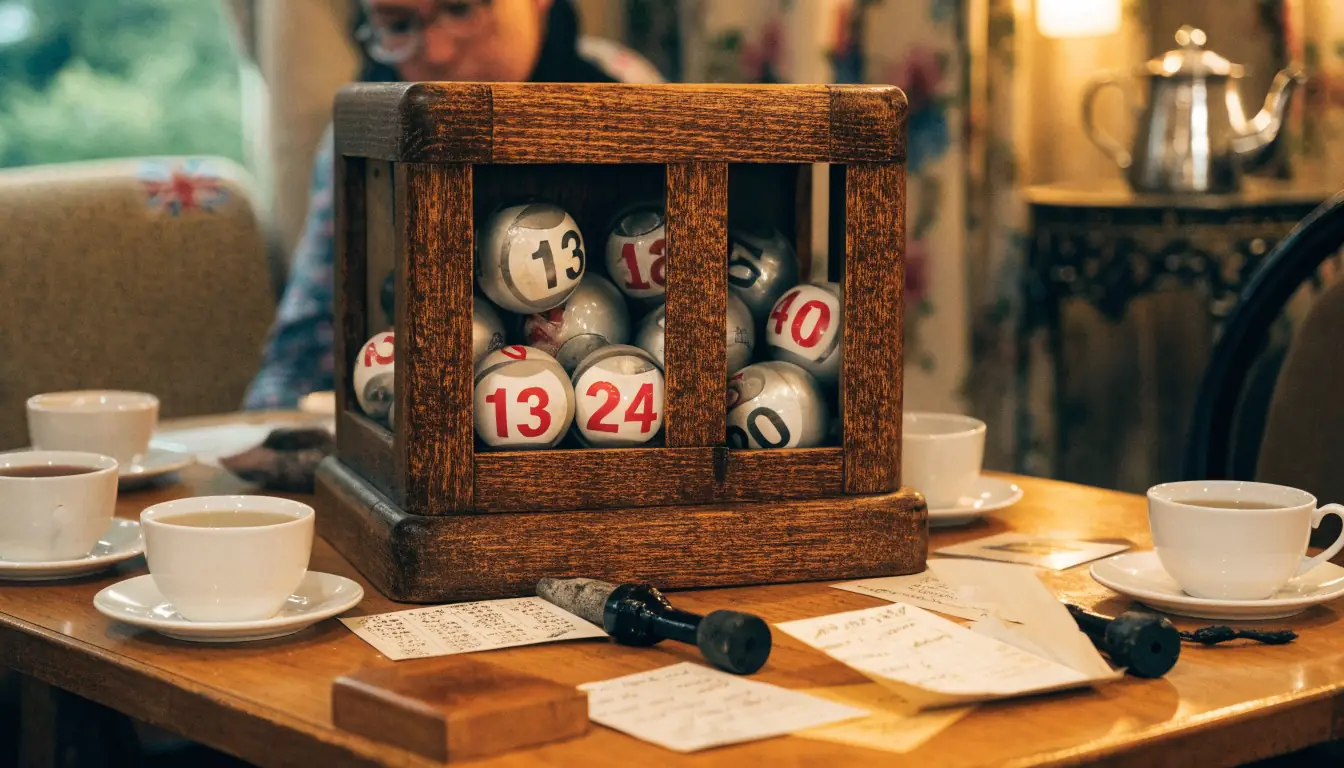
No wagering removes a rollover hurdle for winnings, but offer terms can still govern eligible games and whether balances qualify for withdrawal.
What “No Wagering” Changes — and What It Leaves in Place
The useful part of a no-wagering offer is not complicated: winnings do not have to be played through again before they can be withdrawn. A standard playthrough requirement sets the number of times an offer must be bet before earnings become eligible for withdrawal. Remove that requirement and the particular hurdle disappears. The rest of the offer does not disappear with it.
I have found that the phrase “no wagering” is often read as a promise about the whole withdrawal process. It is narrower than that. It describes what happens to the winnings in relation to a rollover requirement; it does not, by itself, say that every balance can be withdrawn in every circumstance, or that every game on the site qualifies.
That distinction matters on a bingo casino site where bingo rooms and slots sit beside one another. A promotion may be presented alongside both products, while its own terms still define what the bonus can be used on and what happens to any resulting winnings. The presence of slots on a bingo site does not make the offer unrestricted across the site. “No wagering” answers one question only: whether the winnings must meet a playthrough target before withdrawal.
The value is certainty, not a larger bonus
When I compare a bingo slots bonus with an offer that has a rollover condition, I look first at what the condition asks the player to do after receiving the offer. With no wagering, there is no further betting target attached to the winnings. That can make the offer easier to understand: the advertised benefit is not dependent on reaching a turnover figure first.
That is the practical appeal behind searches for bingo slots with no deposit or no-wagering bingo offers. The two descriptions are not interchangeable, though. “No wagering” concerns whether winnings need to be played through; it does not say whether a deposit is needed to receive an offer. Those are separate features, and the terms should identify them separately.
Latest UK No-Deposit Casino Bonuses: How They Work
Nor does no wagering mean that the offer has no conditions. A casino may set a withdrawal cap, or restrict which games are eligible. Those limits do not create a playthrough requirement, but they can still affect how much can be withdrawn or how the offer can be used. The label is accurate only on its own narrow point. It is not a summary of every term that controls the balance.
This is why the word “free” can be less informative than the actual offer conditions. In my experience, promotional language tends to put the attractive feature in the headline and leave the practical boundary in the terms. No wagering is a real benefit, but it needs to be read alongside the restrictions that remain. Headline first. Conditions next.
What to check beyond the label
The first distinction is between the bonus itself and money that can be withdrawn. The offer terms should make clear what is being credited and whether the bonus has separate conditions from a deposited balance. A no-wagering label does not explain that relationship. It only removes a rollover requirement from winnings where the offer provides for that treatment.
The second distinction is between the games a site offers and the games an offer permits. A site may combine bingo and slots, but an individual bonus can still be tied to eligible games. A player considering the best bingo sites with slots is therefore comparing more than a catalogue of products: the promotion’s own rules determine where its value applies. This does not mean the offer is poor. It means the site’s full game range and the bonus’s eligible games are not necessarily the same thing.
The third point is the withdrawal wording. No-wagering winnings may still be subject to other casino terms, including a stated cap. If a cap applies, it changes the amount that can leave the account; it does not turn the offer into one that requires turnover. Keeping those concepts separate avoids a common misunderstanding: “withdrawable without wagering” is not the same as “unlimited withdrawal”.
Do
- Read the specific offer terms
- Check for withdrawal caps
- Identify eligible games
Don’t
- Rely solely on “no wagering” labels
- Assume all balances are withdrawable
- Ignore remaining restrictions
For new bingo sites with slots, the same reading applies as for established operators. A new launch, a bingo-focused brand, or a casino-style site with bingo rooms does not change what no wagering means. The terms of the particular promotion do. I would not treat a prominent badge as a substitute for the wording that explains eligible games, withdrawal limits and the status of bonus funds.
The strongest no-wagering offer is not automatically the one with the loudest headline or the broadest-looking game menu. Its value depends on whether the removal of playthrough is useful and whether the remaining terms are clear. That is the distinction behind “best”: not a promise that every game or every penny is unrestricted, but an offer whose actual conditions match what the label leads people to expect.
No rollover. Other terms remain.
Bingo, Slots and the Turnover Fine Print
A promotion can mention bingo and slots in the same breath, but that does not make their play interchangeable for turnover. When an offer has a playthrough requirement, its terms determine which activity qualifies and how much each qualifying bet adds. The distinction matters because a balance can appear to be moving while the required turnover advances more slowly than expected.
I have seen this confusion arise from treating the games listed on a site as if they all served the same purpose. They do not necessarily count the same way under a promotion. Bingo activity may be measured through ticket purchases, while slot activity is recorded through spins. Those are different forms of play, but the key point is not the format: it is the offer’s definition of qualifying activity.
High-Roller Casino Bonuses in the UK: Terms to Check
One offer, different treatment
Some promotions include both bingo and slot components. A specialist review has reported that certain operators apply different wagering rules to those parts of the same offer. That is a report about particular promotions, not a rule that applies across every bingo site. The terms attached to the specific offer are decisive.
This can affect the practical value of a bonus. If bingo tickets count towards one requirement and slot spins towards another, activity in one product may not clear the condition attached to the other. A promotion might also make only one component eligible for turnover. The headline wording alone cannot settle that: the detail is in the rules for the bonus funds.
I have found that the useful question is not simply whether bingo and slots are both available. It is whether the offer says that both count, whether they count towards the same condition, and whether each has a separate requirement. If the wording leaves those points unclear, the apparent flexibility of a combined offer may not translate into flexible play.
What game weighting does
Game weighting is another layer. A specialist review reports that weighting can reduce the amount a game contributes towards wagering turnover. In practical terms, a qualifying bet does not necessarily move the meter by its full stake. The stated requirement and the progress credited to play are separate things.
That is why the phrase “qualifying game” needs more scrutiny than a simple yes or no. A game may be included, yet contribute less than another eligible game. If a player assumes that every stake counts equally, the remaining turnover can be misjudged. The offer’s weighting table, where provided, explains how the operator calculates progress.
Game weighting can reduce the amount a game contributes towards wagering turnover, meaning a qualifying bet may not move the progress meter by its full stake.
The same logic applies when comparing bingo and slot activity. It is not safe to infer that buying a ticket and placing a slot stake contribute identically just because both are permitted. Nor does a site’s general game menu establish the rules for a specific promotion. The bonus terms control the calculation.
A small detail with a large effect.
Bingo games, slots and side games
The language around bingo can also blur categories. A site may present bingo alongside slots or other casino games, but that layout does not tell us how a promotional condition treats each activity. “Bingo slots” can be used informally to describe slots found on a bingo site; it should not be read as evidence that a slot spin qualifies under a bingo offer.
The same caution applies to side games associated with a bingo session. Their presence within a bingo environment does not by itself show whether they count towards turnover, or at what weighting. The offer rules need to identify eligible activity. If a game is not named or covered by a clear category, its contribution should not be assumed.
This is where searches for bingo and slots games often lead to the wrong comparison. A catalogue answers what can be played. Turnover terms answer what counts for a particular bonus. Those are separate questions. A game can be available for cash play yet excluded from bonus turnover, or allowed with a reduced contribution, depending on the promotion.
Reading the progress, not the headline
I treat a turnover meter as a record of credited activity, not as proof that every stake has been counted in full. The relevant details are the eligible products, any game weightings, and whether bingo and slot components share a condition or have distinct rules. If the terms define separate balances or progress trackers, each should be read on its own.
This also explains why “play bingo slots online” is not a meaningful description of how a bonus clears. Playing a slot on a bingo-branded site is still slot activity for the purpose of checking the offer; the site’s identity does not replace the promotion’s definitions. Free play and free spins raise separate questions about restrictions and withdrawable winnings, so they should not be folded into this turnover comparison.
I would reduce the decision to a simple calculation: identify the activity the offer accepts, check whether it receives full or reduced credit, and follow the progress shown for that requirement. The label on the game is secondary. The credited turnover is what matters.
Bonus Terms Under the UK Wagering Cap
A bingo site can also offer slots without treating the two products as one promotion. That distinction matters more than the site’s menu. A business may run bingo and slot games on the same account, but a promotional incentive cannot bundle both products together in Britain from 19 December 2025. The restriction is about what the bonus rewards, not whether the operator provides both kinds of play.
Mixed-Product Bonuses
From 19 December 2025, promotional incentives cannot bundle both bingo and slots together in Britain; they must be separate incentives with their own terms.
I have seen promotional wording blur that line. A headline might present a single welcome package as covering bingo and slots, while the detailed terms assign different conditions to activity in each product. That structure is no longer a matter of clever presentation: mixed-product bonuses are prohibited. A bingo offer and a slots offer must be separate incentives, with their own terms. The operator’s branding does not turn separate promotions into one combined reward.
The UK Gambling Commission’s wagering limit also puts a ceiling on the playthrough condition attached to promotional bonuses. From 19 January 2026, the maximum is 10x. In practice, that means an operator cannot set a higher promotional playthrough requirement and expect the excess to be acceptable simply because it is printed clearly in the terms. Plain language is important, but it does not make a term lawful if it exceeds the cap.
That limit changes how a slot or bingo promotion should be assessed. The cap is not an endorsement of every condition below it. A lower multiple can still be hard to complete, and a condition can still be restrictive for other reasons. The number is a boundary, not a quality mark.
For bingo and slots sites operating under a UK Gambling Commission licence, the cap is part of the rules governing promotional play. A site’s claims about a generous bonus do not alter that framework. Nor does describing an offer as a “new player reward” or “slots extra” change its status as a promotion. The substance of the incentive matters.
Expiry is a separate condition
A playthrough requirement and an expiry period do different jobs. The first sets the amount of qualifying play needed before bonus-related winnings can be withdrawn. The second sets the time available to meet that condition. An offer can sit within the cap and still become difficult to use if its deadline is short relative to the required play.
I have found that expiry wording is often treated as housekeeping, placed after the headline offer. It is operationally important. If the qualifying play is unfinished when the period ends, the outcome depends on the promotion’s terms. A specialist review has described expiry conditions as potentially leading to the loss of bonus funds or related winnings, but that should not be read as a universal rule: the specific offer terms determine what happens.
The practical check is to read the deadline and the consequence together. A statement that bonus funds expire does not, by itself, explain what happens to winnings generated from them. The terms should make clear what expires, whether any unfinished playthrough is cancelled, and how that affects withdrawal. If those details are separated across the promotion page and its rules, the headline alone cannot answer the question.
Mobile access does not change any of this. A bonus viewed on a phone remains subject to the same cap, product separation and expiry wording as one viewed on a desktop. “Mobile bonus” describes where the promotion can be seen or used; it does not create a separate set of wagering rules.
Evaluating a Bonus
- Identify which product the incentive covers
- Check the playthrough multiple
- Confirm the expiry period
Read the offer as a set of conditions
I would separate the decision into three parts: which product the incentive covers, what playthrough it requires, and when that requirement expires. That catches a common source of confusion: a site may offer both bingo and slots, yet the particular promotion may apply to only one of them. The name of the site is not evidence that both products qualify.
The same applies to phrases such as “bingo and slots welcome offer”. If a promotion appears to reward activity across both products, its structure deserves close attention under the mixed-product ban. If it is a slots promotion on a site that also runs bingo, that is a different arrangement. The terms should identify the eligible product rather than relying on broad marketing language.
A sound offer page makes the essential conditions visible before acceptance: the qualifying product, the playthrough multiple, and the expiry period. The cap limits one part of the deal. It does not remove the need to understand the rest. No loophole.
Deposits, Bonus Funds and the Real Turnover Figure
A deposit offer can advertise a bonus amount while leaving the important calculation in the small print: does the playthrough requirement apply to the bonus funds alone, or to the deposit and bonus together? The multiplier may be identical in both cases, but the qualifying turnover is not. I have seen that distinction make a headline bonus look much more generous than the amount of play needed to release its winnings.
Casino Bonuses: Free Spins and Welcome Offers
The calculation has two parts: the amount covered by the requirement and the number of times that amount must be wagered. If only the bonus is covered, the deposit is outside that calculation. If both funds are covered, the combined balance is the starting figure. The terms should say which applies; a multiplier without that base does not give the full turnover figure.
Consider a £20 deposit and a £20 bonus with a 30x requirement applying to both. The calculation is £40 multiplied by 30, which means £1,200 in qualifying wagering. If the same multiplier applied only to the £20 bonus, the arithmetic would produce £600 instead. Those figures illustrate why “30x” alone is not enough to understand the commitment: the amount to which it applies matters just as much.
That 30x example is arithmetic, not a description of a compliant current UK offer. UK promotional wagering requirements are capped at 10x. The point of the comparison is the base used in the calculation, not a suggestion that the larger multiplier is available under current UK rules.
In an offer’s terms, the wording around “bonus funds” and “deposit” carries the practical meaning. A bonus-only condition can leave deposited money outside the playthrough calculation, while a combined condition counts both amounts. That does not mean the deposit and bonus become interchangeable: the promotion should make clear how bonus funds are treated and what balance is subject to the condition. Clear wording separates the promotional amount from the player’s own deposit instead of letting the headline figure do all the work.
The balance shown in an account can therefore be a poor guide to the remaining commitment. What matters is the offer’s stated calculation and the qualifying activity recorded against it. Where the terms apply the multiplier to a combined amount, the turnover target starts higher than it would under a bonus-only calculation. A simple multiplication, but a consequential one.
Turnover Calculation
Step 1: Determine the base
Identify if the requirement applies to the bonus alone or the combined deposit and bonus (e.g., £20 deposit + £20 bonus = £40).
Step 2: Apply the multiplier
Multiply the base by the playthrough requirement (e.g., £40 × 30x).
Step 3: Calculate total turnover
Determine the final amount of qualifying wagering needed (e.g., £1,200).
I read these terms as a small accounting rule, not as a description of how much money will be won. Turnover is the amount of qualifying bets required by the offer; it is not a promise of a particular outcome. The headline bonus describes what is added under the promotion. It does not, by itself, disclose how much qualifying play is attached.
This distinction matters across casino and bingo promotions, including offers presented alongside slots or bingo play. The product named in an advert does not settle the calculation. The offer’s own terms determine whether the requirement is based on the bonus or on the combined deposit and bonus, and which activity counts. The useful figure is the resulting turnover total, not the multiplier in isolation.
A properly presented offer makes that total possible to work out before acceptance: the covered amount, the playthrough multiple and the qualifying activity should not be left to inference. When only the multiple is prominent, the deposit can disappear into the small print. That is where the real figure changes.
Live Bingo and Casino Offers: Keep the Products Separate
Bingo and casino play can appear side by side on one site, but that does not make them one promotional product. A live bingo offer may cover ticket purchases, while a casino promotion may apply to slot play. The distinction matters when a promotion mentions both: its wording needs to show which activity qualifies and what rules apply to each part.
I have seen how a broad headline can make an offer sound simpler than its terms. “Play bingo and casino” may describe the range of activity available, not a single pool in which every stake counts in the same way. A specialist review describes operators applying different wagering rules to bingo and slot components of one promotion. That is an example of how terms can vary, not a rule that applies to every site.
Read the offer by product
The useful question is not just whether an offer is attached to a bingo account or a casino account. It is whether the terms identify the eligible product and explain what happens when play moves between them. If bingo tickets qualify but slot spins do not, that boundary should be clear. If both are included but treated differently, the distinction should be stated rather than buried beneath a shared bonus headline.
The same care applies to live bingo and casino-style play on a mobile site. They may sit in neighbouring menus or use the same account balance, yet a shared interface does not establish that an offer covers both. I treat the promotional terms as the controlling document, not the placement of a tile or the wording of a banner.
That is where a “combined” offer can become misleading in practice. The word may suggest flexibility, while the conditions divide activity into separate qualifying categories. A player could spend time in one product and find that this does not advance the offer attached to another. The terms should make that distinction visible before acceptance.
Attention A "combined" offer may suggest flexibility, but conditions often divide activity into separate qualifying categories, meaning play in one product may not advance an offer attached to another.
Keep the mechanics visible
A well-explained promotion separates deposited money from bonus funds and names the relevant activity in plain English. If bingo and slot play are both mentioned, the offer should make clear whether either product is excluded, whether each has its own playthrough condition, and how any unfinished condition is handled. Those are not minor details; they determine what the promotion actually rewards.
I would also distinguish a live bingo promotion from a live casino promotion, rather than treating “live” as a shared category. The word can describe how a product is presented, but it does not by itself say which activity qualifies under a bonus. The relevant terms still need to identify the product and its conditions.
The practical test is simple: can the offer be understood without guessing which part of the site counts? If the banner promises bingo and casino play but the terms refer only to slots, the promotion is not clear enough on its face. If separate product rules apply, they should be set out separately, not blended into a single headline.
No shared label makes the products interchangeable. Check the wording.
Best casino sites in the UK
- BeOnBetBonus: 100% up to €500 + 100 FS · Payout speed: 1-3 business days
- EvoSpinBonus: 125% up to €2500 + 125 Free Spins · Payout speed: 1-3 business days
- BritsinoBonus: Welcome Package – Get your £2,200 + 2,000 FS · Payout speed: 1-3 business days
- Revery PlayBonus: 100% up to€1,000+ 100 FS · Payout speed: 1-3 business days
- SlotoSportBonus: 500% up to £ 10 200+ 777 FS · Payout speed: 1-3 business days
- ZombillionBonus: Welcome Pack 250% up to £4000 + 200 FS · Payout speed: 1-3 business days
Free Spins on Bingo Sites: Check the Game Restriction
A bingo site can offer free spins without making them usable across every slot in its games lobby. The site’s wider range and the promotion’s eligible game are separate things. In a specialist review, no-wagering free spins are described as being restricted to a particular slot selected by the operator. That is a report about the offer, not a rule that applies to every bingo and slots bonus.
The restriction matters because a spin is not necessarily a general credit to spend wherever the account holder chooses. The offer terms can name the slot that accepts it. If the spins are tied to that game, choosing another slot—or opening the bingo section—does not make the offer transferable. The “free” label describes the cost of the spins, not freedom to use them across the site.
I have seen this distinction blurred by the way a site presents its products. Bingo may be the reason someone recognises the brand, while the promotion itself is built around a casino slot. That does not make the spin offer a bingo promotion, and it does not mean bingo play can satisfy a condition attached to slot winnings. The eligible game is the practical boundary.
There is a second question to keep separate: whether winnings from the spins have a playthrough requirement. The value of the spins and the winnings they produce are not the same thing. Where a wagering condition applies to free spins, it applies to the resulting winnings, rather than requiring the player to wager the face value of the spins themselves. The terms should therefore make clear both which game is eligible and what happens to any winnings.
That distinction can change how an offer is understood. A promotion may restrict spins to one named slot while separately setting a rollover requirement on winnings. Conversely, the phrase “no wagering” concerns that playthrough condition; it does not, by itself, tell the reader which game the spins can be used on. One term governs access to the spins. The other governs the winnings.
Free Spins Restrictions
Free spins are often restricted to a particular slot selected by the operator. In such cases, the spins are not transferable to other slots or the bingo section.
I would not treat a bingo site’s free spins as a route to the best-paying slots on the site unless the offer actually identifies eligible games and supplies comparable payout information. A game restriction is not evidence of a higher return. Nor does a broad “bingo and slots” label establish that all games qualify. The detail is in the promotion’s own wording.
Read the game restriction and the winnings condition as two separate clauses. If the named slot is not the intended game, the headline has little practical value. If the spins are usable but winnings carry a playthrough requirement, the offer is not no wagering in the sense that matters at withdrawal. The label is only half the deal.
Playing for Free Online: What “No Deposit” Does Not Mean
“No deposit” describes how an offer starts: a player can access it without first making a payment. “No wagering” describes what happens to eligible winnings: there is no playthrough requirement to clear before withdrawal. The labels answer different questions, and one does not imply the other.
I have seen the distinction get blurred in promotional copy. “Play for free” sounds like the winnings are free of conditions, but it may only mean that no deposit is needed to activate the offer. If playthrough applies, the bonus terms still determine what must happen before any resulting balance can be withdrawn. The starting cost and the cash-out rules are separate parts of the deal.
The reverse is also important. An offer described as no wagering removes the rollover requirement; it does not automatically make every win unrestricted. A withdrawal cap or a restriction on eligible games may still apply. The phrase tells only part of the story.
That matters when an offer appears on a site carrying both bingo and slots. A site may let customers play bingo and slot games online, but that does not mean a free offer can be used across both products. The promotional terms set the boundaries. The site’s broader game menu is not a promise about which activity counts for a particular offer.
The same distinction applies to free bingo or slot play. “Free” can refer to the absence of an upfront payment, while the offer may still set conditions on eligible games or withdrawals. No deposit is not a synonym for no wagering, and neither label should be read as a blanket promise about every use of the balance.
I treat the wording as a starting point, not a complete description. The practical check is whether the terms say playthrough must be completed and, separately, whether they limit eligible games or the amount that can be withdrawn. That is where the promotion’s real shape appears. Short label. Separate rules.
Slot Machines Online: The Rules Behind Each Spin
A slot on a bingo site is still an online slot game, not a different kind of machine because it sits beside bingo rooms. The rules governing the spin apply to the slot itself. That distinction matters when a site presents bingo and casino games under one account: the product label does not change how a slot may operate in Britain.
Minimum Spin Duration 2.5 seconds
Autoplay Prohibited
Max Stake (Age 25+) £5
Max Stake (Age 18-24) £2
Each online slot spin must last at least 2.5 seconds. Autoplay is prohibited, so a player cannot set a sequence of spins running automatically. I have found that these rules are easy to miss in promotional language, which tends to focus on the game’s theme or the size of a bonus. They are not bonus conditions. They are limits on the mechanics of play.
There is also a maximum stake per game cycle. For players aged 25 and over, the limit is £5; for those aged 18 to 24, it is £2. The lower limit for younger adults remains in place even though the £5 limit applies to other adult players. A stake limit is not a target or a recommendation: it is the permitted maximum for a single game cycle.
That is the practical answer to what changes when a bingo site includes slot-machine games. The slot does not become exempt from rules on spin speed, autoplay or stakes. Nor does calling it an online bingo slot game make its controls different. The relevant question is whether the game is an online slot, not which section of the website contains it.
Separate mechanics. Separate product.
When a Bingo Slot Machine Win Still Needs Turnover
A win from a slot machine linked to a bingo promotion is not automatically ready to withdraw. The deciding detail is whether the promotion attaches a playthrough requirement to its bonus funds or to winnings generated while those funds are active. The game may feel separate from bingo; the offer terms decide whether its bets count towards turnover.
I have seen the headline bonus do most of the selling while the multiplier sits further down the terms. That is where the practical cost becomes clear. A stated example of a £20 bonus with a 40x requirement calls for £800 in qualifying bingo tickets or slot spins before withdrawal. The figure is the required play, not a promise that the bonus will produce that amount.
There is an important UK distinction: a 40x condition is not a compliant requirement for a UK-licensed promotion under the current 10x cap. The example still shows how a multiplier translates into turnover, but it should not be read as an acceptable current offer from a locally licensed operator.
I would check which activity qualifies before treating a machine-game win as cash. A promotion may specify eligible games, and a bet outside those terms may not reduce the outstanding requirement. The balance can look available while withdrawal remains blocked by unfinished turnover.
Read the condition, not the banner.
Free Bingo Slots: When Winnings Can Be Withdrawn
“Free” describes how the spins are awarded; it does not, by itself, settle when their winnings become withdrawable. On a bingo site that also offers slots, the key detail is whether a playthrough condition applies to the money won from those spins.
When there is no wagering, the winnings are immediately eligible for withdrawal. There is no further turnover to complete before they can be withdrawn. That is the practical meaning of a no-wagering free-spin offer: the spin may produce a win, and the win does not have to be put back through qualifying play first.
A condition changes the position. If the winnings carry a playthrough requirement, they remain subject to that requirement until the required qualifying bets have been made. The original spin may have been free, but the resulting balance is not necessarily ready to withdraw. The distinction is easy to miss in promotional wording, which can foreground the free spins while leaving the withdrawal condition in the terms.
I have seen the cleanest way to read these offers as separating two questions: were spins credited without payment, and can the resulting winnings be withdrawn now? The first does not answer the second. The terms need to state whether wagering applies to spin winnings, rather than merely describing the spins as free.
No rollover, no extra play. That is the point.
How do wagering requirements work on free spin winnings at UK casinos?
They apply to the winnings from the spins, not to the value of the spins themselves. For example, a £20 win with a 10x requirement needs £200 in qualifying slot turnover before withdrawal; with no wagering, the winnings are immediately withdrawable, subject to other terms.
What changed for UK bingo customers when the Commission capped bonus wagering in 2026?
Promotional wagering requirements for UK-licensed operators were capped at 10x the bonus amount from January 2026. Mixed-product bonuses were banned from 19 December 2025.
Are no wagering casino offers really free?
Not necessarily: no wagering removes the playthrough requirement, but an offer may still have eligible-game restrictions or a withdrawal cap. Check the promotion’s terms for those limits.
Which games can I play with no wagering free spins?
No-wagering free spins are usually limited to a specific slot chosen by the operator. Check the offer terms to see which slot is eligible.
Bonuses
150 Free Spins No Deposit UK: Offer Terms Explained
Spin count alone does not show the cash value: stake size, crediting rules, eligibility and wagering conditions all affect the offer. Why 150 Spins Is an Unusual No-Deposit Offer A…
High-Roller Casino Bonuses in the UK: Terms to Check
A practical look at wagering conditions, game eligibility, cash value and the…
No wagering casinos in the UK: terms explained
No wagering removes the playthrough condition, but game eligibility, withdrawal limits and…
Online Casino with a 100% Bonus: What to Check
A deposit match adds bonus funds, but qualifying rules, maximums and withdrawal…
Published by the Vaultline team.