
ecoPayz and UK Slot Stake Limits: How the Caps Shape Your Play
 Available in GB
A player asked me recently whether using a wallet let him get around the new slot stake limits, and I want to answer that question head-on before anything else: no, and nothing should. The payment method has no bearing on the cap. The limit lives in the game, not the cashier, and that is exactly as it should be.
The UK has brought in maximum stakes per spin on online slots, and those caps apply no matter how you funded your balance — wallet, card or anything else. Understanding how the limits work, and why they exist, matters more than understanding any payment detail, because these caps are about keeping play within bounds that protect people. The wallet is just how the money arrives; the stake limit governs what happens next.
So this piece is about the caps themselves and how they interact with funding through Payz, which is to say barely at all in mechanical terms but quite a lot in spirit. I will set out what the limits are, why the figures were chosen, and how a wallet fits into a regime designed to keep stakes sensible. The honest throughline is that these limits are a feature of a safer system, not an obstacle to route around.
What the New Caps Actually Are
The limits are specific, staggered by age, and already in force, so there is no ambiguity about what applies to you. The UK has set a maximum online slot stake of £5 per spin for players aged 25 and over, which took effect on 9 April 2025, and a tighter £2 per spin for younger adults aged 18 to 24, in force from 21 May 2025.

The age split is deliberate and tells you something about the thinking behind the rules. Younger adults face the lower cap because they are recognised as a more vulnerable group, so the regime applies extra caution to them rather than treating all players identically. These are hard per-spin ceilings built into the games themselves, which means they bite at the point of play regardless of how much sits in your balance or how it got there. A wallet full of funds does not lift the cap; the cap is on the spin, not the wallet. That design is the entire point — by placing the limit in the game mechanics, the regulation makes it structural rather than something a player has to enforce on themselves in the heat of a session.

It helps to see these figures against reality. The average online slot stake sits at around £0.60, far below either cap, which means the limits are not aimed at typical play at all — they are ceilings to catch the extremes, not handcuffs on the ordinary player. Most people will never come close to £5 a spin, let alone £2. The caps exist for the minority of play that runs hot, and for them the structural limit is precisely the protection that matters most.
Best casino sites in the UK
- BeOnBetBonus: 100% up to €500 + 100 FS · Payout speed: 1-3 business days
- EvoSpinBonus: 125% up to €2500 + 125 Free Spins · Payout speed: 1-3 business days
- BritsinoBonus: Welcome Package – Get your £2,200 + 2,000 FS · Payout speed: 1-3 business days
- Revery PlayBonus: 100% up to€1,000+ 100 FS · Payout speed: 1-3 business days
- SlotoSportBonus: 500% up to £ 10 200+ 777 FS · Payout speed: 1-3 business days
- ZombillionBonus: Welcome Pack 250% up to £4000 + 200 FS · Payout speed: 1-3 business days
Why the Limits Sit Where They Do
The figures were not plucked from the air, and the reasoning behind them is worth understanding because it reframes the caps from restriction to safeguard. The limits are part of a broader push to make gambling demonstrably safer, and the official framing of how they should be read is telling.

The intent is that a stake cap is a ceiling, not a target. As the gambling minister put it, online slots stake limits “should serve as a maximum stake that customers should choose to stake up to” — a boundary that play should stay within, not a figure anyone is encouraged to reach. That distinction matters enormously. A £5 cap is not a suggestion to bet £5; it is the outer edge beyond which the regulator has decided play should not go, set so that even the most intense session has a built-in limit on how fast money can leave. The whole regime treats designed-in limits as more reliable than relied-upon restraint, which is why the cap lives in the game rather than in a hope that players will hold back. It is structural protection precisely because willpower is an unreliable brake when a session is running.
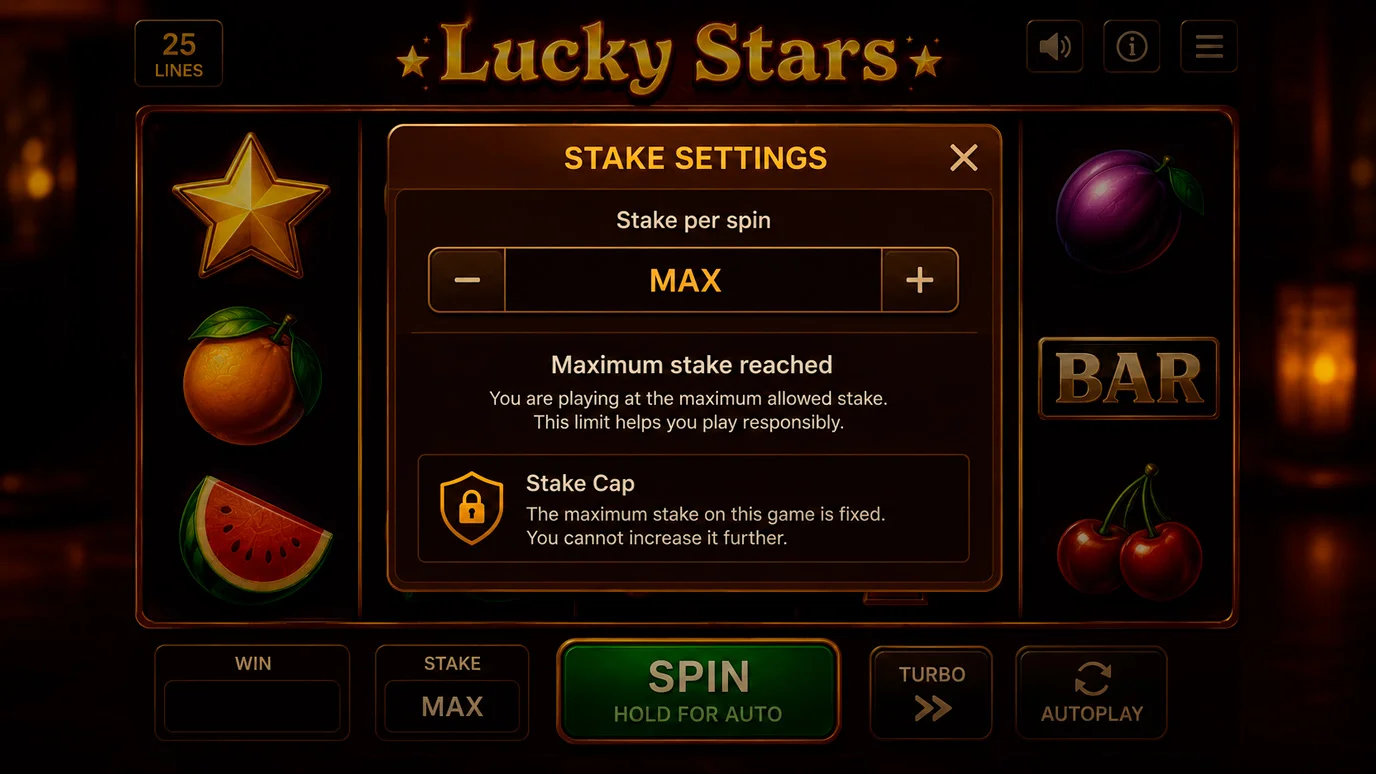
Seen that way, the limits are not the regulator spoiling anyone’s fun — they are a recognition that the speed and accessibility of online slots can carry real risk, and that a hard ceiling is the most dependable way to contain it. The caps protect the minority for whom play tips into harm, while barely touching the majority who already stake well under them. That is good regulation: targeted, structural and quiet for most.
How the Wallet Fits a Capped Game
So where does funding through Payz sit in all this? Mechanically, almost nowhere — and that is the reassuring answer. The wallet delivers money to your balance; the stake limit governs how that balance can be wagered per spin, and the two never collide. No payment method touches the cap.
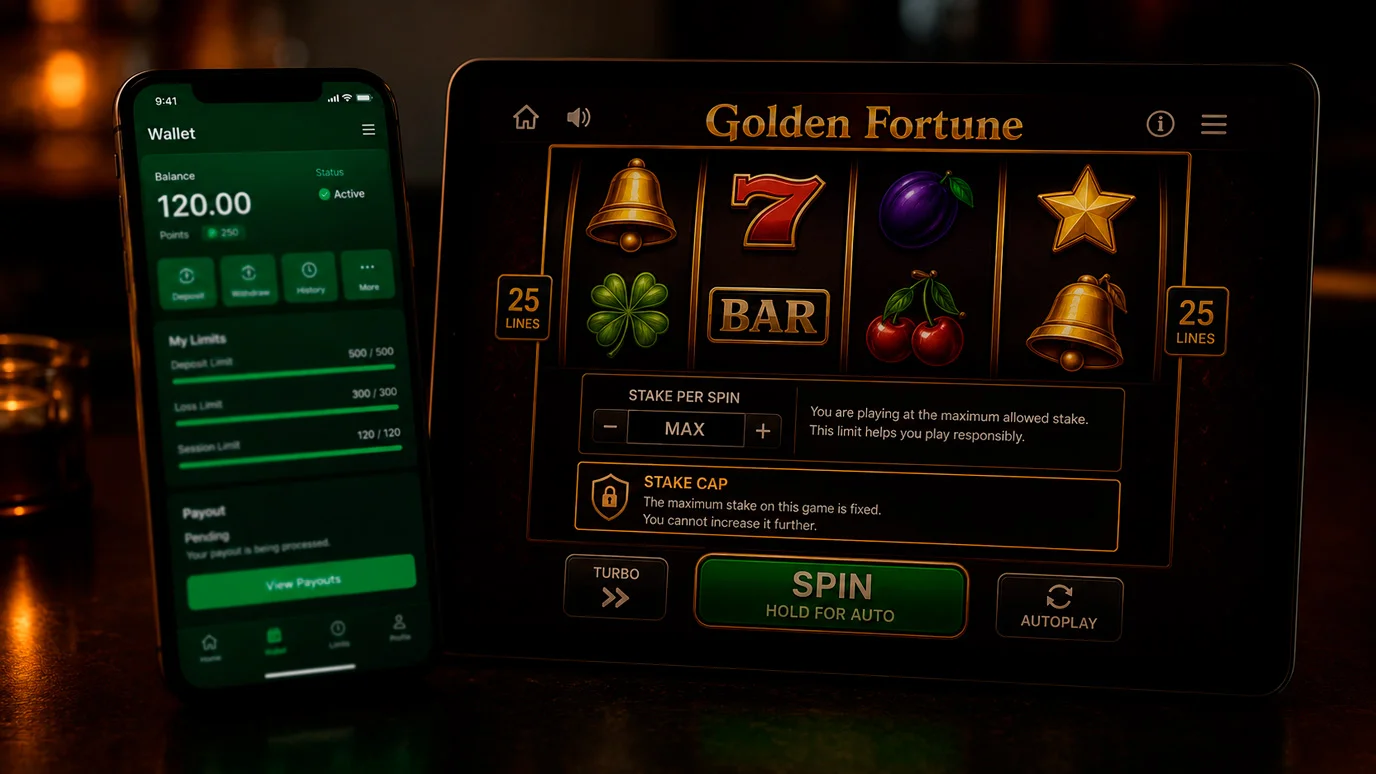
What the wallet does offer is complementary control on the other side of the equation. While the stake limit caps how much you can bet per spin, the wallet lets you cap how much you bring to the table in the first place, by funding a deliberate, separated budget rather than leaving an open pipe to your bank. The two work in the same spirit from different angles: the regulation limits the speed of play, the wallet limits the supply of funds, and together they give a careful player two structural brakes instead of one. That is the genuinely useful interaction — not the wallet evading the cap, which it cannot and should not, but the wallet reinforcing the same protective logic at the funding stage. If you want to see how that funding control actually works in practice, it is the core of how I approach ecoPayz casino deposits as a budgeting tool rather than just a payment step.
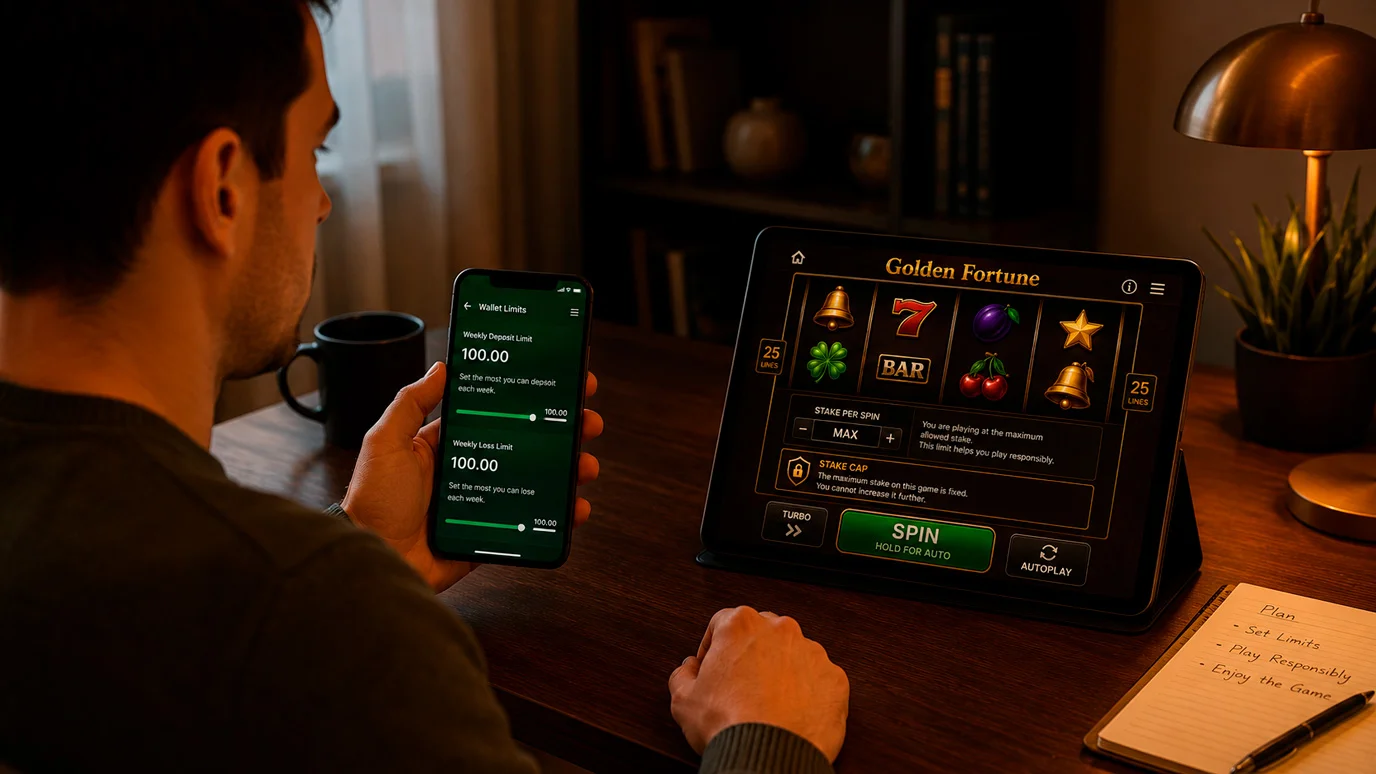
The clean conclusion is that stake limits and payment choice operate on entirely separate planes, and the smart player uses both deliberately. Let the per-spin cap do its structural job inside the game, and use the wallet to set your own ceiling on what enters play at all. Neither replaces the other, and used together they keep play inside bounds you have chosen as well as bounds the regulator has set.
Published by the Vaultline team.