
Best ecoPayz Casinos in the UK: How to Pick a Licensed Payz Site
 Available in GB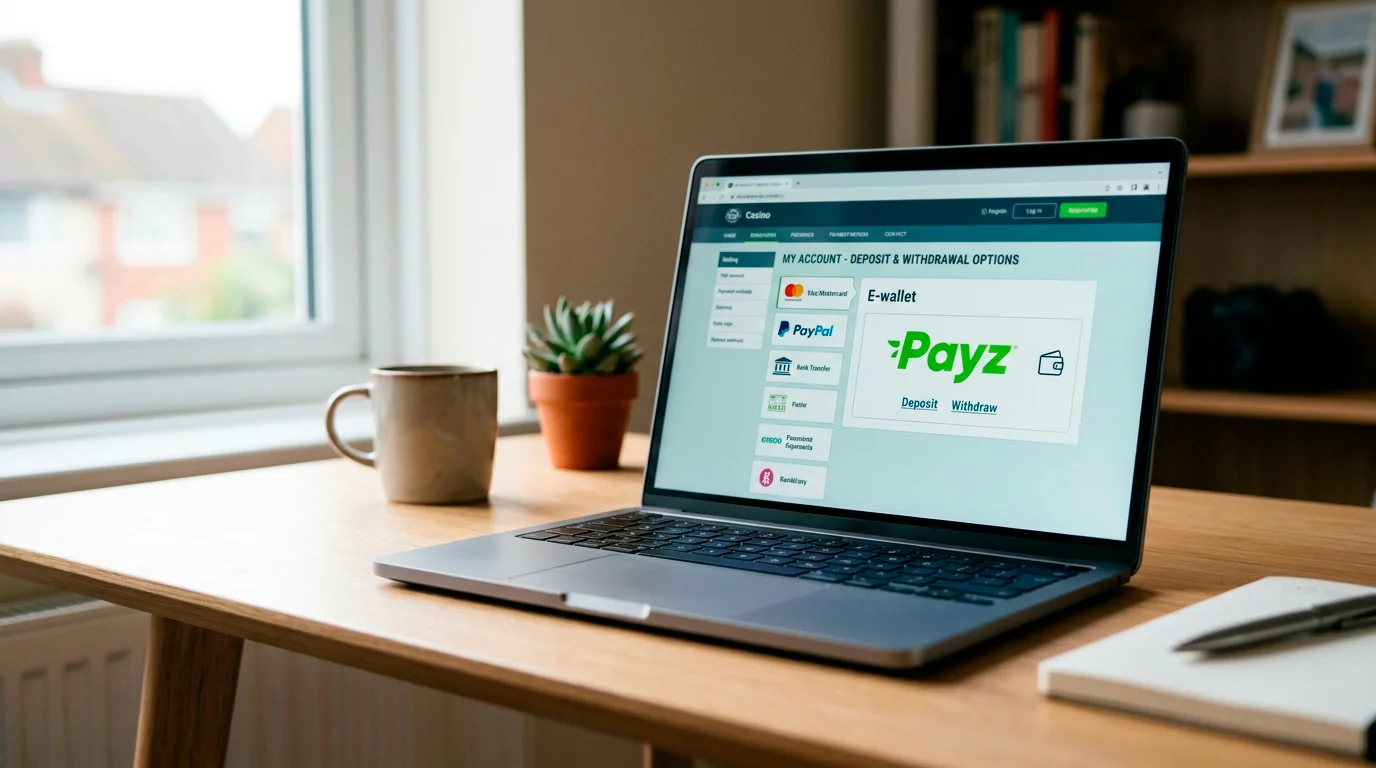
Six years auditing cashier flows has taught me one uncomfortable thing: the best ecoPayz casino for you is almost never the one sitting at the top of a sponsored list. It is the one whose payout desk treats your e-wallet withdrawal the way it treats a debit card refund, fast and without drama. That distinction is the whole game, and most “top sites” pages ignore it completely because ranking is easier to sell than reliability is to measure.
So I want to reset the question. Instead of asking which Payz casino is best, ask which one will still be best the morning after a four-figure win, when the cashier suddenly wants a utility bill and a selfie. The market is large enough that you can afford to be picky. The UK serves around 22.5 million gambling consumers, which means operators compete hard for deposits but compete far less hard on the boring back-office work that decides whether your money comes back smoothly. This guide is about reading those signals before you ever fund an account, so you choose on evidence rather than on whatever a banner told you this morning.
Throughout, I am talking about Payz, the e-wallet that used to be called ecoPayz before it rebranded in May 2023. The product is identical; only the name on the cashier button changed, and plenty of UK sites still print the old one. If your shortlisting habits are built around the wallet rather than the brand on the button, the rename is a non-issue.
Evaluating ecoPayz Casino Quality and Payout Reliability
A reader once forwarded me a screenshot of a casino’s homepage that promised “instant Payz payouts” in a banner roughly the size of a bus. The withdrawal page, three clicks deeper, quietly mentioned a 72-hour pending window and a £2,000 weekly cap. That gap between the front door and the cashier is the single most useful thing you can learn to spot, because it tells you whether a site treats payments as a service or as a marketing slogan.
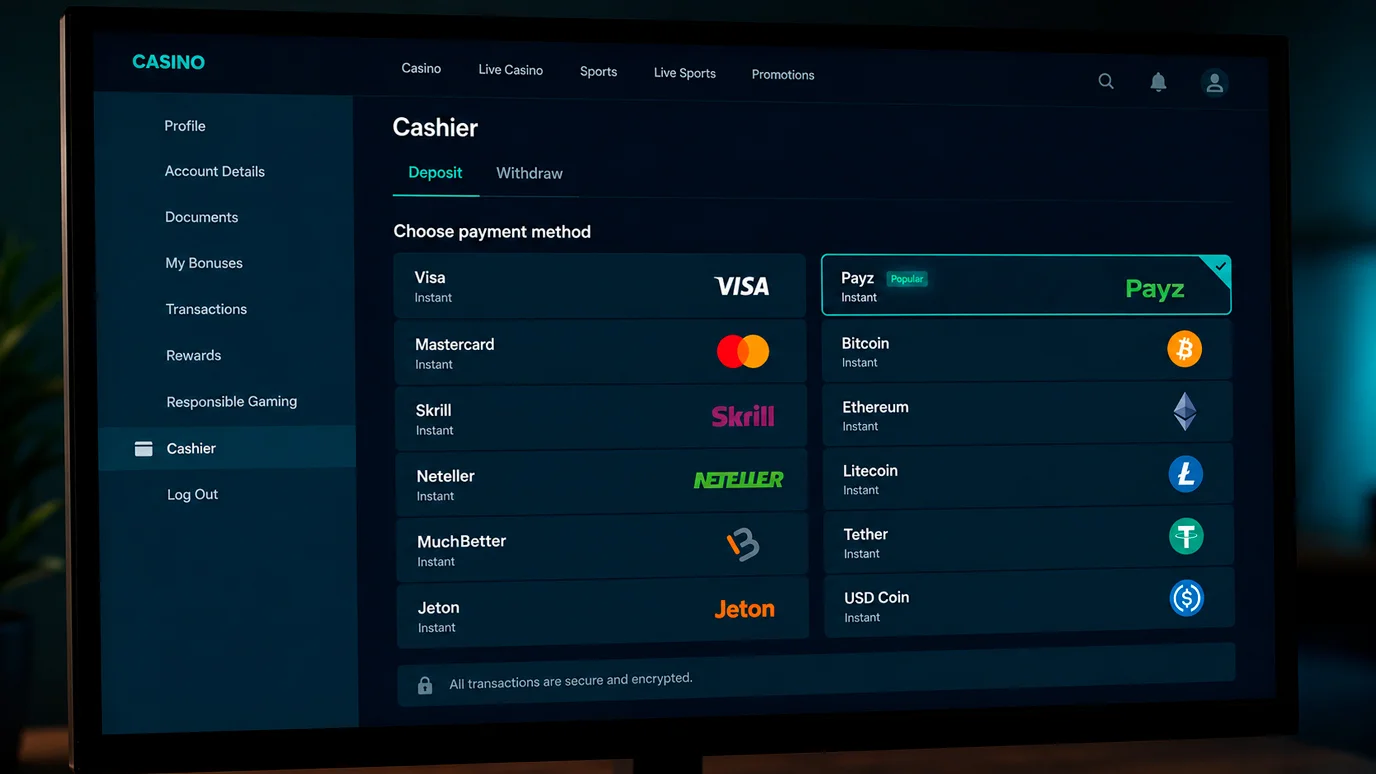
A Payz casino earns your attention on four practical points, and none of them is the welcome offer. First, does it actually process e-wallet withdrawals to Payz, not just accept Payz deposits? Many sites take your money one way and pay it back another, which defeats the privacy and speed you chose the wallet for in the first place. Second, is the licensed footprint real and current? The regulated UK market is not infinite; there are 8,234 licensed gambling premises and a tightly supervised set of remote operators, and a site that cannot point to its place in that structure is telling you something. Third, are the cashier terms written for a human to read, or buried? Fourth, does the operator’s track record suggest it can hold customer money responsibly when volume spikes?
I weight payout behaviour above everything because it is where promises and reality diverge most. Deposits almost always work; that is the easy half of the relationship, and a site will happily make depositing frictionless because it is in the operator’s interest. Withdrawals are where you find out who you are dealing with. The remote casino, betting and bingo sector now makes up 46 per cent of the entire GB market, so the operators competing for your Payz deposit are numerous and well funded, which is exactly why you can hold out for one that handles the unglamorous side properly.
There is a fifth point I almost left off because it sounds soft, but it matters: how the site behaves when something goes wrong. Every payment system has bad days. A maintenance window, a verification backlog, a flagged transaction that needs a human to clear it. The operators I trust are the ones whose support can tell you exactly where your withdrawal sits and why, in plain language, within an hour. The ones I avoid answer with a templated apology and a 72-hour disclaimer. You cannot test this directly before depositing, but you can read the support pages and the published response times, and you can notice whether the site sounds like it expects problems and has planned for them.
The mistake I see most often is treating “accepts Payz” as a finish line. It is a starting filter. Once a handful of sites clear it, the real comparison begins on the parts of the cashier nobody advertises. I would rather play at a site with a dull homepage and a flawless payout record than at one with a spectacular front page and a payout desk that goes quiet at the weekend, and after six years of watching both kinds, that preference has never once let me down.
Checking the UKGC licence before you trust a site
I have a small ritual before I deposit anywhere, and it takes about ninety seconds. I scroll to the footer, find the licence statement, and then I do not believe it. I open the Gambling Commission’s public register separately and check that the operator’s name, the account number and the trading domain all match what the site claims. It sounds paranoid. It is the cheapest insurance in this entire hobby.
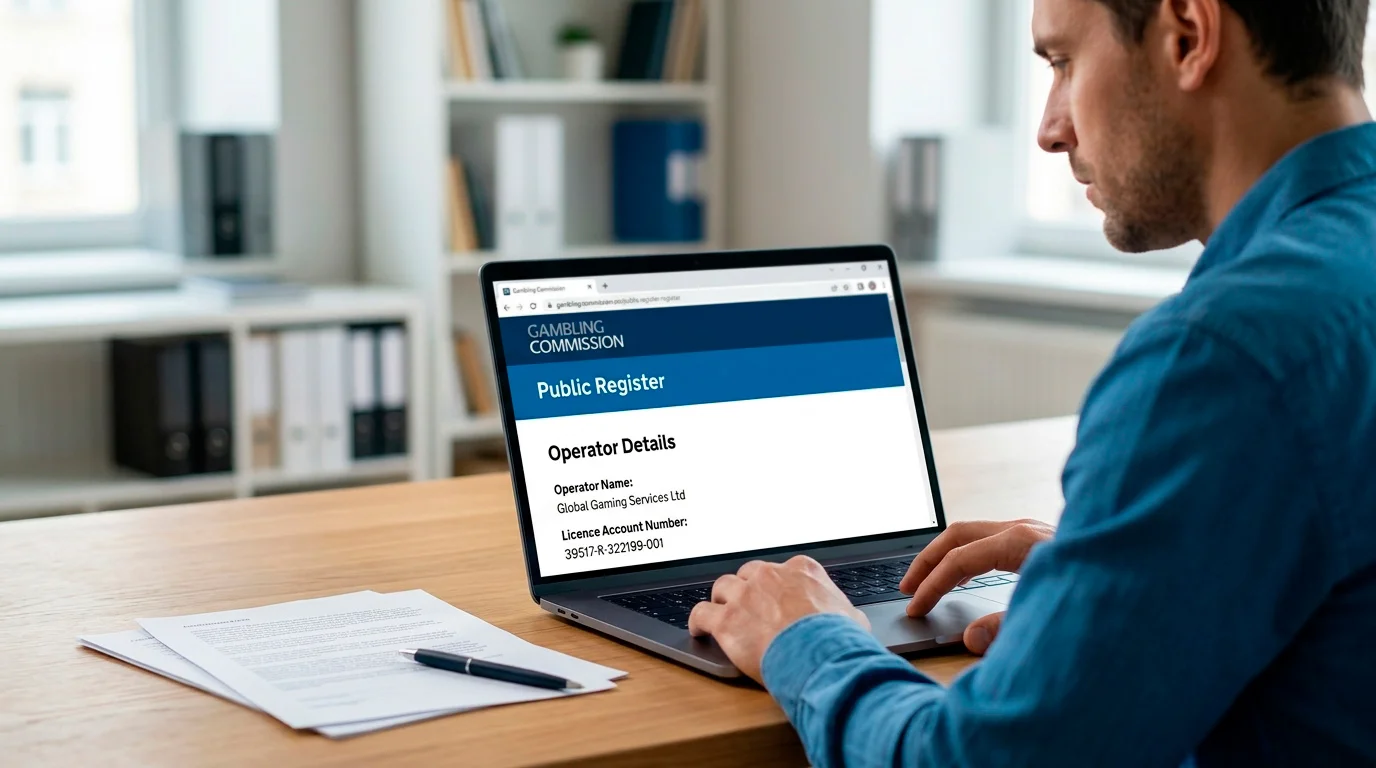
A UK Gambling Commission licence is not a decorative badge; it is a set of binding conditions an operator agrees to live under, and the regulator enforces them with real money. When NetBet Enterprises Limited was ordered to pay 650,000 pounds over anti-money-laundering and social-responsibility failings, that was not a parking ticket; it was the licence doing the job it exists to do. A site operating under that framework can be held accountable. A site operating outside it cannot, no matter how polished its Payz checkout looks.
The reason this matters specifically for e-wallet players is that Payz works almost everywhere, including on sites that have no business taking UK customers. The wallet does not check whether the casino on the other end holds a UKGC licence; that is your job. The regulator has been blunt about why the evidence base behind its rules exists, with its chief executive Andrew Rhodes describing the national gambling survey as “a key building block of the evidence base” that shapes how operators are supervised. The practical takeaway: a licensed operator is one whose payment and verification conduct sits inside that supervised system, and an unlicensed one is simply a wallet transaction into the dark.
If you want to understand the wallet side of that safety question in more depth, my colleague’s piece on whether ecoPayz is safe for gambling walks through how the FCA layer protects the wallet itself, which is a separate guarantee from the casino’s UKGC licence. Hold both ideas in your head at once: a safe wallet on a licensed casino is the only combination that protects you on both ends.
What an honest cashier page tells you
Show me a casino’s banking page and I will tell you more about how it will treat you than any review could. The cashier is where an operator either respects your intelligence or hopes you will not read.
The first thing an honest cashier does is separate its own charges from the wallet’s charges. Payz has its own fee structure that has nothing to do with the casino: a peer-to-peer transfer runs at 1.5 per cent on the Silver tier and is free once you reach Gold, currency conversion sits at 2.99 per cent on Classic and Silver before dropping to 1.49 per cent at Gold and above, and there is a 1.50-euro monthly charge if the account goes dormant. A transparent casino will tell you it adds nothing on top of that, and a transparent casino will say so plainly rather than letting you assume the wallet’s conversion margin is the casino robbing you. When a player complains to me that “the casino charged me a fee on my Payz deposit,” nine times out of ten it was the wallet’s own FX margin, and the casino simply failed to explain the difference.
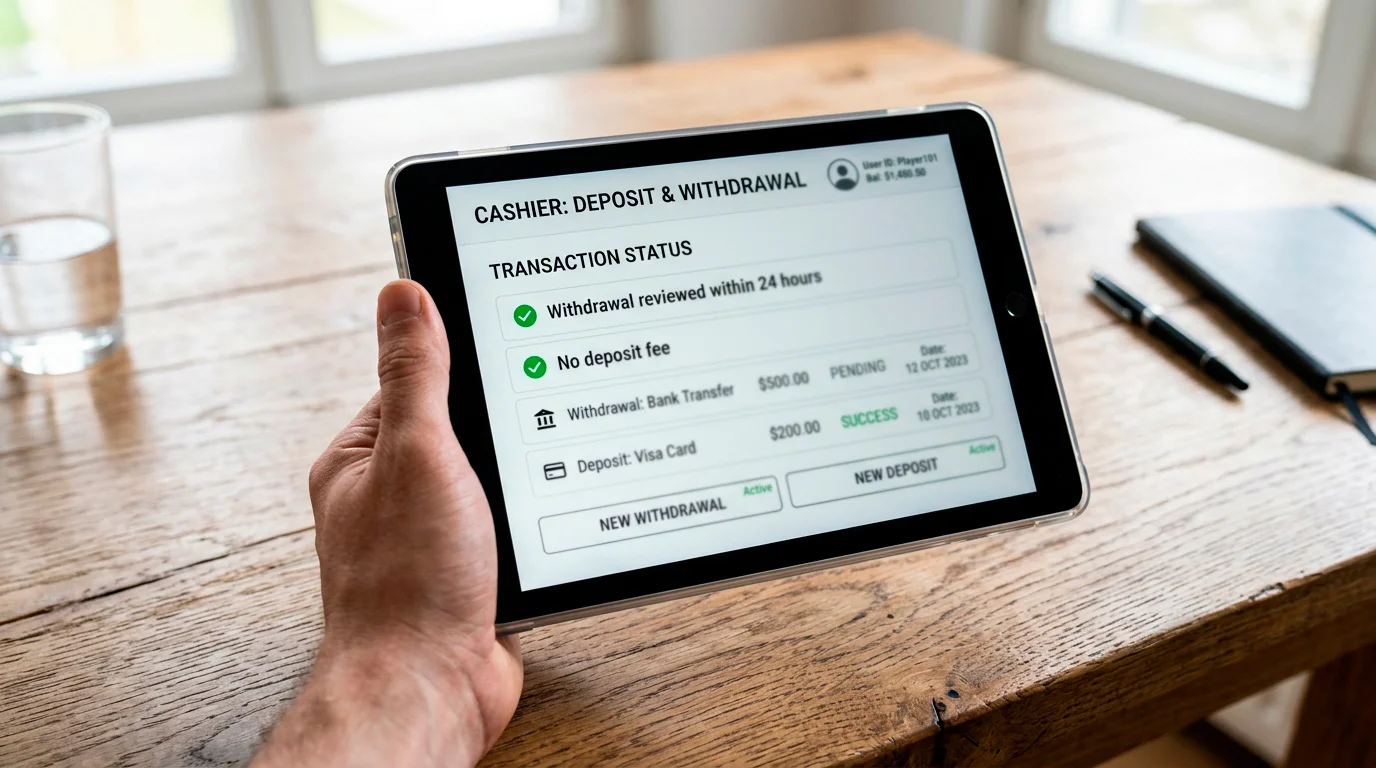
The second signal is specificity on timing. “Withdrawals processed quickly” is meaningless. “E-wallet withdrawals reviewed within 24 hours, then sent to Payz instantly” is a commitment you can hold them to. The third is honesty about limits, both per transaction and per week, stated before you deposit rather than discovered when you try to cash out. The fourth, and the one most sites fail, is a clear explanation of the same-method rule: that winnings generally return to the payment method you deposited with, up to the amount you deposited. A cashier page that hides any of these is not necessarily a scam, but it is telling you it would rather you did not look too closely, and that is information.
Let me make the fee point concrete, because it is the source of more bad reviews than any other single thing. Imagine you hold a Payz balance in euros and deposit at a casino that bills in pounds. Payz converts at its own margin, which on a Classic or Silver account is 2.99 per cent. On a 200-euro top-up that is roughly six euros vanishing into the spread before the casino has touched a penny. The casino added nothing; the wallet did. But because the deduction happens inside the same deposit flow, players blame the site. An honest cashier heads this off by stating in writing that it applies no deposit fee and that any currency difference is handled by your wallet provider. That one sentence saves a thousand support tickets, and its presence or absence is a reliable proxy for how much the operator respects you.
Payout reliability, and why it varies so much
The single most common message in my inbox is some version of “the wallet is fast, so why did my withdrawal take three days?” The answer is almost never Payz. The wallet credits in seconds. The variable is the casino’s internal processing, and that variable is enormous between operators.
Reliability is partly a function of scale and partly a function of staffing. The volume moving through UK online gambling is staggering and uneven; in the October-to-December quarter of the 2025/26 year, online gross gambling yield came in at 1.5 billion pounds, and even with yield down 2 per cent year on year the number of bets and spins still rose 6 per cent to 27.4 billion. That is a colossal flow of individual transactions, and the operators who staff their payments and verification teams to match it are the ones who pay out on time. The ones who treat the payout desk as a cost centre are the ones who let your withdrawal sit in a queue over a weekend.
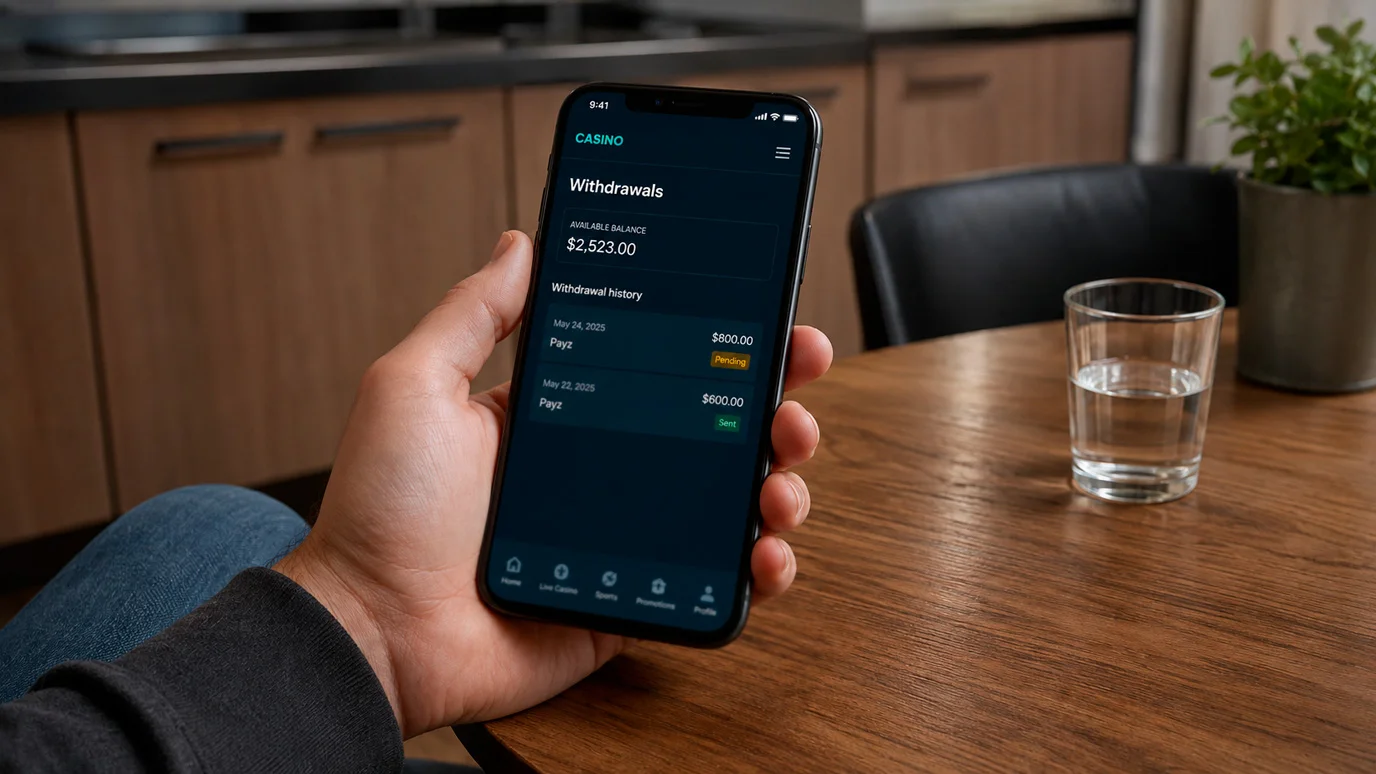
Here is how I test reliability without risking real money on a guess. I look for three things. One, a stated review window for first withdrawals, because the first cash-out is always the slowest and an operator that is upfront about it is managing your expectations honestly. Two, evidence that verification is requested at sign-up or first deposit rather than ambushing you at withdrawal, because a casino that front-loads its checks is one that has thought about your experience. Three, consistency of reported timelines across multiple independent accounts rather than a single glowing testimonial. A site that is reliable for a 50-pound payout and a site that is reliable for a 5,000-pound payout are not always the same site, and the difference shows up precisely at the moment it hurts most.
One practical note specific to Payz: because the wallet itself settles instantly, any delay you experience is a casino delay, full stop. That actually makes diagnosis easy. If the casino marks your withdrawal as “completed” but the funds are not in your Payz balance within minutes, then on the rare occasion it is a wallet issue. If the casino still shows “pending,” it is the casino, and no amount of refreshing the Payz app will change that.
The red flags that should stop a deposit
I keep a mental list of deal-breakers, and I have never regretted walking away from a site that tripped one. The first is the absence of a verifiable, current UKGC licence, which I have already laboured because it is the one that costs you the most. But there are subtler tells.
A site that accepts credit-card-funded e-wallets for gambling is either careless or operating outside UK rules, and that should worry you more than it first appears. The credit-card ban has applied since April 2020, and it reaches through e-wallets too, so a UK-licensed casino cannot lawfully let you gamble with a Payz balance you topped up on credit. There is a hard reason the regulator drew that line: among online gamblers who used credit cards, 22 per cent were classified as problem gamblers, a concentration that made the link impossible to ignore. A casino that shrugs at how your wallet was funded is a casino that is either not checking or not licensed, and both are red flags wearing the same coat.

The others come faster. Withdrawal limits so low that a modest win would take weeks to extract. Bonus terms that quietly void winnings if you withdraw “too early.” A support channel that is a contact form and nothing else. Reviews that all sound suspiciously similar and all appeared in the same fortnight. And the classic: a cashier that offers Payz for deposits but pushes you toward a slower, more traceable method for withdrawals. None of these alone proves bad faith. Two or three together, and I close the tab.
One red flag deserves its own mention because it disguises itself as generosity: the unusually large welcome offer attached to brutal wagering terms. I am not warning you off bonuses as a concept, but a headline figure that dwarfs anything the market normally runs is usually paying for itself somewhere, and that somewhere is often a clause excluding e-wallet deposits from the offer entirely, or a playthrough requirement engineered so the money is mathematically unlikely to convert to a withdrawable balance. When the size of the carrot is the loudest thing on the page, read the terms twice as carefully, not less. A serious operator competes on how it pays you back, not on how big a number it can print before the asterisk.
My working checklist for vetting a Payz casino
After enough audits, the process compresses into something you can run yourself in under ten minutes. I am going to hand you mine, because the point of this guide was never to crown a winner; it was to make you the auditor.
Start with the licence. Find the operator name in the footer, then confirm it independently on the public register, matching name, number and domain. If any of the three does not line up, stop. Next, open the cashier or banking page and confirm that Payz appears for withdrawals and not only deposits, because deposit-only acceptance is the most common way sites quietly downgrade your e-wallet to a one-way street.

Then read the fee disclosure and check that the casino distinguishes its charges from the wallet’s. Remember the wallet’s own numbers so you are not surprised later: the conversion margin and the dormancy charge are Payz’s, not the casino’s. After that, hunt for the stated withdrawal timeline and limits, and treat vague language as a negative signal rather than a neutral one. Check when verification is requested; front-loaded is good, withdrawal-time ambush is bad. Confirm the same-method rule is explained rather than hidden. Finally, look for a live support channel and a complaints or alternative-dispute-resolution route, because the existence of a formal escalation path tells you the operator expects to be held to account.
Run that sequence and you will reject most sites before you ever type a card number, which is exactly the point. The best ecoPayz casino is not a name I can give you; it is the one left standing after your own checklist has done its work, and on a market this crowded there will always be more than one.
Questions UK players keep asking
Prepared by the Vaultline editorial staff.